There was no 2019 Toyota MR2. Toyota ended production of its mid-engine sports car in July 2007, after 23 years and three generations, so any page advertising a 2019 model year is describing a car the company never built. What follows is the real history of the MR2, the specifications of the final generation, and why the nameplate disappeared.

The MR2 Lineage (1984–2007)
The Toyota MR2 was a two-seat, mid-engine, rear-wheel-drive sports car produced in three generations. The first generation, coded W10, ran from 1984 to 1989 and was notable for offering genuinely accessible mid-engine handling. The second generation, coded W20, was sold from 1989 to 1999 and grew larger and more powerful, with turbocharged versions that made it a serious performance car. The third and final generation, coded W30 or ZZW30, ran from October 1999 to July 2007 and returned to the original philosophy of light weight and modest power.
Interior
The W30 cabin is minimalist and strictly a two-seater, with a driver-focused layout and few luxuries. There is a small front trunk in place of a rear one, since the engine sits behind the seats, and in-cabin storage is limited. Later cars received revised interior trim and minor equipment upgrades, but the focus remained on light weight and low cost rather than comfort or technology.

Exterior and Dimensions
The W30 is a very compact sports car: 3,886 mm long, 1,694 mm wide and just 1,240 mm tall, on a 2,451 mm wheelbase, with a curb weight of about 996 kg. Its low, wide stance and short overhangs are typical of a mid-engine layout, which centralizes mass for responsive handling. There was no fixed-roof version, though hard tops and aftermarket accessories were common among owners.

Third Generation (W30; 1999–2007)
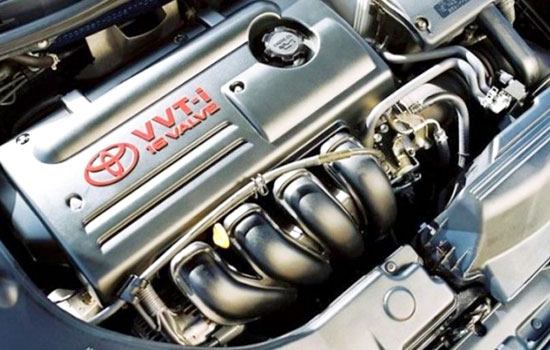
The W30 launched in Japan in October 1999 as the MR-S, and was marketed as the MR2 Spyder in the United States and Australia and as the MR2 Roadster in Europe. It was a two-door convertible with a folding soft top, available only as an open car. It used a 1.8-liter 1ZZ-FE four-cylinder with VVT-i, producing 138 bhp (140 PS, 103 kW) and 126 lb-ft (171 Nm) of torque, driving the rear wheels through a mid-mounted engine. Transmission choices were a five-speed manual, a six-speed manual in Europe, and five- or six-speed Sequential Manual Transmissions. It was deliberately built for handling rather than straight-line speed, and it weighed under a metric ton.
First Generation (W10; 1984–1989)
The original MR2 was conceived as a light, affordable mid-engine sports car and was one of the first mass-market cars to combine a transverse mid-mounted engine with rear-wheel drive. It was praised for its balance and low running costs, and it established the formula that later generations would follow: two seats, an engine behind the driver, and a focus on handling rather than raw power.
Second Generation (W20; 1989–1999)
The second-generation MR2 grew into a larger, heavier and more powerful car, and it became a genuine performance machine. Turbocharged versions of its 2.0-liter engine gave strong acceleration, and the model spawned a popular racing and tuning following. It was sold through the 1990s, with periodic updates to suspension, brakes and equipment, before the lighter third generation replaced it in 1999.
The two early generations remain the most collectible, especially low-mileage turbo cars, while the W30 has become popular as an affordable entry into mid-engine motoring. Across all three, the constant was the layout: an engine mounted behind the cabin driving the rear wheels, which gives the MR2 its distinctive handling character.
Key Specifications
| Item | MR2 W30 (1999–2007) |
|---|---|
| Engine | 1.8 L 1ZZ-FE VVT-i four-cylinder |
| Power / torque | 138 bhp (140 PS) / 126 lb-ft (171 Nm) |
| Transmission | 5- or 6-speed manual; 5- or 6-speed SMT |
| Length / wheelbase | 3,886 mm / 2,451 mm |
| Height / curb weight | 1,240 mm / about 996 kg |
| Body | 2-door convertible, 2 seats |
Why Production Ended
The MR2’s final years coincided with a broad shift in buyer preferences toward SUVs and crossovers, which squeezed low-volume sports cars. Toyota discontinued the model in the United States after the 2005 model year, with about 27,941 units sold in North America, while production for Japan and Europe continued until July 2007. The company’s attention turned toward hybrid and more fuel-efficient vehicles, and the lightweight W30, with its aluminum-intensive construction, was expensive to develop relative to its sales.
The MR2 Nameplate Since 2007
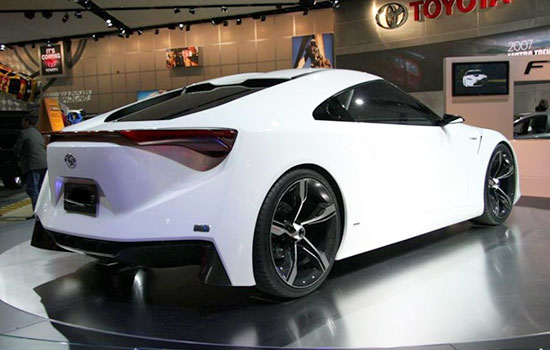
No direct replacement for the MR2 was ever launched. Toyota’s sports-car line continued instead with the 86, introduced in 2012, and the revived Supra, introduced in 2019. Periodically, rumors of an MR2 revival circulate in the motoring press, but as of the model’s most recent coverage no production successor has been confirmed. Buyers searching for a new mid-engine Toyota sports car therefore have no MR2 to buy.
Buying a Used MR2 Today
Because production ended in 2007, the MR2 is now a used and increasingly collectible car. The W30 is prized for its low weight, sharp steering and affordability, while the earlier W20 turbo models are sought after for their performance. Buyers should watch for rust and for the condition of the soft top and sequential manual transmission, and should confirm parts availability, since the car has been out of production for well over a decade. For other Toyota models covered here, see the 2019 Toyota SW4 Review and the 2019 Toyota Aurion Review, or browse the Car Review index.