There is no such thing as a 2019 Toyota Celica. Toyota built the Celica from December 1970 until April 2006, and the nameplate was retired when the seventh-generation car went out of production. The final model year in North America was 2005. Any article describing a redesigned 2019 Celica with a new family of turbocharged engines was speculation or invention, because Toyota never announced or built such a car.
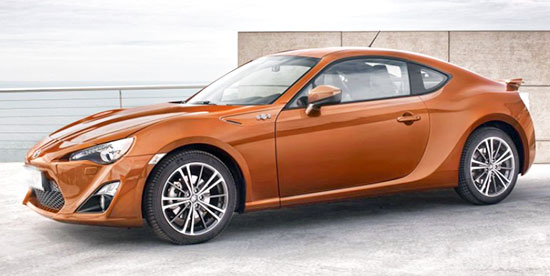
Correction: the Celica ended in 2006
The Celica ran for seven generations over roughly 36 years, as documented on Wikipedia. Production of the seventh-generation car (model code T230) began in July 1999 and ended in April 2006. The last North American model year was 2005, but global production continued into the spring of 2006. There was no 2019 model, no 2018 model and no redesign waiting in the wings.
The seven generations at a glance
- First generation (A20/A30), 1970-1977: rear-wheel drive, 1.6- and 2.0-liter four-cylinders
- Second generation (A40/A50), 1977-1981: rear-wheel drive, and the first Celica Supra spin-off
- Third generation (A60), 1981-1985: rear-wheel drive
- Fourth generation (T160), 1985-1989: switch to front-wheel drive; GT-Four all-wheel drive from 1986
- Fifth generation (T180), 1989-1993: front- and all-wheel drive
- Sixth generation (T200), 1993-1999: front- and all-wheel drive
- Seventh generation (T230), 1999-2006: front-wheel drive, 1.8-liter four-cylinders only
The final generation: engines and specs
The seventh-generation Celica came as a single three-door liftback body style. It used two versions of Toyota’s 1.8-liter ZZ four-cylinder engine. The GT used the 1ZZ-FE with VVT-i, while the GT-S in North America (T-Sport in the UK, SS-II in Japan) used the 2ZZ-GE, a high-revving engine co-developed with Yamaha that added VVTL-i variable valve lift, as described on Wikipedia’s Toyota ZZ engine page.
| Model | Engine | Power | Torque | Transmission |
|---|---|---|---|---|
| Celica GT (ZZT230) | 1.8 L 1ZZ-FE, VVT-i | 140 hp (104 kW) at 6,400 rpm | 125 lb-ft (170 Nm) at 4,200 rpm | 5-speed manual or 4-speed automatic |
| Celica GT-S (ZZT231, North America) | 1.8 L 2ZZ-GE, VVTL-i | 180 hp (134 kW) at 7,600 rpm | 133 lb-ft (180 Nm) at 6,800 rpm | 6-speed manual |
| Celica T-Sport / SS-II (Europe and Japan) | 1.8 L 2ZZ-GE, VVTL-i | up to 190 PS (189 hp / 141 kW) | 180 Nm | 6-speed manual |

The 2ZZ-GE paired variable valve timing with a two-stage variable valve lift: below about 6,200 rpm it ran on a mild cam profile, and above that threshold a hydraulic actuator switched to a more aggressive profile that gave the engine a sudden surge of power. That characteristic is why the engine is often called a high-revving design, with a redline near 8,000 rpm in most markets.
Specs that are often quoted incorrectly
A 2.0-liter engine, a torque figure of 258 and fuel economy of 27 mpg city and 30 mpg highway are sometimes quoted for a 2019 Celica. None of those numbers corresponds to a real production Celica. The seventh-generation Celica was never offered with a 2.0-liter engine; it used 1.8-liter four-cylinders only. Its actual torque output was 170 to 180 Nm (125 to 133 lb-ft), not 258, and the 27/30 mpg claim sits between the EPA ratings of the real car rather than matching any of them.
Real fuel economy of the final Celica
The US Environmental Protection Agency rated the 2005 Celica as follows, according to fueleconomy.gov:
- GT, 1.8-liter, 4-speed automatic: 25 mpg city / 33 mpg highway / 28 combined
- GT, 1.8-liter, 5-speed manual: 23 mpg city / 30 mpg highway / 26 combined
- GT-S, 1.8-liter, 6-speed manual: 21 mpg city / 30 mpg highway / 25 combined
- GT-S, 1.8-liter, automatic: 22 mpg city / 28 mpg highway / 24 combined
Exterior and interior of the final Celica

The seventh-generation Celica was a single body style, a three-door liftback, with a low, wedge-shaped profile. It measured 4,335 mm long, 1,735 mm wide and 1,310 mm tall on a 2,600 mm wheelbase, and weighed 1,090 to 1,180 kg.

The cabin was a strict 2+2 layout with two front seats and a small rear bench, a driver-focused dashboard and a floor console. Hagerty’s history of the Celica notes that Toyota pared the seventh generation back on purpose: no turbo, no all-wheel drive and only the liftback body, in the interest of lower weight.
Why the Celica was discontinued
By the mid-2000s, sales of affordable two-door sports coupes were falling across the market, and several rivals left the segment around the same time. Toyota ended Celica production in April 2006 without a direct replacement. The Celica name was not used again on a production Toyota, and the role of affordable Toyota coupe has since been filled by the rear-wheel-drive GR86 rather than a front-wheel-drive liftback.
What buyers can get today

Used seventh-generation Celicas are the only way to buy the nameplate. GT-S cars with the 2ZZ-GE and six-speed manual are the versions collectors seek, but the engine rewards careful maintenance: regular oil changes and an eye on the VVTL-i hardware and timing chain are the usual ownership talking points. Because the car has been out of production for nearly two decades, condition and service history matter more than any single specification.
For a new Toyota sports coupe, buyers today have the rear-wheel-drive GR86 with its 2.4-liter flat-four. Toyota has also signaled that it is working on a new Celica-badged model: reports in 2024 to 2026 described a turbocharged, all-wheel-drive GR Celica derived from the GR Corolla, such as this Carscoops summary of an Autocar report, but nothing has been launched and no date has been confirmed.
See also the 2019 Toyota Crown Redesign and Price and the 2019 Toyota Sienna AWD Review, or browse more car reviews.