Toyota built the Celica from December 1970 until April 2006, across seven generations, and the model was discontinued more than a decade before the “2020” date that some pages assign to it. There was no 2020 Toyota Celica and no new Celica model year after 2005. Anyone searching for one is looking for a car that has not been in production for close to two decades; the useful questions are what the Celica was, what the final generation offered, and what Toyota sells instead today.
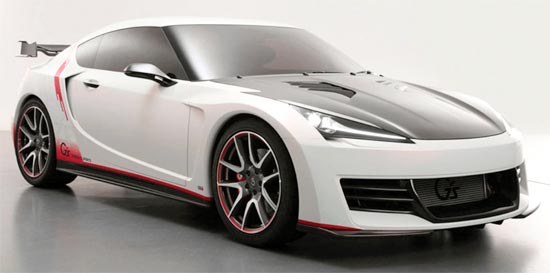
The Celica Lineage
The Celica arrived in 1970 as a sporty two-door coupe and quickly became one of Toyota’s most recognizable models. Over its life it ranged from affordable coupes to turbocharged, all-wheel-drive rally specials. A six-cylinder variant introduced in 1978 as the Celica Supra was spun off in 1986 to become the standalone Toyota Supra. The Celica also underpinned Toyota’s strong rally record, including world championship titles in the early 1990s with the GT-Four.
The Seventh Generation (1999-2006)
The final, seventh-generation Celica launched in 1999. It was lighter and shorter than the model it replaced but rode on a longer wheelbase, which improved interior space without making the car larger overall. Toyota’s stated aims were a lighter, more responsive and more affordable coupe, with a class-leading power-to-weight ratio. It went on sale in the UK on 12 November 1999 at an on-the-road price of £19,255, in a single, well-equipped specification.
Engines and Performance
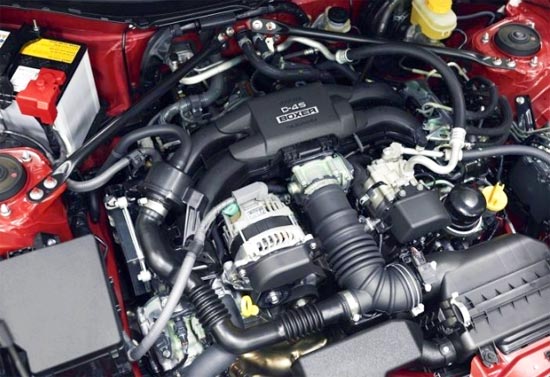
The seventh-generation Celica used an all-aluminum 1.8-liter, 16-valve, twin-cam engine with Toyota’s VVT-i variable valve timing. The standard car, sold as the Celica GT in North America, produced 140 hp at 6,400 rpm and 125 lb-ft of torque at 4,200 rpm, paired with a close-ratio six-speed manual. A more powerful version, the GT-S in the US and the T Sport in the UK, used the high-revving 2ZZ-GE engine rated at around 180 hp, with the UK T Sport quoted at 189 hp. With a curb weight of just over 1,100 kg, the standard car reached 62 mph in about 8.7 seconds and a top speed of 127 mph.

Interior and Layout
The Celica was a 2+2 coupe, meaning it had two usable front seats and a small rear pair suited to occasional passengers. The cabin was compact but well specified for its price, with air conditioning, a CD player, power windows and alloy wheels. As a two-door sports coupe, cargo space and rear legroom were limited by design, and the model prioritized a low, close driving position over practicality.

Why Production Ended
The Celica was retired in April 2006 as demand for affordable sports coupes fell. Buyers were shifting toward SUVs, crossovers and hot hatchbacks, and the coupe segment that had sustained the Celica for decades was shrinking. In the United States, Toyota’s Scion tC took on much of the entry-level coupe role, while the company’s performance focus moved elsewhere. The Celica was not replaced directly, and its nameplate stayed dormant for years afterward.
What Buyers Can Buy Today
Anyone wanting a new Toyota sports car today has three options. The GR86 is a rear-wheel-drive 2+2 coupe developed with Subaru, the GR Supra is a larger coupe developed with BMW, and the GR Corolla is a turbocharged all-wheel-drive hatchback. None is a direct Celica successor, but the GR86 comes closest in spirit and price. Used Celicas remain available on the secondhand market, with the seventh-generation GT and GT-S being the most commonly traded. Buyers cross-shopping other Toyota models can compare the 2020 Toyota Crown Redesign, Review and the 2019 Toyota Yaris Sedan Interior Design and Review.

The Rumored Revival
Talk of a Celica comeback has circulated for years, and it grew more concrete in the 2020s. In May 2023, Toyota’s president Koji Sato said he wanted to reintroduce the Celica name, and in November 2024 Toyota confirmed that a new Celica was under development, with a possible market launch around 2026 or 2027. Those plans remained unconfirmed as a production car, so there is still no Celica on sale. Until Toyota launches such a vehicle, the correct statement is simple: the last Celica was built in 2006.
Design and Chassis
The seventh-generation Celica’s most notable engineering feature was its light construction. The body and the 1.8-liter engine were built largely from aluminum, and the car weighed only slightly more than 1,100 kg, which gave it the strong power-to-weight ratio Toyota advertised at launch. The four-cylinder engines were matched to a close-ratio six-speed manual gearbox, a relatively unusual feature in an affordable coupe at the time and one that rewarded frequent gear changes. The chassis was tuned for agile, front-wheel-drive handling rather than outright power.
Rally Heritage
The Celica’s reputation was built partly on rallying. The turbocharged, all-wheel-drive Celica GT-Four competed in the World Rally Championship and helped Toyota win several manufacturers’ and drivers’ titles in the early 1990s, including championship success with driver Carlos Sainz. That rally program shaped how enthusiasts regarded the name, and it is one reason the Celica retains a following long after production ended. The road-going seventh generation was front-wheel drive, but it inherited some of the brand’s sporting identity from those competition cars.
Buying a Used Celica
On the used market, the seventh-generation Celica is the most common, with the GT and GT-S versions to choose between. The 2ZZ-GE GT-S engine is the more sought-after because of its high-revving character, while the 1ZZ-FE GT is cheaper to run and simpler. As with any car of this age, condition matters far more than mileage, and buyers should have an independent inspection done before purchase. Because the model has been out of production since 2006, parts are generally available but can take longer to source than for a current car.