The Toyota A-BAT was a compact hybrid pickup truck concept shown in 2008. It was designed to blend car-like comfort with truck utility in a small package, but it never reached production. There was no 2019 Toyota A-BAT, and no production version was ever built; this article covers what the concept was, what it promised, and why it stayed a show car.
What the A-BAT Was
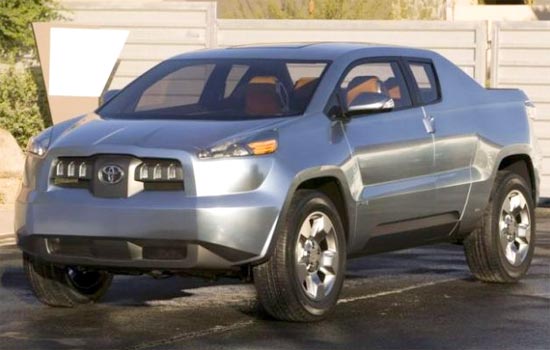
The A-BAT, short for Advanced Breakthrough Aero Truck, was a compact, four-passenger pickup concept developed by Toyota’s Advanced Product Strategy group and Calty, the company’s North American design center in Newport Beach, California. It was positioned below the Toyota Tacoma in size and used a unibody architecture rather than a traditional body-on-frame truck chassis, which gave it car-like ride and handling. The concept was intended to appeal to suburban buyers who wanted occasional truck capability without the size and fuel use of a full-size pickup.
Debut at the 2008 Detroit Auto Show
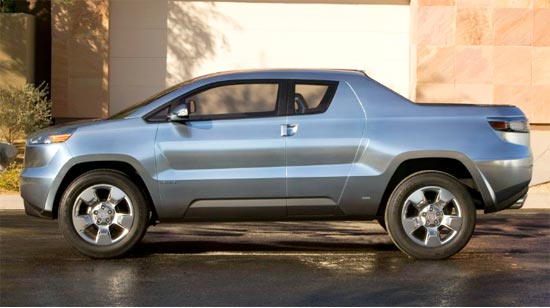
Toyota unveiled the A-BAT at the 2008 North American International Auto Show in Detroit. The design team, led by project chief designer Ian Cartabiano with creative designer Matt Sperling, built the truck around a trapezoidal side profile inspired by the Toyota Prius, with a cab-forward layout, fast A- and C-pillars, and short overhangs. A bold grille carried Toyota’s reverse-trapezoid and T-face theme, and 19-inch wheels sat at the corners for a tough, planted stance.

Hybrid Powertrain and Unibody Construction
The A-BAT used a four-cylinder gasoline engine paired with Toyota’s Hybrid Synergy Drive, making it one of the first compact trucks to be conceived as a hybrid from the outset. The unibody platform was chosen to save weight and improve efficiency while still allowing a usable bed. Translucent solar panels on top of the instrument panel recaptured energy from the sun to help charge the navigation unit, a portable power pack, and the backlit display screens.
Dimensions and Cargo Features
The concept was compact by pickup standards, at 181.3 inches long, 74.4 inches wide, and 64.0 inches high, on a 112.2-inch wheelbase. Its bed measured 48.0 inches long, extending to 72.0 inches with the pass-through midgate folded down and to 96.0 inches with the tailgate open as well. That versatility let the A-BAT carry a standard 4×8 sheet of plywood, a capability unusual for a vehicle of its size.
| Dimension | A-BAT concept |
|---|---|
| Overall length | 181.3 in |
| Overall width | 74.4 in |
| Overall height | 64.0 in |
| Wheelbase | 112.2 in |
| Bed length | 48.0 in |
| Bed with midgate down | 72.0 in |
| Bed with midgate and tailgate down | 96.0 in |
| Wheels | 19-inch |
Interior Design
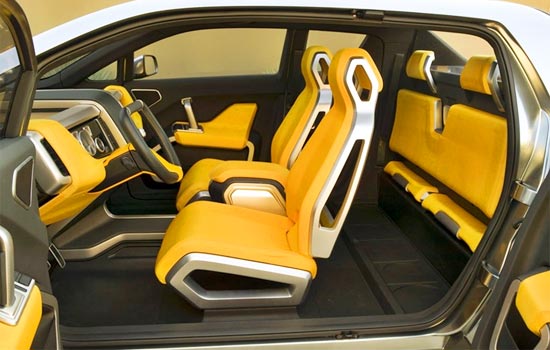
Inside, the A-BAT seated four and used lightweight materials such as carbon fiber and aluminum for the instrument panel, console, and seats. A rigid alloy center console housed a portable power pack that could supply AC and DC power for tools, camping gear, or a laptop. The bed included lockable drawers in its walls, sliding tie-downs, tailgate lighting, and a first aid kit and flashlight integrated into the tailgate. A retractable navigation unit with a seven-inch screen and Wi-Fi was also fitted.
Why It Was Never Built
Despite a warm reception, the A-BAT never made it to production. Toyota’s compact truck offering remained the Tacoma, and the business case for a small unibody hybrid pickup did not hold in a market that was moving toward larger trucks. Analysts and Toyota itself noted that compact pickups had lost ground to full-size models and to SUVs, and the concept was shelved.
What Toyota Built Instead
Rather than a compact hybrid truck, Toyota focused on its established Tacoma and Tundra lines. The hybrid truck idea eventually returned in a different form: the 2022 Toyota Tundra introduced the i-Force Max hybrid, combining a twin-turbo 3.5-liter V6 with an electric motor for 437 hp, and the redesigned 2024 Tacoma gained its own i-Force Max hybrid option. Both are full- and mid-size trucks rather than the small, car-based pickup the A-BAT previewed.
The A-BAT’s Legacy
The A-BAT is remembered as an early attempt to imagine an efficient, car-like compact truck, years before hybrid pickups became mainstream. Its emphasis on flexible cargo space, integrated power outlets, and solar-assisted electronics foreshadowed features that later appeared on production trucks. For enthusiasts, it remains a what-if concept rather than a model year, and no 2019 version was ever made. Readers interested in Toyota’s other discontinued small models can see our 2019 Toyota Urban Cruiser Release Date & Price and 2019 Toyota Rukus Review.
Design Influences
The A-BAT’s styling team drew on two very different sources of inspiration. From the Toyota Prius they took the trapezoidal side silhouette, adapting it into a fresh pickup image. From a NATO all-terrain military truck they took the idea of pushing the occupants as far forward as possible to maximize the rear bed within a compact footprint. The result was a short, tall, cab-forward truck with a sleek front window and a clearly defined bed.
The Compact Truck Segment in 2008
When the A-BAT was shown, the compact pickup segment in the United States was under pressure. Buyers were moving toward larger full-size trucks and toward SUVs, and the small-pickup market had shrunk considerably from its 1980s and 1990s peak. Toyota’s own compact offering, the Tacoma, was already a well-established body-on-frame truck, which left little room for a smaller, car-based model in the company’s line-up.
Could There Have Been a 2019 A-BAT?
There was no 2019 A-BAT because the concept was never approved for production and Toyota never announced a launch date. Concept cars are often built to test ideas and gauge public reaction, and many, like the A-BAT, remain one-offs. Buyers looking for a small hybrid truck from Toyota instead found the brand focused on gasoline Tacomas and Tundras until hybrid versions of those larger trucks arrived in the 2020s.