There is no 2019 Toyota Rukus. The Rukus was a compact, box-shaped hatchback that Toyota sold in Australia, and its production ended in 2015. The model was the Australian-market version of the Japanese Corolla Rumion and the North American Scion xB, and it left showrooms years before the 2019 model year began.

What the Rukus Was
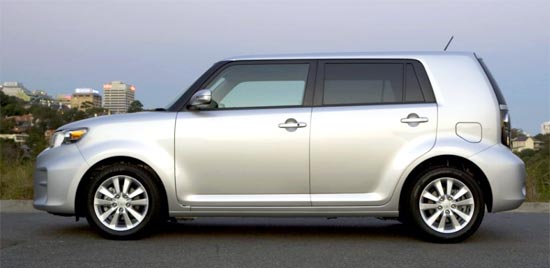
The Rukus belonged to a family of boxy compact hatchbacks that Toyota built from 2007 to 2015 on the E150-series Corolla. Toyota sold the same basic car as the Corolla Rumion in Japan, the Rukus in Australia and the Scion xB in the United States and Canada. All three shared Toyota’s New MC platform, a five-door body and a tall, near-vertical rear tailgate. The design maximized interior space within a small footprint, a formula shared with the Kia Soul.
Toyota assembled the car in Japan at Kanto Auto Works in Iwate and at the Takaoka plant in Aichi. The model was the first Japanese domestic-market Corolla derivative to exceed the country’s 1,695 mm compact-car width limit, measuring 1,760 mm across.
Australian Launch and Sales Decline
Toyota launched the Rukus in Australia in May 2010, roughly four years into the model’s global life cycle. It never sold in large numbers. Just 3,867 Rukuses were sold in Australia over its entire run, and by the end of August 2015 only 122 had been registered that year, a 26.5 percent slide from the same period in 2014. That made it Toyota Australia’s slowest-selling passenger car.
Toyota confirmed in September 2015 that production for the Australian market would cease the following month, saying the decision was made “in line with customer demand”, and the Rukus was discontinued in October 2015. Toyota expected remaining stock to be exhausted within a few months.

Engines and Specifications
Two naturally aspirated four-cylinder engines were offered in the Rumion and Rukus, both paired with Toyota’s Super CVT-i continuously variable transmission:
| Engine | Displacement | Output | Torque | Transmission |
|---|---|---|---|---|
| 1NZ-FE | 1,496 cc I4 | 108 hp @ 6,000 rpm | 105 lb-ft @ 4,400 rpm | Super CVT-i |
| 2ZR-FAE | 1,797 cc I4 | 134 hp @ 6,000 rpm | 129 lb-ft @ 4,400 rpm | Super CVT-i with 7-speed mode |
The smaller 1.5-liter unit produced 108 hp and 105 lb-ft of torque, while the 1.8-liter produced 134 hp and 129 lb-ft. Front-wheel drive was standard, and an all-wheel-drive 1.8-liter version was also offered in Japan. The Australian car used the 1.8-liter engine.
Dimensions and Design
The Rukus measured 4,210 mm long, 1,760 mm wide and 1,630-1,640 mm tall, with a 2,600 mm wheelbase and a curb weight between about 1,270 and 1,400 kg. Its upright proportions gave it more headroom and load space than a conventional compact hatchback of the same footprint, which was the whole point of the design.
Why It Failed
The Rukus reached Australia late in its life cycle, competing against fresher small cars and boxy rivals such as the Kia Soul, which remained in production after Toyota dropped the Rukus. Its sales fell steadily: 823 units in 2012, 418 in 2013, 232 in 2014, and just 122 through August 2015. The car’s tall shape, limited engine range and four-year-old design did not match what most Australian compact-car buyers wanted by the mid-2010s.

What Buyers Can Buy Instead
Toyota never replaced the Rukus directly. In the United States the Scion xB was replaced by the Corolla iM, a rebadged Auris, for the 2017 model year once the Scion brand was retired. Australian buyers who wanted a small Toyota hatch moved to the Corolla, which occupies a similar compact role even though it shares no bodywork with the Rukus.
For related Toyota coverage, see the 2019 Toyota Avanza Philippines Review and the 2019 Toyota Corolla Altis Review.
The Scion xB and Corolla Rumion Connection
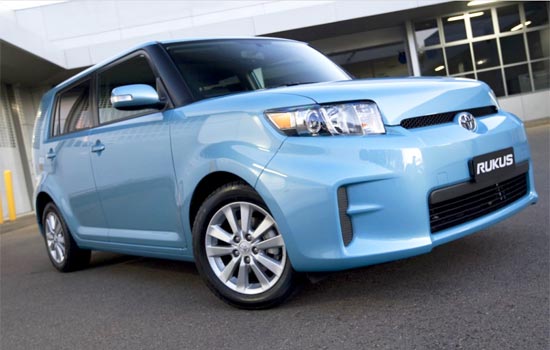
The car that became the Rukus began life in Japan as the Toyota bB, which was rebadged for North America as the first Scion xB in 2003 and became a cult favorite with younger buyers. The second-generation xB, launched in 2007, was the car sold in Australia as the Rukus and in Japan as the Corolla Rumion. It was larger and more conventional than the first xB, and it was this generation that reached Australia in 2010, by which time the design was already several years old.
Interior and Practicality
The Rukus’ tall body gave it generous headroom and a versatile cabin for its size. The rear seats folded to expand cargo space, and the near-vertical tailgate made loading easier than in a conventional hatchback. Toyota positioned the car for young buyers who wanted space and a distinctive look, but its boxy proportions, firm ride and relatively thirsty 1.8-liter engine did not suit every taste, and its tall stance gave it more body roll than a conventional small car.
Safety
The Australasian New Car Assessment Program tested the Rukus in 2010 and awarded it a four-star result. It scored 12.61 out of 16 in the frontal offset test, a full 16 out of 16 in the side impact test and 2 out of 2 for the pole test, while pedestrian protection was rated adequate. Electronic stability control was fitted as standard, and the car was covered by Toyota’s Australian dealer network for servicing and parts.
The Rumion Name Today
Toyota let the Rukus, Rumion and xB names lapse after 2015, but it revived the Rumion badge in October 2021 for a rebadged Suzuki Ertiga sold in India and parts of Africa, an unrelated vehicle with no connection to the boxy original. The Scion brand itself was retired in 2016, and Toyota folded its remaining Scion models back into the Toyota range.