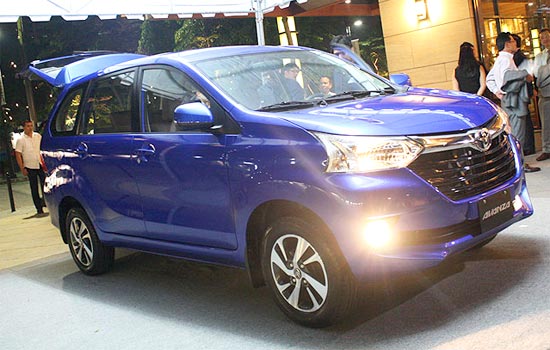
The Toyota Avanza is a seven-seat multi-purpose vehicle developed by Daihatsu and sold across Southeast Asia, Mexico, the Middle East and Africa. In the Philippines it is Toyota’s entry-level family MPV, sitting below the Innova. The 2019 model year brought a second facelift to the second-generation Avanza (platform code F650), which had been in production since 2011.
What the Avanza Is
The Avanza and its Daihatsu Xenia twin were developed by Toyota and Daihatsu in the wake of the 1997 Asian financial crisis as an affordable alternative to the larger Kijang and Innova. Production began in December 2003 in Indonesia, where Daihatsu’s Astra Daihatsu Motor builds the car. The name Avanza comes from the Spanish word avanza, meaning “get moving”.
The second-generation Avanza used a semi-unibody chassis – body-on-frame at the front, monocoque at the rear – with rear-wheel drive, a layout retained from the Kijang so the vehicle could carry heavier loads. Toyota said about 2.75 million Avanza and Xenia units had been sold worldwide by November 2018, and the Avanza was the best-selling passenger car in Indonesia every year from 2006 to 2019.
The Second Generation and Its Facelifts
The second generation arrived in 2011 and kept the same basic platform as the first, taking about four years to develop. It received a first facelift in 2015 and a second update on January 15, 2019. That 2019 change is the version most buyers in the Philippines associate with the “2019 Avanza”, and it remains a rear-drive, seven-seat MPV underneath.
The 2019 Facelift
The 2019 update brought a new grille and split-type headlights, and LED headlamps became standard on every grade except the base J. Inside, the instrument cluster gained blue accents, the air-conditioning controls became electronic, and the update added a 6.8-inch touchscreen on G and Veloz grades. The seats were retrimmed in black with red stitching, and the exterior gained redesigned two-tone 15-inch alloy wheels.

Engine and Drivetrain
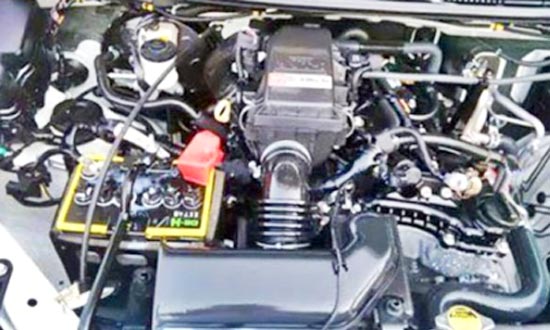
Two naturally aspirated gasoline engines were offered, both with Dual VVT-i:
| Engine | Type | Output | Torque | Transmission |
|---|---|---|---|---|
| 1.3L (1NR-VE) | 4-cyl, 16-valve DOHC | about 95 hp | 121 Nm | 5-speed manual / 4-speed automatic |
| 1.5L (2NR-VE) | 4-cyl, 16-valve DOHC | 103 hp | 136 Nm | 5-speed manual / 4-speed automatic |
The 1.5-liter 2NR-VE used in the G and Veloz grades produced 103 hp and 136 Nm of torque, and drive went to the rear wheels. A four-speed automatic was the only self-shifting option on this generation, and reviewers noted that the engine had to work hard when the MPV was fully loaded with seven passengers.

Dimensions and Seating
The facelifted second-generation Avanza measures about 4,200 mm long, 1,660 mm wide and 1,685-1,695 mm tall, on a 2,655 mm wheelbase, with 180 mm of ground clearance. Toyota fitted three rows of seats for seven occupants, and the third row folds to expand cargo space; the trunk behind the third row is small, so the Avanza is at its most practical with the rear seats folded.
Equipment and Safety
Standard safety equipment included two front airbags, anti-lock brakes with electronic brakeforce distribution, side-door impact beams, ISOFIX child-seat anchors and three-point seatbelts for all occupants, including the third row. Higher grades added a touchscreen infotainment system, power windows, keyless entry and automatic climate control. The Avanza was positioned as a value MPV rather than a technology leader, so features such as speed-sensing door locks were absent.
The Avanza in the Philippine Market
Toyota Motor Philippines offered the 2019 Avanza in a small number of grades: the 1.3 J and 1.3 E, the 1.5 G and the range-topping Veloz. The model is a common sight in the country as a family car and as a vehicle for ride-hailing fleets, helped by straightforward mechanicals and widely available parts. It competes in the budget MPV class with vehicles such as the Suzuki Ertiga and Mitsubishi Xpander.

Later Generations and Buying Today
The third-generation Avanza arrived in 2021 and switched to front-wheel drive on the Daihatsu New Global Architecture, dropping the rear-drive layout of the first two generations. That car also gained a continuously variable transmission and available Toyota Safety Sense, and spawned the Toyota Veloz as a separate model. Buyers shopping today will find the 2019 Avanza is a used-market vehicle, and its simple mechanicals and parts availability are a common selling point. Related coverage includes the 2019 Toyota Prado Redesign, Engine, Performance and the 2019 Toyota Avalon Hybrid Review.
Why the Avanza Sells
The Avanza’s success rests on price, space and durability rather than driving appeal. It is built in Indonesia by Astra Daihatsu Motor and sold there and across Southeast Asia, as well as in Mexico, Pakistan, Nepal, Bangladesh, Sri Lanka, the Middle East, the Caribbean, Egypt and parts of Africa. Its Daihatsu Xenia twin is sold in Indonesia under the Daihatsu brand. The Avanza’s run as the best-selling passenger car in Indonesia from 2006 to 2019 made it one of the region’s highest-volume models.
Comfort and Practicality
Reviews of the 2019 Avanza described a cabin that prioritizes usable space over premium materials. The 2019 car has 17 cupholders and bottle holders, three rows of seats for seven people and a folding third row for cargo. The third row is best suited to children or smaller adults, and the ride is firm, especially when the car is lightly loaded; it settles down with passengers and cargo aboard. Ground clearance of 180 mm helps on uneven roads, and the tall body makes entry and exit easy.