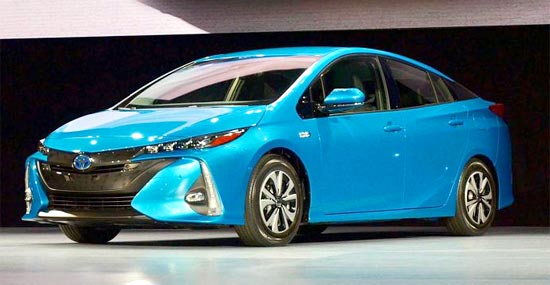
There was no 2019 Toyota Prius v. The Prius v was a compact hybrid wagon that Toyota sold in the United States from the 2012 through the 2017 model years, and U.S. sales ended after the 2017 model year. Production for other markets, where the same vehicle was badged the Prius alpha in Japan and the Prius+ in Europe, ran until March 2021. Buyers who went looking for a new 2019 Prius v at a Toyota dealership would have found nothing; the closest new hybrid people movers in Toyota showrooms were the RAV4 Hybrid and, later, the Corolla Hybrid.
What the Prius v Was
The Prius v (Toyota said the “v” stood for versatility) was introduced in Japan in May 2011, reached the United States in October 2011 and Europe in June 2012. It was the first variant spun off from the standard Prius and was built on the third-generation (XW30) Prius platform. Unlike the hatchback Prius, the Prius v was a five-door compact MPV with a tall roofline, a shape Toyota tuned to a drag coefficient of 0.29 and a body that was longer and wider than the car it was based on.
The point of the model was space. Toyota claimed the interior offered more than 50 percent more cargo volume than the 2010 Prius, with 34.3 cubic feet behind the rear seats and 38 inches of rear legroom. The U.S. version seated five; Japan and Europe got a three-row, seven-seat layout made possible by a smaller lithium-ion battery.
Engine and Hybrid System
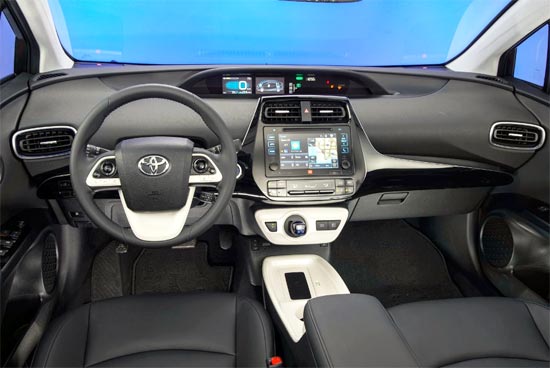
The Prius v used the same 1.8-liter 2ZR-FXE Atkinson-cycle four-cylinder as the regular Prius, rated at 98 horsepower at 5,200 rpm and 105 lb-ft of torque at 4,000 rpm. It was paired with a 60 kW traction motor and Toyota’s Hybrid Synergy Drive, giving a combined system output of 134 horsepower. Drive went to the front wheels through a one-speed planetary power-split unit rather than a conventional belt-and-pulley CVT.
Battery hardware depended on the market. The five-seat U.S. car used a 1.3 kWh nickel-metal hydride pack running at about 201 volts, while the seven-seat Japanese and European versions used a smaller 1.0 kWh lithium-ion battery. Toyota also fitted the Prius v with a “Pitch and Bounce” motor control that worked with the suspension to cancel fore-and-aft movement on uneven roads.
| Engine | 1.8 L 2ZR-FXE I4, Atkinson cycle |
| Engine output | 98 hp at 5,200 rpm; 105 lb-ft at 4,000 rpm |
| Hybrid system output | 134 hp (100 kW) |
| Traction motor | 60 kW |
| Transmission | 1-speed planetary (power-split) |
| Battery | 1.3 kWh NiMH (5-seat) / 1.0 kWh Li-ion (7-seat) |
| Wheelbase | 109.4 in |
| Length / Width / Height | 181.7 in / 69.9 in / 62.0-63.0 in |
| Cargo behind rear seats | 34.3 cu ft |
Fuel Economy
When it launched, the U.S. Environmental Protection Agency rated the Prius v at 44 mpg in the city, 40 mpg on the highway and 42 mpg combined. By the final model year the EPA figures for the 2017 Prius v had settled at 43 mpg city, 39 mpg highway and 41 mpg combined. Under the European NEDC test the base model was quoted at 4.1 L/100 km combined, with 96 g/km of CO2.
Size, Space and Equipment
The Prius v rode on a 109.4-inch wheelbase and measured 181.7 inches long, 69.9 inches wide and between 62.0 and 63.0 inches tall, depending on roof equipment. Curb weight was roughly 3,197 to 3,241 pounds. Standard equipment echoed the contemporary Prius, including four drive modes (Normal, Power, Eco and EV), a smart key with push-button start, an electronic shift lever, Hill Start Assist and a backup camera.
The Prius v was also where Toyota’s Entune multimedia system made its debut in 2012. Options across the range included LED headlamps, a lightweight resin panoramic sunroof, dynamic radar cruise control with a pre-collision system and an advanced parking guidance system.
U.S. Trims and Pricing
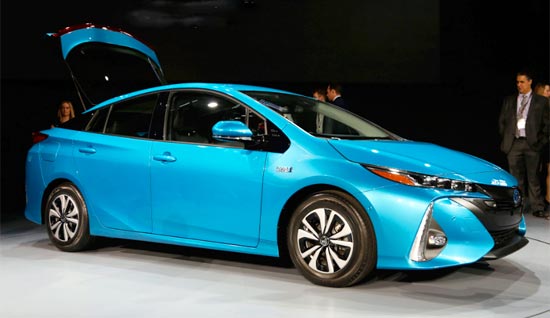
In the United States the Prius v was sold in numbered trims. Through the run these included Two, Three, Four and Five, with the top Five grade adding SofTex-trimmed upholstery, heated front seats, 17-inch alloy wheels, LED headlamps and fog lamps. For its final 2017 model year the Prius v carried an original MSRP of $26,675 to $30,935, depending on trim.

Why Production Ended
U.S. sales peaked at 40,669 units in 2012 and then fell steadily. Toyota ended U.S. sales of the Prius v after the 2017 model year, with the RAV4 Hybrid, which arrived for 2016, effectively taking its place. The model continued in Japan as the Prius alpha until Toyota announced in December 2020 that it would be discontinued in March 2021. The Daihatsu Mebius, a rebadged version of the same vehicle, ended in February 2021.

What to Buy Instead
Anyone who wanted the Prius v’s combination of hybrid economy and wagon space new in 2019 could not buy one from Toyota. The practical substitutes were the RAV4 Hybrid, which by then offered all-wheel drive and comparable fuel economy, and the smaller Prius hatchback. Used Prius v wagons remain available on the secondhand market, and the Corolla Hybrid, introduced for 2020, later became another alternative. Toyota also offers the larger Highlander Hybrid and Sienna Hybrid for buyers who need three rows. Related Toyota hybrids from the same period include the 2019 Toyota Prius Prime and the 2019 Prius hatchback.
Markets, Sales and Recognition
The Prius v was a global model. Toyota reported that worldwide sales of the Prius v, Prius alpha and Prius+ reached about 634,000 units by April 2016. Japan was by far the largest market with roughly 428,400 sales, followed by the United States with about 148,079, Europe with 38,200 and Canada with 12,670. The 2012 Prius v was a finalist for Green Car Journal’s Green Car of the Year, was shortlisted for 2012 Car of the Year Japan and won Green Car Reports’ Best Car to Buy 2012 alongside the Prius Plug-in Hybrid.
The U.S. car also introduced Toyota’s Vehicle Proximity Notification System in the 2012 model year. Because a hybrid can move almost silently on electric power, the system used externally mounted speakers to emit a warning sound below about 15 mph, with a pitch that rose and fell with speed. In the 2015 ANCAP crash tests the Prius v scored 15.21 out of 16 for frontal offset protection, 15.27 out of 16 for side impact and a full 2 out of 2 in the pole test.