The compact crossover market remains one of the most fiercely contested battlegrounds in North America and global automotive retail. In this hyper-competitive landscape, the 2027 Toyota Corolla Cross Hybrid: facelift redesign, upgraded AWD, and fuel economy upgrades represent a calculated, high-stakes evolution by the world’s largest automaker. Since its introduction, the Corolla Cross Hybrid has served as a bridge between the subcompact hatchback segment and larger crossovers like the RAV4. For the 2027 model year, Toyota is implementing a comprehensive mid-cycle refresh engineered to elevate the crossover’s road presence, optimize energy recovery, enhance off-the-line mechanical traction, and refine cabin ergonomics.
This mid-cycle iteration arrives at a pivotal moment. While Toyota continues to expand its electrified envelope across enthusiast platforms—as seen in deep-dive reports like the 2027 Toyota Celica: Next-Gen AWD Sports Coupe Preview, Powertrain, and Launch Window—the practical, high-volume models carry the financial and regulatory weight of corporate fleet emissions targets. The 2027 Corolla Cross Hybrid tackles this mandate head-on, pairing next-generation electronic all-wheel drive with Fifth-Generation Toyota Hybrid System (THS 5) enhancements to deliver benchmark thermal efficiency alongside practical utility.
Exterior Facelift Redesign: Hammerhead Aesthetic and Aerodynamics
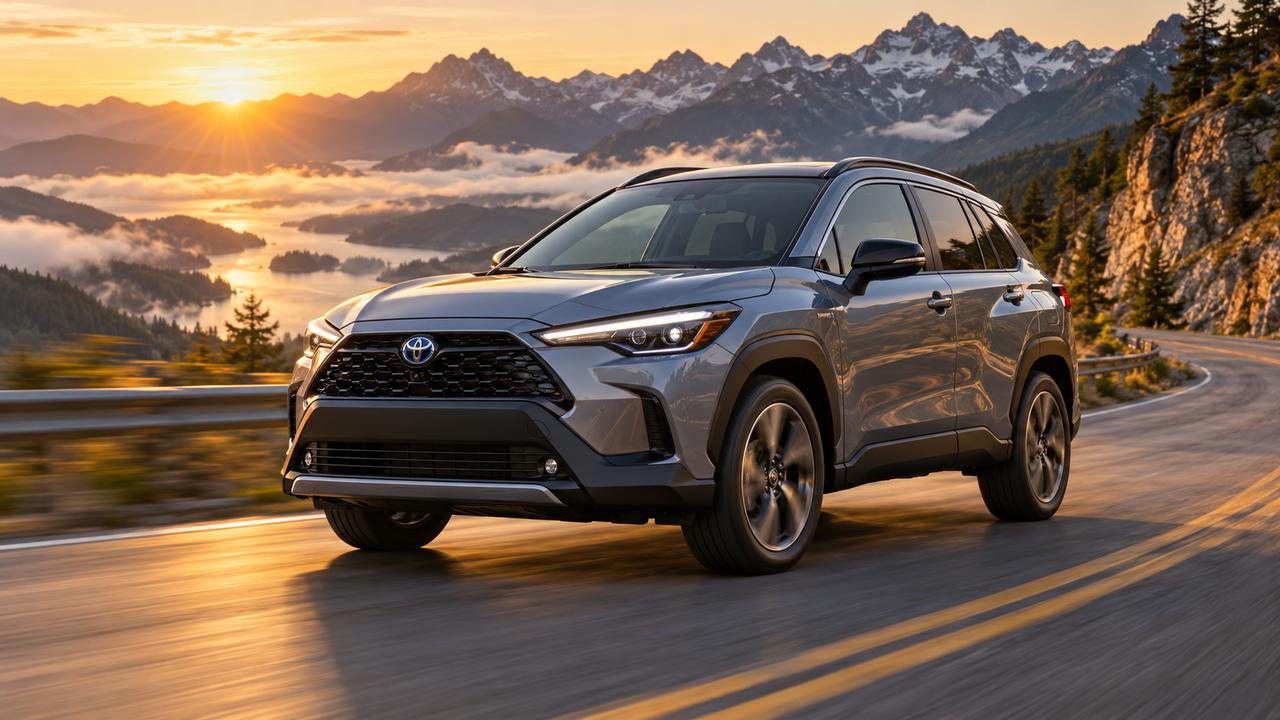
The exterior transformation of the 2027 Corolla Cross Hybrid centers on Toyota’s contemporary design language, colloquially termed the “Hammerhead” front fascia. Previously characterized by a somewhat utilitarian, bulbous front grille, the 2027 facelift adopts a sculpted, aerodynamic snout that mirrors the sharp aesthetics of the refreshed Camry, Prius, and Crown Signia. The upper grille is slimmed down to an aggressive horizontal aperture, flanked by bi-LED headlamps featuring sharp C-shaped daytime running light (DRL) light guides.
Airflow management represents a significant engineering focus for the mid-cycle redesign. Beneath the sleekened hood, Toyota’s aerodynamicists have integrated active grille shutters within the lower hexagonal air intake. These shutters remain closed during steady-state cruising and engine warm-up phases, deflecting air around the front wheel arches via newly carved vertical air curtains. This integration actively mitigates high-pressure turbulence inside the wheel wells, trimming the vehicle’s overall drag coefficient ($C_d$) from 0.33 down to an estimated 0.31.
At the rear, the facelift redesign introduces full-width LED taillights connected by an ultra-thin light bar that accentuates the vehicle’s horizontal stance. Revised lower bumper cladding with integrated aerodynamic diffuser fins replaces the bulky matte-black plastic of the initial production run. In sport-focused grades such as the SE and XSE, gloss-black garnishes, two-tone contrast black roofing options, and newly cast 18-inch machine-finished alloy wheels lend the subcompact crossover a more planted, athletic profile.
Interior Overhaul: Cabin Ergonomics and Digital Architecture
Inside the cabin, the 2027 Corolla Cross Hybrid receives updates designed to resolve customer complaints regarding plastic-heavy trim pieces and entry-level digital interfaces. The dashboard architecture has been re-sculpted with a tiered layout, featuring soft-touch, double-stitched synthetic leather across the mid-pad. Toyota has also updated acoustic insulation throughout the floor pan and firewall, addressing tire drone and cabin vibration at highway speeds.
The centerpiece of the tech overhaul is the introduction of an optional 12.3-inch fully digital driver instrument cluster alongside a standardized 10.5-inch Toyota Audio Multimedia touchscreen. Driven by Toyota’s latest connected software stack, the interface supports over-the-air (OTA) software updates, wireless Apple CarPlay, wireless Android Auto, and cloud-based navigation with dynamic rerouting. Crucially, Toyota’s interior engineers have resisted the industry temptation to bury essential controls inside software menus. While rivals undergo radical cockpit reorganizations—such as the layout updates observed in the 2027 Hyundai Tucson Hybrid: Refined Center Console, Physical Climate Buttons, and AWD Specs—the Corolla Cross Hybrid retains physical rotary temperature dials and tactile toggle switches for the dual-zone climate system, preserving intuitive functionality.
- Digital Cockpit Integration: 7.0-inch multi-information cluster standard on S and SE; 12.3-inch configurable digital display standard on XSE.
- Smart Storage Solutions: Redesigned center console with expanded cupholders, elevated wireless Qi charging pad, and tiered armrest storage.
- Acoustic Upgrades: Thicker acoustic laminated front windshield glass and optimized door seals reduce NVH (Noise, Vibration, Harshness) levels by 2.5 dB at 65 mph.
- Eco-Conscious Materials: SofTex synthetic leather seats woven from 30% recycled plastics on top-tier trims, paired with standard heated front seating elements.
Powertrain Engineering: 5th-Generation Hybrid Architecture
Underneath the restyled hood, the 2027 Corolla Cross Hybrid leverages the fully optimized Fifth-Generation Toyota Hybrid System (THS 5). The core internal combustion component remains the naturally aspirated 2.0-liter M20A-FXS inline 4-cylinder Dynamic Force engine. Operating on an ultra-efficient Atkinson cycle, this engine achieves an exceptional thermal efficiency rating of nearly 41%, thanks to an ultra-high 14.0:1 compression ratio, laser-clad intake valve seats, and Toyota’s D-4S dual-injection system (utilizing both direct cylinder injection and low-pressure port injection).
Where the 2027 model year takes a leap forward is within its power electronics and transaxle assembly. Toyota has fitted lighter, more power-dense electric motor-generators (MG1 and MG2) within the planetary gear-type continuously variable transmission (e-CVT). The internal drive inverter utilizes newly developed low-loss silicon carbide (SiC) semiconductors, cutting electrical conversion losses by roughly 10%. Additionally, the old nickel-metal hydride chemistry has been completely superseded by a compact, high-output lithium-ion battery pack mounted unobtrusively beneath the rear passenger seats, saving 31 pounds while cycling current into the drive motors with lower internal resistance.
The combined powertrain system output rises incrementally from 196 horsepower to an estimated 202 total system horsepower. This boost improves passing torque at highway speeds without taxing the gasoline engine, cutting the 0-60 mph sprint time down to a projected 7.7 seconds.
Upgraded Electronic On-Demand AWD (E-Four) Dynamics
Every Corolla Cross Hybrid distributed in the North American market relies on Toyota’s Electronic On-Demand All-Wheel Drive (E-Four) system, eliminating the heavy, mechanically inefficient driveshaft running to the rear axle. For the 2027 refresh, Toyota’s chassis engineers have overhauled the rear axle drive module with a more robust permanent-magnet synchronous motor. This upgraded rear motor delivers a 15% increase in rear axle torque output, yielding instantaneous breakaway traction when launching on snow, slick mud, or wet pavement.
Vehicle Stability Control (VSC) algorithms have also been recalibrated. The updated Dynamic Torque Tracking control system works synchronously with the regenerative braking system to execute torque vectoring by brake. When pitching into a tight turn, the system subtly applies braking force to the inside wheels while commanding the rear electric motor to provide stabilizing drive thrust, actively resisting understeer. This marks a clear distinction in Toyota’s engineering philosophy: while the brand is reviving purpose-built sports car dynamics on specialized platforms—highlighted by the developmental insights on the 2027 Toyota MR2: Mid-Engine Turbo Rebirth, Specs, Expected Price, and Release Date—it is systematically cascading responsive handling characteristics into its family-oriented crossovers.
Furthermore, an improved Trail Mode switch logic recalibrates throttle sensitivity and rear-axle differential braking. If a rear wheel loses contact with the ground or slips on loose gravel, the upgraded E-Four system instantly locks down the slipping wheel and directs mechanical power directly to the wheel with traction, providing legitimate, light-duty off-tarmac capability.
Fuel Economy, Range, and Real-World Efficiency
Through the combined impacts of aerodynamic optimization, reduced electrical transaxle losses, and the lighter lithium-ion battery array, the 2027 Corolla Cross Hybrid pushes its EPA efficiency figures to new heights. The outgoing generation offered an already impressive 45 MPG City / 38 MPG Highway / 42 MPG Combined. The 2027 mid-cycle refresh pushes expectations even further.
Projected EPA ratings for the base S and mid-tier SE trims target an exceptional 47 MPG City / 41 MPG Highway / 44 MPG Combined. The slightly heavier XSE grade, with its wider 18-inch tires and elevated roof rails, is projected to achieve 45 MPG City / 39 MPG Highway / 42 MPG Combined. Supported by a 10.6-gallon fuel tank, the vehicle provides an interstate highway cruising range exceeding 430 miles, making it an efficient choice for long-distance commuter journeys.
Comprehensive Trim Specifications and Comparison
The table below details the projected engineering specifications, powertrain architecture, fuel economy targets, and estimated pricing across the 2027 Toyota Corolla Cross Hybrid trim structure.
| Trim Level | Powertrain Architecture | Combined Output | AWD Layout | EPA Projected (City/Hwy/Comb) | Wheels / Tires | Estimated Starting MSRP |
|---|---|---|---|---|---|---|
| S | 2.0L M20A-FXS + Dual MG + Rear Motor (Li-Ion) | 202 hp | Electronic On-Demand AWD (E-Four) | 47 / 41 / 44 MPG | 17-inch Steel w/ Covers | $29,500 |
| SE | 2.0L M20A-FXS + Dual MG + Rear Motor (Li-Ion) | 202 hp | Electronic On-Demand AWD (E-Four) | 47 / 41 / 44 MPG | 17-inch Alloy Wheels | $31,200 |
| Nightshade | 2.0L M20A-FXS + Dual MG + Rear Motor (Li-Ion) | 202 hp | Electronic On-Demand AWD (E-Four) | 46 / 40 / 43 MPG | 18-inch Gloss-Black Alloy | $32,400 |
| XSE | 2.0L M20A-FXS + Dual MG + Rear Motor (Li-Ion) | 202 hp | Electronic On-Demand AWD (E-Four) | 45 / 39 / 42 MPG | 18-inch Multi-Spoke Machine Alloy | $33,900 |
| Woodland (Anticipated) | 2.0L M20A-FXS + Dual MG + High-Torque Rear E-Motor | 202 hp | Upgraded E-Four w/ Trail Logic | 44 / 38 / 41 MPG | 17-inch Bronze Flow-Formed A/T | $34,600 |
Safety Systems and Chassis Architecture
Structural rigidity in the 2027 Corolla Cross Hybrid benefits from supplementary structural adhesives applied along the rear wheel wells and the center floor tunnel of the TNGA-C (Toyota New Global Architecture – Compact) platform. The vehicle retains its front MacPherson strut setup paired with an independent double-wishbone multi-link rear suspension—a distinct mechanical advantage over the cheaper torsion-beam setup utilized on front-wheel-drive non-hybrid Corolla Cross iterations sold overseas. Dampers have been re-valved to offer progressive compression, effectively softening harsh pavement cracks while mitigating lateral body roll.
Active safety takes an evolutionary leap with the integration of Toyota Safety Sense 3.0+ (TSS 3.0+) as standard equipment across all grades. Utilizing an upgraded forward-facing optical camera with a wider field of view and high-definition millimeter-wave radar, the system introduces expanded operational parameters:
- Pre-Collision System with Pedestrian Detection: Capable of detecting oncoming vehicles during intersection turns, bicyclists, and pedestrians across low-light conditions, executing automatic emergency deceleration.
- Full-Speed Range Dynamic Radar Cruise Control: Features refined distance-tracking software and smooth deceleration when slower traffic merges into the lane.
- Lane Tracing Assist and Proactive Driving Assist: Uses subtle steering corrections and gentle deceleration during winding highway curves to maintain centered tracking and minimize driver fatigue.
- Blind Spot Monitor and Rear Cross-Traffic Alert: Upgraded with Safe Exit Assist, preventing rear occupants from opening side doors into approaching cyclists or passing motor vehicles.
While rugged off-road trucks in adjacent vehicle segments undergo mechanical chassis revisions—like the suspension developments analyzed in the 2027 Nissan Frontier Pro-4X: Midsize Pickup Tech Overhaul, Rugged Bilstein Shocks, and Price—the Corolla Cross Hybrid remains fundamentally tuned for metropolitan agility, dynamic safety, and passenger protection on modern highways.
Pricing, Production Timelines, and Market Availability
Toyota plans to maintain production of the North American-spec Corolla Cross Hybrid at the Mazda Toyota Manufacturing (MTM) joint facility in Huntsville, Alabama. Tooling updates for the 2027 facelift are anticipated to commence during the late second quarter of 2026, paving the way for customer deliveries to begin in late autumn 2026 as a 2027 model year offering.
Despite persistent inflationary pressures across raw materials and microelectronics, Toyota aims to protect the Corolla Cross Hybrid’s value-driven positioning. The base S trim is expected to enter the market at an accessible MSRP of roughly $29,500, with fully equipped XSE and anticipated adventure-themed Woodland editions peaking under the $35,000 threshold before destination and dealer delivery fees. This pricing structure undercuts larger hybrid crossovers while offering fuel economy figures that surpass conventional subcompact crossovers.
Final Assessment
The 2027 Toyota Corolla Cross Hybrid: facelift redesign, upgraded AWD, and fuel economy upgrades provide a targeted response to the evolving subcompact crossover sector. By discarding the humble, anonymous design of its initial iteration in favor of the bold Hammerhead aesthetic, upgrading real-time cabin connectivity, and extracting extra mileage and rear-wheel response from the Fifth-Generation Hybrid architecture, Toyota solidifies its dominance in daily commuter transportation. The 2027 Corolla Cross Hybrid remains a masterclass in sensible automotive engineering: dependable, exceptionally efficient, and comprehensively modernized for the requirements of everyday motorists.