2027 Toyota GR86: In-House Turbocharged Engine Switch, Chassis Updates, and Track Specs
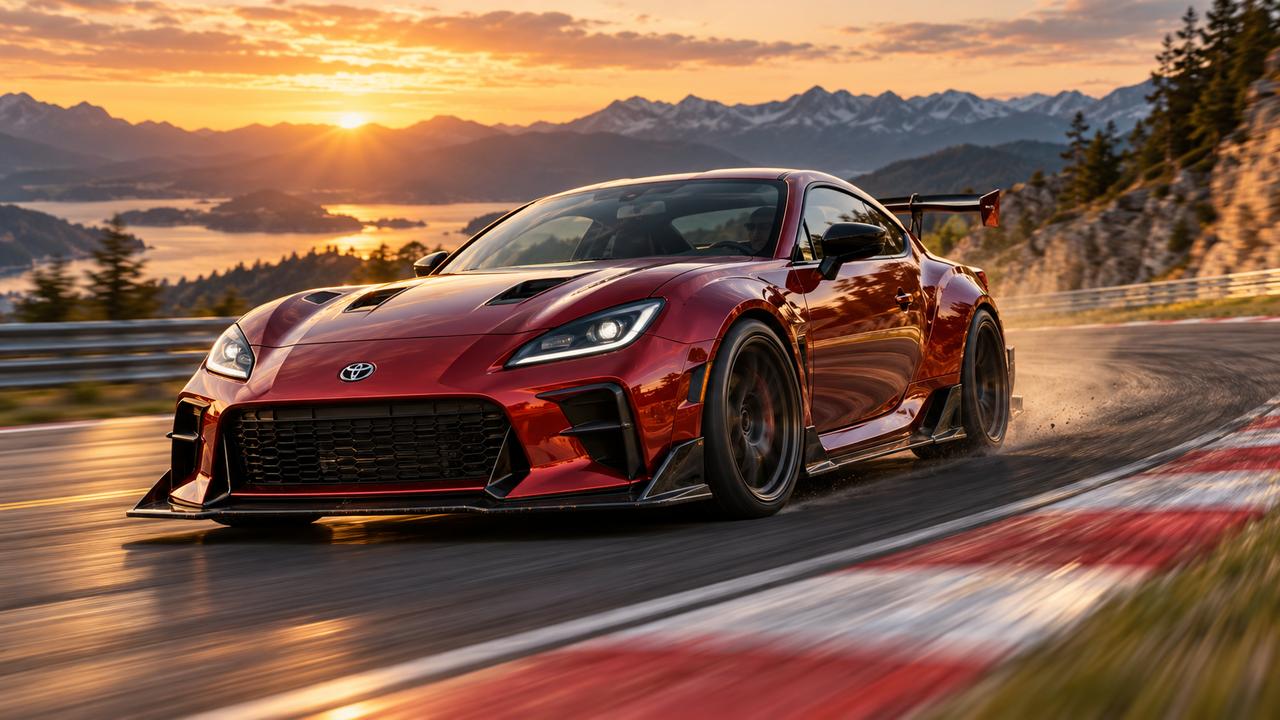
The sports car ecosystem is standing on the precipice of a seismic operational shift. For over a decade, the lightweight, rear-wheel-drive platform co-developed by Toyota and Subaru has provided driving purists with an accessible masterclass in vehicle balance. However, tighter global emissions mandates, evolving corporate motorsport strategies, and mechanical track limitations have forced Toyota Gazoo Racing (TGR) to take full control of its compact enthusiast icon. The 2027 Toyota GR86: in-house turbocharged engine switch, chassis updates, and track specs represents a complete re-engineering of the formula, discarding the legacy Subaru boxer engine in favor of a bespoke, race-bred Toyota internal combustion architecture.
This generational shift aligns with Toyota Chairman Akio Toyoda’s aggressive mandate to preserve internal combustion excitement through proprietary motorsport hardware. As the broader sports lineup expands alongside developmental projects like the 2027 Toyota Celica: Next-Gen AWD Sports Coupe Preview, Powertrain, and Launch Window, the upcoming GR86 sheds its collaborative roots to deliver an authentic, unified Toyota Gazoo Racing product built from the pavement up for high-lateral-G circuit environments.
The In-House Powertrain Shift: Farewell Boxer, Enter the G16E-Derived Turbo
Since the introduction of the Scion FR-S and Toyota GT86 in 2012, followed by the second-generation GR86 in 2022, the vehicle’s primary calling card—and its most debated mechanical element—has been Subaru’s naturally aspirated flat-four. While the current 2.4-liter FA24 addressed earlier torque-dip criticisms by producing 228 horsepower and 184 lb-ft of torque, it has encountered structural and regulatory headwinds. European safety regulations (GSR2) and stringent fleet CO2 limits have already prematurely ended GR86 sales across European territories. Concurrently, amateur track drivers have documented localized oil starvation issues during sustained high-speed right-hand corners caused by the boxer’s wide, horizontal oil scavenging profile.
For the 2027 model year, Toyota is engineering a modified version of the 1.6-liter turbocharged inline-three cylinder engine—codenamed G16E-GTS—derived directly from the GR Yaris and GR Corolla. Modifying this powerplant for a front-midship, rear-wheel-drive configuration is no small mechanical feat. The engine must be rotated 90 degrees for a longitudinal layout, demanding a completely reconfigured oil sump, custom engine mounts, tailored exhaust manifolds, and a high-flow dry-sump or multi-baffle wet-sump oiling system engineered to eliminate track-day starvation completely.
Internal testing benchmarks indicate this turbocharged inline-three will be tuned to produce approximately 300 horsepower and 295 lb-ft of torque. Unlike the peaky nature of earlier iterations, this unit delivers peak torque starting as low as 2,800 RPM and pulling hard to a 7,200 RPM redline. To satisfy stringent Euro 7 and CARB emissions benchmarks, Toyota engineers are pairing this forced-induction powerplant with a compact 48-volt mild-hybrid assist motor tucked inside the transmission bellhousing, which fills early turbo spool gaps while lowering idle emissions.
Transmission options will strictly cater to driving enthusiasts. A standard short-throw six-speed manual gearbox with automatic rev-matching (iMT) remains standard equipment, equipped with hardened carbon synchros on gears one through four. Alongside the manual, Toyota will offer its newly developed Gazoo Racing Direct Automatic Transmission (GR-DAT)—an eight-speed single-clutch torque-converter unit featuring hyper-fast thermal heat dispersion, lock-up clutch engagement, and predictive software programmed directly through TGR’s World Rally Championship data streams.
Chassis Dynamics: Modular TNGA Architecture and Weight Optimization
Switching from a wide, low-profile horizontally opposed engine to an upright, turbocharged inline-three inherently alters the vehicle’s center of gravity and polar moment of inertia. Critics questioned whether an upright engine would ruin the hallmark low hood-line and balance of the 86. In response, Toyota Gazoo Racing’s engineers have developed an ultra-rigid modular front subframe, positioning the inline engine as far back against the firewall as possible, officially designating the 2027 car as a true front-midship (FMR) configuration.
Structural rigidity is set to jump by an estimated 25% over the second-generation chassis. Toyota achieves this through increased application of high-tensile structural adhesives—adding roughly 15 meters of aerospace-grade bond lines along the door sills, roof rails, and wheel well arches. Furthermore, a bespoke aluminum front strut tower cross-brace links directly into the cabin bulkhead, resisting high-speed torsional deflection during heavy trail-braking maneuvers.
Suspension architecture receives a comprehensive overhaul. While retaining front MacPherson struts and a double-wishbone rear, the geometry has been thoroughly altered:
- Revised Roll Center: The front roll center is lowered by 12mm to harmonize with the upright engine’s rotational mass, keeping transient chassis rolls predictable and smooth.
- Inverted Monotube Dampers: Standard trims receive upgraded Hitachi twin-tube units, while higher track-focused trims boast inverted Bilstein or Sachs monotube shocks valved specifically for kerb impacts and track curbs.
- Strengthened Rear Carrier: The rear differential mounting carrier features stiffer polyurethane subframe bushings, eliminating the rear-axle tramp under hard dig launches common in previous platforms.
- Mass Minimization: Extensive utilization of aluminum on the hood, front fenders, and roof panel keeps curb weight pegged at an impressive 2,820 to 2,890 lbs, despite the added cooling and turbocharger plumbing.
This level of focused dynamics mirrors Toyota’s high-performance mid-engine developments, such as the ambitious engineering featured on the 2027 Toyota MR2: Mid-Engine Turbo Rebirth, Specs, Expected Price, and Release Date, demonstrating Gazoo Racing’s dedication to dedicated sports chassis.
Comprehensive Specification Comparison: 2027 GR86 vs. Predecessors and Benchmarks
The architectural divergence between the second-generation collaborative build and the forthcoming in-house Gazoo Racing model is stark. The table below outlines the mechanical, structural, and performance shifts scheduled for the 2027 model year.
| Attribute | 2nd Gen Toyota GR86 (FA24) | 2027 Toyota GR86 (Target In-House) | Engineering Advantage |
|---|---|---|---|
| Engine Layout | 2.4L Naturally Aspirated Boxer-4 (Subaru) | 1.6L Turbocharged Inline-3 (Toyota G16E-GTS) | Eliminates lateral high-G cornering oil starvation; unified Toyota parts bin |
| Horsepower | 228 hp @ 7,000 RPM | 300 hp @ 6,500 RPM | +72 horsepower gain; superior power-to-weight ratio |
| Torque | 184 lb-ft @ 3,700 RPM | 295 lb-ft @ 2,800–4,800 RPM | +111 lb-ft boost; broad, plateaued mid-range acceleration |
| Drivetrain Configuration | Front-Mounted Boxer / Rear-Wheel Drive | Front-Midship Inline / Rear-Wheel Drive | Optimized 51:49 balance; lower polar moment of inertia |
| Transmission Choices | 6-Speed Manual / 6-Speed Auto | 6-Speed Close-Ratio Manual / 8-Speed GR-DAT | Lightning-fast dual-clutch-style shifts with manual engagement integrity |
| Curb Weight (Est.) | 2,811 – 2,851 lbs | 2,840 – 2,890 lbs | Minimal weight gain offset by aluminum skinning and lighter 3-cylinder block |
| 0-60 MPH Acceleration | 6.1 seconds (Manual) | 4.7 seconds (Manual) / 4.4 seconds (GR-DAT) | Enters contemporary hot-hatch and junior sports car performance territory |
| Front Braking Hardware | 2-Piston Floating (Opt. 4-Piston Brembo) | Standard 4-Piston Monobloc Brembo (355mm Rotors) | Superior thermal dissipation and pedal modulation during track sessions |
Track Hardware, Aerodynamics, and Cooling Architecture
The switch to forced induction introduces increased thermal requirements. Turbochargers generate substantial underhood heat, demanding a comprehensive rethinking of the GR86’s aerodynamic package and thermal cooling circuits. TGR aerodynamicists have integrated functional aerodynamic venting inspired by GR GT3 concept studies.
A functional hood extractor now vents high-pressure air passing through the primary radiator and front-mounted intercooler, effectively reducing front-axle aerodynamic lift at track speeds over 90 mph. Dual brake ducting channels integrated within the aggressive front bumper deliver cold ambient air directly to the inner vanes of the 355mm ventilated front discs. In the rear, a full flat-floor undertray terminates in an active or dual-channel venturi rear diffuser, working alongside an integrated aluminum ducktail spoiler to stabilize the car under high-speed threshold braking.
To ensure track-day reliability, the track-tier variants of the 2027 GR86 will feature an auxiliary air-cooled engine oil cooler nestled in the driver-side bumper corner, paired with a dedicated transmission cooler on GR-DAT models. Electronic driver aids receive a recalibrated “Expert” track mode developed by Super GT drivers, permitting up to 15 degrees of yaw slip angle before subtle individual-wheel brake intervention gently reins in excessive oversteer.
Driver Cockpit, Ergonomics, and Tactile Controls
While mainstream vehicles increasingly migrate every operational control into multi-tiered touchscreen displays, Toyota Gazoo Racing retains an uncompromising focus on driver ergonomics. High-performance driving demands immediate, tactile muscle memory. While automotive interiors in consumer crossovers—such as the layout seen in the 2027 Hyundai Tucson Hybrid: Refined Center Console, Physical Climate Buttons, and AWD Specs—reiterate the importance of daily driver ergonomics through dedicated knobs, the 2027 GR86 takes functional simplicity a step further.
The driver sits 8mm lower in heavily bolstered bucket seats that feature harness passthroughs and high-density shoulder foam designed to clear helmet lateral pads. The steering wheel adopts an ultra-compact, thick-rimmed profile wrapped in tactile Ultrasuede, entirely devoid of distracting capacitive touch sliders. Real, physical rotary dials dictate climate controls, and dedicated mechanical toggle switches handle traction control deactivation, track-mode telemetry activation, and exhaust-valve baffles.
Directly ahead of the driver rests an 8.5-inch anti-glare TFT digital cluster. When switched into Circuit Mode, the display sweeps away trivial infotainment readouts, foregrounding a central linear tachometer, predictive lap-timer readouts, gear position, oil temperature, oil pressure, and tire temperature telemetry.
Durability Testing and Target Market Realities
Developing an in-house powertrain requires rigorous torture-testing across challenging proving grounds. Toyota’s test mules have logged thousands of endurance laps at the Fuji Speedway and the Nürburgring Nordschleife. The thermal management of the three-cylinder engine under relentless full-throttle loads has been subjected to severe torture cycles—much like the demanding powertrain and chassis benchmarks Toyota applies across its toughest off-road hardware or competitors undergo in platforms such as the 2027 Nissan Frontier Pro-4X: Midsize Pickup Tech Overhaul, Rugged Bilstein Shocks, and Price.
Expected trim levels for 2027 reflect tiered enthusiast priorities:
- Base GR86: Equipped with standard 17-inch forged wheels, Michelin Pilot Sport 5 tires, standard limited-slip differential, and the 300-hp inline-three powerplant. Estimated starting MSRP: $34,500.
- GR86 Premium: Adds 18-inch matte-black wheels, Michelin Pilot Sport 4S rubber, upgraded 8-speaker audio, duckbill decklid spoiler, and heated Ultrasuede sport seats. Estimated MSRP: $37,800.
- GR86 Track Edition / GRMN: Features 2-way adjustable Sachs/Bilstein coilovers, Brembo 6-piston front/4-piston rear calipers, Michelin Pilot Sport Cup 2 tires, carbon-fiber roof panel, and an auxiliary transmission/oil cooling system. Estimated MSRP: $43,500.