There was no 2019 Toyota Aurion. The Aurion was a large front-wheel-drive sedan built in Australia by Toyota and sold from 2006 to 2017. Production ended on 17 August 2017, when the last car rolled off the line at Toyota’s Altona plant in Victoria, ahead of the factory’s closure that October. The Aurion was never offered in the United States, and it was not replaced by another Aurion: the model it handed over to was the imported eighth-generation Camry, which reintroduced a V6 option to the Camry range in Australia.
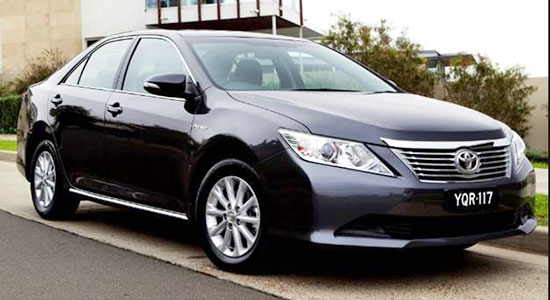
What the Aurion Was
The Aurion was a mid-size sedan derived from the contemporary Camry, sharing most of its structure, tooling and drivetrain but wearing restyled front and rear ends and a different interior. Its name came from the Greek word meaning "tomorrow." It was introduced in 2006 and replaced the Toyota Avalon in Australia and New Zealand. Because it used a V6 as standard, it competed in the large-car segment against the Holden Commodore, Ford Falcon and Honda Accord Euro of the day. Two generations were built: the XV40 from 2006 to 2012 and the XV50 from 2012 to 2017. In several East and Southeast Asian markets the same car was sold simply as the Camry.
Interior
As a large family sedan, the Aurion emphasized rear-seat space and comfort. Grades ranged from the fleet-oriented AT-X up through Touring and the sportier Sportivo and Sportivo ZR6, with the top Presara trim adding the most equipment. Interior changes between generations were modest, focused on trim, materials and infotainment rather than a wholesale redesign, which kept the car familiar to Australian buyers and suited its role as a long-distance family and fleet vehicle.

Exterior and Dimensions
The Aurion was a full-size four-door sedan with front-wheel drive and seating for five. Its proportions were conventional for a large Australian family car, with a long wheelbase giving good cabin space. The second-generation XV50, launched in 2012, adopted a sharper, more contemporary front-end treatment than the original, but the overall silhouette remained that of a traditional three-box sedan. The car shared its side panels and center body with the Camry of the same era, which is why the two look closely related in profile.

Engine and Performance
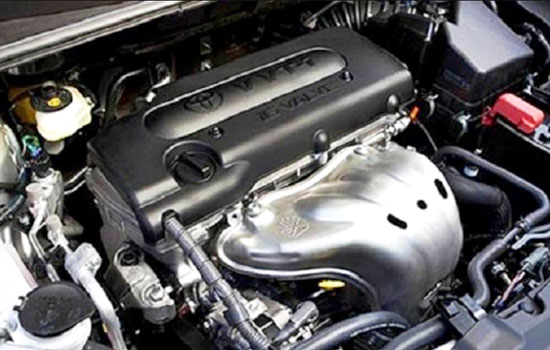
Every standard Aurion used the 3.5-liter 2GR-FE V6. When it launched in 2006 it produced 200 kW (about 268 hp) at 6,200 rpm and 336 Nm (248 lb-ft) of torque at 4,700 rpm, driving the front wheels through a six-speed automatic. Toyota Australia also offered a limited high-performance TRD Aurion from 2007 to 2009, which added a supercharged V6 and a full bodykit; just 537 were built before poor sales ended the program in March 2009. Safety was a selling point: the car came with electronic stability control as standard, and it was assessed under the ANCAP crash-test program of its time.
| Specification | Toyota Aurion 3.5 V6 |
|---|---|
| Engine | 3.5 L V6 (2GR-FE) |
| Power | 200 kW (about 268 hp) at 6,200 rpm |
| Torque | 336 Nm (248 lb-ft) at 4,700 rpm |
| Transmission | 6-speed automatic |
| Layout | Front-engine, front-wheel drive |
| Body | 4-door sedan, 5 seats |
| Production | 2006–2017 (Australia) |
The End of Production and Sales
Over its roughly 11-year run the Aurion generated more than 110,000 Australian sales, with about 70,000 further examples exported, for a total production run of roughly 180,000 cars. Its best year was 2007, its first full year on sale, with 22,036 units; by 2016 annual sales had fallen to 3,833 as buyers deserted large passenger cars. The final car built was a white top-spec Presara, which was sent to a Melbourne dealership rather than being kept as a museum piece. The end of the Aurion coincided with the closure of Toyota’s Altona factory, ending 54 years of local manufacturing for the company.

What Replaced It
The Aurion’s successor was the eighth-generation Camry, built in Japan and launched in Australia in November 2017. That car was offered with a 2.5-liter four-cylinder, a hybrid, and a V6, effectively folding the Aurion’s role into the Camry line. For 2019, then, the correct answer to "where is the new Aurion?" is that the nameplate had already ended. For other Toyota models covered here, see the 2019 Toyota Estima Review Australia and the 2019 Toyota Celica Engine Specs and Release Date, or browse the Car Review index.
Buying a Used Aurion Today
Because production ended in 2017, an Aurion is now a used-car proposition. Its appeal is a robust, smooth naturally aspirated V6, generous space and Toyota reliability; its drawbacks are front-wheel-drive large-car handling, higher fuel use than modern four-cylinder rivals, and the fact that parts and dealer support reflect a discontinued Australian-built model. Anyone specifically wanting a "2019 Aurion" should instead look at the Camry of that year.
First-Generation Sales
The first-generation XV40 alone accounted for 80,213 Australian sales between its late-2006 launch and January 2012, when it was replaced. Sales fell steadily over that period as the large-car market contracted.
| Year | XV40 units sold |
|---|---|
| 2006 (Nov–Dec) | 3,037 |
| 2007 | 22,036 |
| 2008 | 19,562 |
| 2009 | 13,910 |
| 2010 | 11,764 |
| 2011 | 8,915 |
| 2012 (Jan) | 989 |
| Total | 80,213 |
The pattern was clear across the segment: what had been one of Australia’s most popular classes of car in the 2000s lost ground every year to medium SUVs and smaller, more efficient sedans. The Aurion’s decline mirrored that of the locally built Ford Falcon and Holden Commodore, and it is the main reason Toyota did not replace it with another dedicated large sedan, folding the V6 role into the imported Camry instead.