The Toyota Estima is the Japanese-market name for a minivan that Toyota also sold as the Previa in many countries and as the Tarago in Australia. It was produced from January 1990 until October 2019 across three generations, making the 2019 Estima the final model year of the line. Australian buyers knew it as the Tarago, and that version remained on sale until March 2020, when it was replaced by the Granvia. Anyone searching for a brand-new 2019 Estima in Australia was therefore looking at the end of a 14-year generation rather than a fresh design.

Three Generations, One Nameplate
The first-generation Estima, launched in 1990, was an engineering oddity: its inline-four engine was mounted almost flat beneath the front seats in a mid-engine layout. In Japan, Toyota also offered narrower variants called the Emina and Lucida. The name Previa derives from the Spanish word for "preview," reflecting Toyota’s view that the first Previa previewed technologies it would use more widely. The second generation, which arrived in 2000, switched to a conventional front-engine, front-wheel-drive design based on the Camry platform, and it introduced the Estima Hybrid in Japan in 2001 — one of the earliest hybrid minivans. The third generation, coded XR50, debuted in 2006 and stayed in production through 2019.
Across its life the model was marketed under three names: Estima in Japan, Previa in most other markets, and Tarago in Australia. The first generation was sold in North America for the 1991 to 1997 model years; the second generation was not offered there, because American buyers received the Toyota Sienna instead.
Engines and Drivetrains
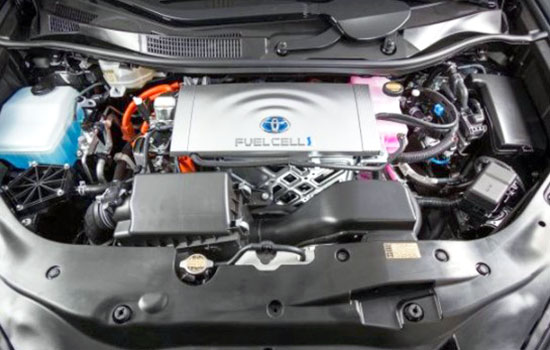
The third-generation Estima was offered with a 2.4-liter 2AZ-FE four-cylinder, a 3.5-liter 2GR-FE V6, and, in Japan and Hong Kong, a 2.4-liter 2AZ-FXE hybrid. Transmissions depended on engine: a four-speed automatic on early 2.4 cars, a seven-speed Super CVT-i on later 2.4 models, a six-speed automatic on the 3.5-liter V6, and an e-CVT for the hybrid. The hybrid, coded AHR20, used Toyota’s E-Four all-wheel-drive system and paired the gasoline engine with electric motors; it was described as similar in concept to the Lexus RX 400h but a generation behind it. The hybrid was sold only in Japan and Hong Kong, with limited imports elsewhere.
The Australian Tarago
Toyota Australia launched the Tarago in March 2006 with the ACR50R model code and the 2.4-liter 2AZ-FE four-cylinder. In February 2007 it added the GSR50R, using the 3.5-liter 2GR-FE V6 that produced 202 kW (271 hp) and 340 Nm (251 lb-ft) — the same engine family used in the Aurion. The Tarago could be configured to seat up to eight people, which made it a popular choice for large families and shuttle operators. Toyota confirmed the Granvia would replace the Tarago by the end of 2019, and the Tarago was removed from the Australian range in March 2020.
Dimensions and Exterior
The third-generation Estima is a substantial vehicle: a 2,950 mm wheelbase, a length of 4,795 mm from 2006 to 2015 and 4,820 mm from 2016 to 2019, a width of 1,800 mm (1,820 mm after the 2016 update), and a height of 1,750 mm. Curb weight ranged from about 1,725 kg to 1,915 kg. Its boxy, aerodynamic shape and sliding side doors gave it excellent access and load flexibility for a family MPV. Notably, the third generation was never offered in Europe.

Interior and Features
The third-generation Estima was unusually technology-rich for a minivan of its era. Depending on grade and market it offered automatic parallel and reverse parking, Lane-Keep Assist, Adaptive Front-Lighting System headlamps that swiveled with the steering, track-mounted second-row reclining seats with footrests, and power-folding split third-row seats on seven-seat models. The hybrid drivetrain gave it quiet, low-speed electric running around town, while the V6 gave it relaxed highway performance.

Why It Was Discontinued
Production of the Estima and Estima Hybrid ended in October 2019 after roughly 13 years of the third generation. Demand for large minivans had been falling in many markets as buyers moved to SUVs and crossovers, and Toyota was reshaping its MPV line-up. In Japan the Estima’s role was partly absorbed by the Alphard and Vellfire for buyers wanting something more luxurious, while in Australia the Granvia took over from the Tarago. For readers comparing related Toyota people-carriers, see the 2019 Toyota Celica Engine Specs and Release Date and the 2019 Toyota Aygo Review, or browse the Car Review index.
Buying a Used Estima or Tarago Today
Used Estimas and Taragos are available in Japan, Australia and via gray imports elsewhere. Their strengths are space, seating flexibility and, in hybrid form, good fuel economy for the size; their weaknesses are thirst from the V6 and the age of the platform. Because production ended in 2019, there is no newer Estima to buy — the nameplate itself is retired, and the closest modern alternatives in Toyota’s range are the Granvia and the Alphard/Vellfire.
Seating and Practicality
One of the Estima’s defining traits was passenger capacity. Depending on the generation, market and seating layout, it was offered with six, seven or eight seats, and the Australian Tarago could carry up to eight. Sliding doors on both sides made it easy to load children or cargo in tight parking spaces, and the third-generation car offered track-mounted second-row seats and a power-folding third row. For families, the combination of a flat floor, generous headroom and the option of all-wheel drive made it a genuinely versatile vehicle rather than simply a large car.
Fuel economy varied widely by engine. The 2.4-liter four-cylinder was the most economical of the non-hybrid versions, the hybrid was markedly more efficient again in city use, and the 3.5-liter V6 traded economy for effortless overtaking. Buyers should check which drivetrain and seating configuration a particular car has, because the range spanned a broad spread of cost and capability.