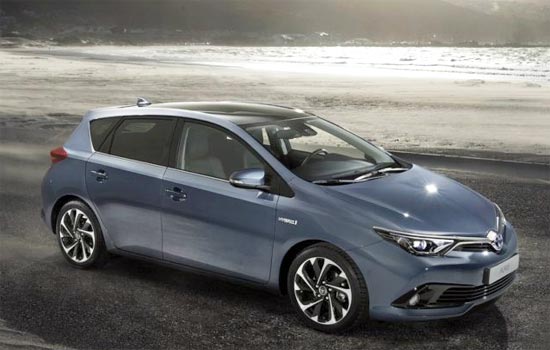
The Toyota Auris was the European name for Toyota’s compact family hatchback, sold from 2006 to 2018 on the same engineering foundations as the Corolla. There was no 2019 Toyota Auris. Toyota discontinued the nameplate across Europe in January 2019 and moved the car back under the Corolla badge, so anyone searching for a 2019 Auris is looking for the twelfth-generation Corolla that replaced it rather than a distinct new model.
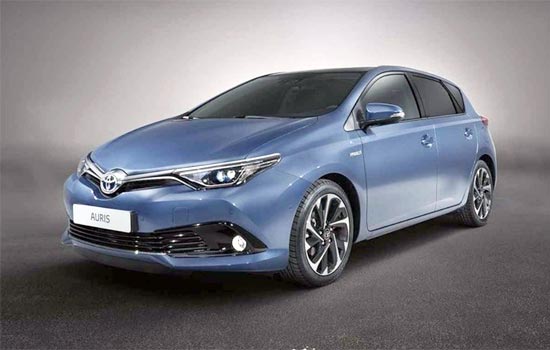
What the Auris Was
The Auris is a compact car derived from the Corolla. In Europe, Toyota positioned it as the replacement for the Corolla hatchback while the sedan version kept the Corolla nameplate. The badge was also used in Japan, where the more luxurious first-generation car was sold as the Toyota Blade, succeeding the Allex and the Corolla RunX. The Auris competed in the heart of the European compact class against the Volkswagen Golf and the Ford Focus and became one of Toyota’s highest-volume models in the region. Buyers cross-shopping Toyota’s smaller and alternative-fuel cars often compared it with the 2019 Toyota Vios Review and the hydrogen-powered 2019 Toyota Mirai Review.

First Generation (E150; 2006–2012)
The first-generation Auris arrived in 2006 and shared its platform with the E150-series Corolla. It went on sale in the United Kingdom on 1 February 2007, replacing the E120 Corolla hatchback. The car was primarily a five-door hatchback, and European examples were built at Toyota’s Burnaston plant in the United Kingdom, with some production also handled in Turkey for other markets. Its styling was more rounded and aerodynamic than the Corolla it replaced, part of an effort to give Toyota a more distinctive presence in Europe, and the range was revised in 2009 with new powertrains and equipment.
Second Generation (E180; 2012–2018)
The second generation launched in 2012 and was offered as a five-door hatchback and as an estate called the Touring Sports. It used the E180 Corolla platform and received a refreshed interior and improved refinement. Powertrains ranged from an 89 hp 1.4-liter turbo diesel to a 134 hp 1.8-liter hybrid gasoline-electric unit. Depending on the version, 0–62 mph took between 10.0 and 13.2 seconds, and curb weight spanned roughly 2,690 to 3,142 pounds. The 2013 model earned a five-star Euro NCAP rating, scoring 92 percent for adult occupant protection, 84 percent for child occupant protection, 68 percent for pedestrian protection, and 66 percent for safety assist.
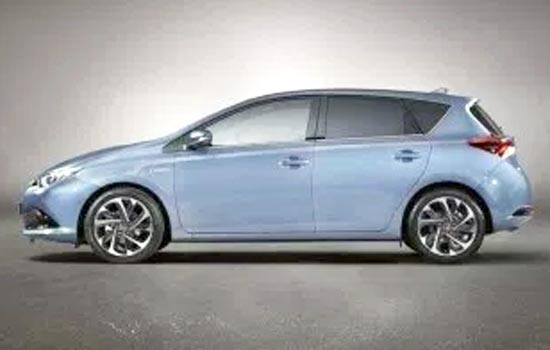
| Variant | Engine | Power | Notes |
|---|---|---|---|
| Auris 1.4 D-4D | 1.4 L turbo diesel | 89 hp | Entry diesel |
| Auris 1.6 | 1.6 L gasoline | approx. 130 hp | Quickest conventional version |
| Auris Hybrid | 1.8 L hybrid (2ZR-FXE) | 134 hp | Most efficient; e-CVT |
Hybrid Power and Efficiency
The Auris Hybrid paired a 1.8-liter Atkinson-cycle gasoline engine with Toyota’s Hybrid Synergy Drive and an electronically controlled continuously variable transmission. Combined output was 134 hp, and the electric motor allowed low-speed running on electricity alone. It was sold in the UK from 2012 to 2019 and was the model’s most economical variant, making it popular with private buyers and fleet operators alike. Toyota also built an Auris HSD Full Hybrid concept to promote the technology before the production hybrid arrived.
Sales and Market Position
In the United Kingdom alone, Toyota sold 122,316 examples of the Auris and Auris Touring Sports across the model’s life, according to the company’s own passenger-car sales records. The car was a steady rather than spectacular seller in Europe, where it trailed the segment leaders, but it gave Toyota a credible mainstream hatchback and, through the hybrid, a fuel-efficiency story that few rivals could match at the time.
Why There Was No 2019 Auris
Toyota previewed a third-generation Auris as a pre-production model at the March 2018 Geneva Motor Show, built on the Toyota New Global Architecture (TNGA) GA-C platform. The production car, however, was launched under the Corolla name. Toyota discontinued the Auris nameplate across Europe with the E210-series Corolla in January 2019. The only place the Auris badge survived into 2019 was Taiwan, where the hatchback kept the name from September 2018 until 15 July 2020, when it was renamed Toyota Corolla Sport.
The Replacement: Twelfth-Generation Corolla (E210)
The car that would have been the 2019 Auris is the E210 Corolla. Hatchback production began in June 2018, with the sedan and estate following in January 2019. It uses the GA-C version of Toyota’s TNGA platform and offers 1.2-liter turbo gasoline, 1.8-liter and 2.0-liter hybrid, and conventional gasoline engines depending on market. The lower, wider body was designed for better visibility and driving dynamics, and the model went on to become the best-selling passenger vehicle in the world.

Buying an Auris Today
Because the name ended in 2018, secondhand Auris stock covers the 2006–2018 run, with the second generation (2012–2018) the most plentiful. The hybrid versions remain the most economical to run, returning strong fuel economy in town, while the hatchback and Touring Sports estate share many service parts with the Corolla of the same era. Buyers who want the car that directly followed the Auris should look at the 2019-onward Corolla hatchback and Touring Sports. Additional background is available in our Toyota Auris Review. Servicing costs are generally modest because the mechanicals are shared with the Corolla, and the Touring Sports estate offers substantially more cargo space than the hatchback for family use. Buyers should check that hybrid battery health has been inspected and that any recall work has been completed.