The Toyota Avanza is a three-row multi-purpose vehicle (MPV) developed by Daihatsu and marketed by Toyota, mainly for Indonesia and other emerging markets. It entered production in December 2003, and for the 2019 model year it received a second facelift of the second-generation car rather than an all-new redesign. The next-generation Avanza did not arrive until 2021–2022, when the model swapped its traditional rear-wheel-drive layout for a front-wheel-drive platform.
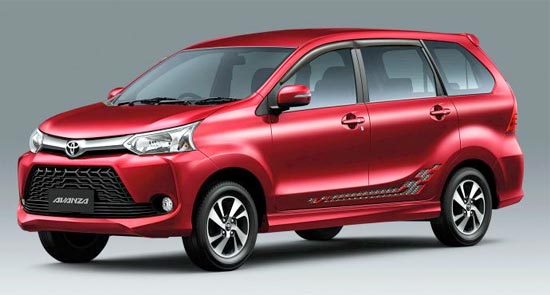
What the 2019 Avanza Actually Was
The Avanza has gone through two distinct generations. The first ran from its December 2003 launch until 2011. The second generation was launched in Indonesia on 9 November 2011, and it was this car that carried the Avanza name through 2021. Toyota updated the second-generation model twice: a first facelift on 12 August 2015 and a second facelift on 15 January 2019. The 2015 update is the one that replaced the old engines, swapping the 1.3-liter K3-VE and 1.5-liter 3SZ-VE for the newer NR family. The 2019 update, led by chief engineer Kazutoshi Sakamoto, was a styling, equipment and suspension revision rather than a new platform.
This distinction matters because the 2019 Avanza is sometimes described as a redesign. It is not: it is the second facelift of the 2011-generation MPV, and it kept the same chassis, engines and rear-wheel-drive layout as before. The genuinely new, front-wheel-drive Avanza — the W100 series — followed in late 2021, with a separate Veloz model spun off at the same time. The compact Toyota 2019 Toyota RAV4 XLE sits in a different segment entirely.
Development and Background
The Avanza was conceived after the 1997 Asian financial crisis, when the price of the best-selling Toyota Kijang had risen sharply. Toyota, Daihatsu and their Indonesian subsidiaries began feasibility studies in 1999, and Toyota handed development and manufacturing to Astra Daihatsu Motor because of Daihatsu’s expertise in low-cost vehicles. The result was a compact, inexpensive three-row MPV built in Indonesia and sold through both Toyota and Daihatsu dealer networks — Daihatsu marketed its version as the Xenia. The Avanza’s role was to sit below the larger Kijang Innova, splitting Toyota’s traditional Kijang program into two products.
2019 Facelift: Exterior and Interior
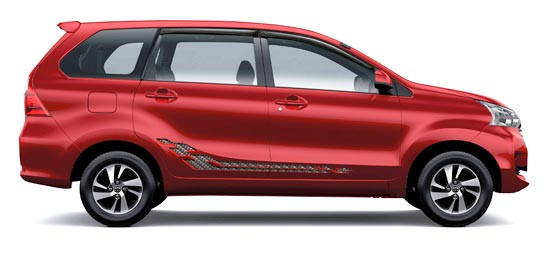
The January 2019 facelift gave the Avanza a redesigned front fascia with split-style headlights and a revised rear fascia. LED headlights became standard across the range, and the side mirrors were shared with the F800-series Toyota Rush. A shark-fin antenna and a new alloy wheel design rounded out the exterior changes. A GR Limited variant was offered for the Veloz grade, adding sportier trim to the top of the range.
2019 Interior and Equipment Changes
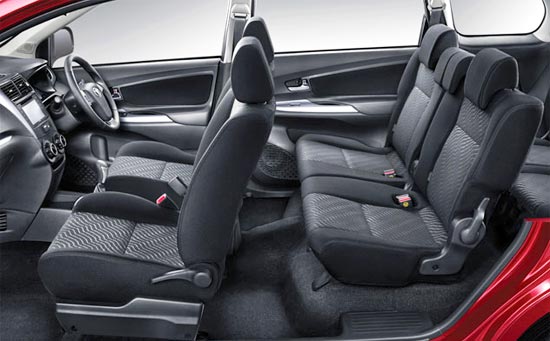
Inside, the 2019 update brought a new interior color, digital air-conditioner controls, and, on the G and Veloz grades, auto-retractable outer mirrors. The Veloz grade also gained a keyless-entry system with a push-start button. Suspension tuning was revised for the facelift, and the instrument cluster and switchgear were carried over. The cabin kept the Avanza’s core layout: three rows of seats in a compact footprint, with a 7-seat configuration on higher grades and a simpler bench layout on entry trims.
Engines and Specifications
For 2019 the Avanza was offered with two naturally aspirated four-cylinder engines from Toyota’s NR family, both fitted with Dual VVT-i and paired with a five-speed manual or four-speed automatic transmission:
- 1.3-liter 1NR-VE — approximately 95 horsepower and 121 Nm of torque
- 1.5-liter 2NR-VE — 103 horsepower (77 kW) at 6,000 rpm and 136 Nm of torque at 4,200 rpm
The 1.5-liter 2NR-VE displaces 1,496 cc. Drive goes to the rear wheels, and the rear-wheel-drive layout is a defining trait of the second-generation Avanza that sets it apart from the front-wheel-drive third generation that replaced it.

Dimensions and Key Figures
Measured on the 2019 Avanza Veloz 1.5, the figures are as follows:
| Dimension | 2019 Avanza Veloz 1.5 |
|---|---|
| Length | 4,200 mm |
| Width | 1,660 mm |
| Height | 1,695 mm |
| Wheelbase | 2,655 mm |
| Ground clearance | 200 mm |
| Fuel tank | 45 liters |
| Layout | Front-engine, rear-wheel drive |
Where the Avanza Is Sold
The Avanza is sold across Southeast Asia as well as in Mexico, Pakistan, Nepal, Bangladesh, Sri Lanka, the Middle East, the Caribbean, Egypt and parts of Africa. It was the best-selling passenger car in Indonesia every year from 2006 to 2019. By November 2018, roughly 2.75 million Avanza and Daihatsu Xenia units had been sold worldwide. At its peak in 2013, the Avanza accounted for about 17 percent of all car sales in Indonesia.
Release Date and What Came Next
The 2019 facelift went on sale in Indonesia from January 2019 and in Malaysia from 17 May 2019, where it was offered in 1.5 E, 1.5 S and 1.5 S+ grades; the 1.5 S+ added blind-spot monitoring and rear cross-traffic alert. Pricing varied by market and grade, so check local listings for accurate figures. The second-generation Avanza was eventually replaced by the front-wheel-drive W100 series, introduced in November 2021 and launched in Malaysia in 2022, ending the model’s long run of rear-wheel-drive, body-on-frame-free MPVs and passing the Veloz name to a standalone model.

Safety and Trim Levels
Anti-lock brakes with electronic brakeforce distribution became standard on all Indonesian Avanza models with the 2015 facelift, and dual front SRS airbags had already been made standard in 2013. The 2019 line-up in Indonesia was built around the 1.3 E, 1.3 G, 1.5 G and 1.5 Veloz grades, with the Veloz serving as the flagship. In Malaysia the second facelift adopted the Indonesian Veloz front fascia across all three grades. These safety and trim details carried over from the earlier second-generation updates rather than being new for 2019.