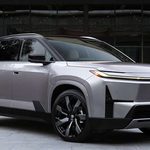
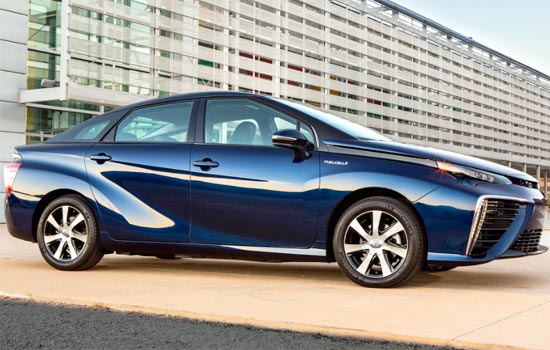
The 2019 Toyota Mirai is a real model — but it was not a redesign year. It was the mid-life version of Toyota’s first mass-produced hydrogen fuel-cell sedan, codenamed JPD10, which went on sale in Japan in December 2014 and reached US buyers as a 2016 model year car. A second, all-new Mirai arrived for 2021. The 2019 car therefore represents the first generation in its final form, with the powertrain, range and pricing that defined Toyota’s first hydrogen sedan.

What the Mirai Is
The Mirai is a mid-size hydrogen fuel-cell vehicle (FCV). Instead of burning gasoline, it combines hydrogen from two carbon-fiber-reinforced tanks with oxygen from the air in a fuel-cell stack to make electricity, which drives an electric motor. The only tailpipe emission is water vapor. Toyota calls the system the Toyota Fuel Cell System, and it borrows electric-motor and power-control parts from the company’s hybrid range to cut cost and improve reliability. Refueling takes roughly the same time as filling a gasoline car — Toyota has demonstrated hydrogen fills in under three minutes.
The Mirai grew out of more than two decades of Toyota fuel-cell research. The company began work on hydrogen fuel cells in the early 1990s and showed a string of concepts, including the FCV-R study at the 2011 Tokyo Motor Show, before putting the production car on sale. Toyota says its fuel-cell vehicles were subjected to more than 1,000,000 miles of road testing during development, including cold-weather trials in Canada and high-temperature testing in Death Valley.
Interior and Design
The first-generation Mirai is a four-seat sedan, with two individual seats in front and two in the rear, plus a large central tunnel where the fuel-cell stack and hydrogen tanks sit. The interior uses a driver-focused dash layout with a digital instrument cluster and a central touchscreen infotainment system. Because the car is sold only where hydrogen stations exist, Toyota emphasized comfort and technology rather than outright cargo volume, and the unusual packaging gives rear passengers a sense of space despite the compact exterior.

Powertrain and Specifications
The 4JM fuel-cell-powered electric motor drives the front wheels. It produces 113 kW (151 hp) and 335 N·m of torque, and it is fed by a 1.6 kWh nickel-metal-hydride battery that buffers power during acceleration. The hydrogen is stored in two tanks built from a three-layer carbon-fiber-reinforced plastic structure. The first Mirai rides on a 2,780 mm wheelbase.
| System | Specification |
|---|---|
| Traction motor | ”4JM” fuel-cell electric motor |
| Output | 113 kW (151 hp), 335 N·m |
| Battery | 1.6 kWh nickel-metal-hydride |
| Fuel storage | 122 L across two hydrogen tanks |
| Wheelbase | 2,780 mm |
Range, Efficiency and Refueling
According to the U.S. Environmental Protection Agency, the 2019 Mirai has a total range of 312 miles on a full tank, with a combined city/highway rating of 67 MPGe and 1.5 kg of hydrogen used per 100 miles. Those figures come from fueleconomy.gov, the US government’s official fuel-economy database. The main practical limitation is infrastructure: hydrogen stations are concentrated in California, Japan and a few European regions, which is why Toyota limited early sales to areas with refueling coverage.

Pricing, Rollout and Infrastructure
In the United States the 2019 Mirai started at $58,500 before government incentives, up from the 2017 base price of $57,500. In Japan, sales opened on 15 December 2014 at about 6.7 million yen before a government subsidy. The first cars were delivered to California customers in late 2015, and Toyota marketed the Mirai in Japan, the US and Europe wherever a hydrogen network existed. European sales began in September 2015, with the UK the first market outside Japan to deliver a car; Canada added the Mirai in Quebec from January 2018. A February 2017 recall covered roughly 2,800 early cars over a fuel-cell output-voltage issue.
Hydrogen availability, not vehicle capability, shaped the Mirai’s sales. By January 2018 California had 31 retail hydrogen stations in operation and US Mirai sales had passed the 3,000-unit mark, a small figure that reflected the limited refueling network rather than any shortfall in the car itself.
Competition and Context
When the Mirai launched, it was one of only a handful of hydrogen fuel-cell cars on sale anywhere, a small field that reflected the cost of fuel cells and the scarcity of refueling points. Rivals included the Hyundai Nexo, which competed directly with the Toyota in the markets where both were offered. That limited competition, combined with the infrastructure problem, is why fuel-cell cars remained a niche alongside battery-electric vehicles and hybrids.
The Second Generation (2021)
Toyota unveiled an all-new Mirai in October 2019 and began production in December 2020 for the 2021 model year. The second generation switched to rear-wheel drive on the TNGA GA-N platform, raised output to 182 hp and lifted the EPA range to 402 miles using three hydrogen tanks. It also moved to a longer 2,920 mm wheelbase. Readers interested in other Toyota models covered here can see the [https://toyotasuggestions.com/2019-toyota-matrix-redesign-and-price.html 2019 Toyota Matrix Redesign and Price] and the [https://toyotasuggestions.com/2019-toyota-noah-redesign-release-date-engine.html 2019 Toyota Noah Redesign, Release Date, Engine].
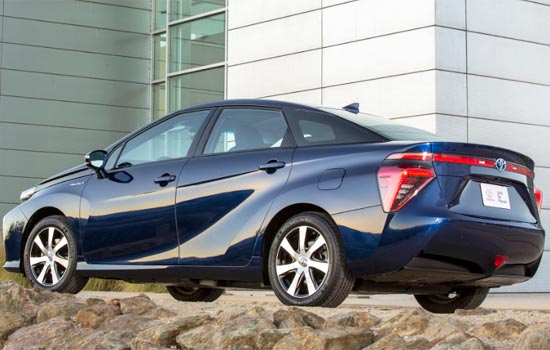
The Mirai’s name comes from the Japanese word for “future”, a deliberate statement about the technology it carried. Toyota positioned the car as a complement to its hybrids rather than a replacement for them, and it limited availability to regions where drivers could actually refuel with hydrogen.
Toyota tested the Mirai in extremes before launch, including cold-weather trials in Yellowknife, Canada, high-temperature testing in Death Valley and steep-grade climbs in San Francisco, and it crash-tested the car extensively at its Higashi-Fuji Technical Center to protect the fuel-cell stack and tanks in frontal, side and rear impacts.