The Toyota Sienta is a compact multi-purpose vehicle (mini-MPV) with sliding rear doors that Toyota has built since September 2003. For the 2019 model year the Sienta on sale was the second-generation car, coded XP170, which had debuted on 9 July 2015. Toyota sold it in Japan, Hong Kong, Singapore, Indonesia, Taiwan, Thailand and Laos, positioning it below the larger Noah/Voxy and above the Roomy in its home line-up. In Indonesia and Thailand it served as an upmarket alternative to the Avanza.
What the 2019 Sienta actually was
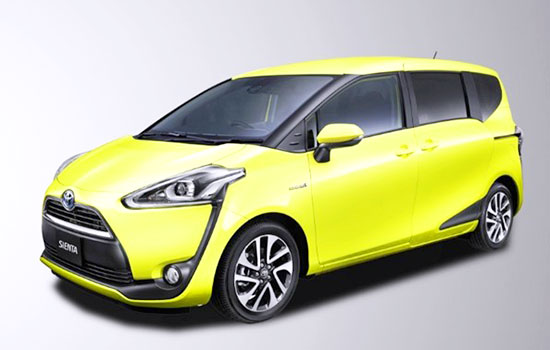
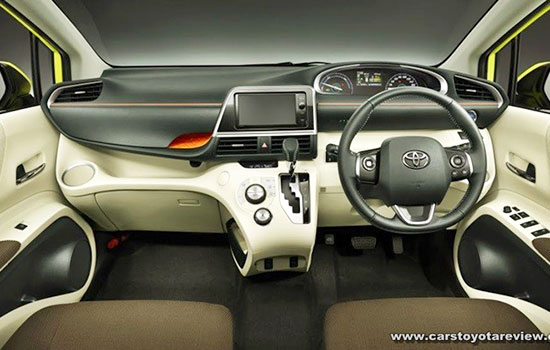
There was no all-new 2019 Sienta. The XP170 second generation arrived in July 2015 with a rounded exterior that Toyota said was inspired by the shape of a trekking shoe, replacing the boxy first-generation model. Toyota then ran two rounds of updates. A Japanese-market facelift went on sale on 11 September 2018 and added a five-seat variant called Funbase along with a mildly revised grille. A separate Southeast Asian facelift launched in Thailand on 6 August 2019 and in Indonesia on 2 September 2019; those cars received a new grille, revised interior parts and armrests for the driver and second-row passengers.
The Sienta name is sometimes confused with the larger Toyota Sienna, which is a different vehicle sold mainly in North America. The Sienta is a small, sliding-door MPV about 4.2 meters long, not a full-size minivan. Several markets received only one round of changes, so a 2019 Sienta built in Japan and one built in Indonesia do not look identical.
A short history of the Sienta
The first-generation Sienta (XP80) went on sale in September 2003, based on the Vitz/Yaris and powered by a 1.5-liter VVT-i four-cylinder producing 110 PS (81 kW) at 6,000 rpm through a CVT. It was facelifted in May 2006, when production moved from Toyota’s Takaoka plant to Daihatsu’s Kyoto plant. Toyota paused sales in late 2010 while it tried to replace the car with the Passo Sette, then resumed Sienta sales in May 2011 after customers asked for it back. A sportier Sienta Dice variant joined the range, and first-generation production finally ended in June 2015. The second generation replaced it that July.
Engines and powertrain
The XP170 Sienta used a family of small four-cylinder engines, and the choice depended on the market:
- 1.5 L 2NR-FE four-cylinder — Taiwan and Southeast Asia
- 1.5 L 2NR-FKE four-cylinder with VVT-iE — Japan
- 1.5 L 1NZ-FE four-cylinder — Japan (four-wheel-drive NCP175)
- 1.8 L 2ZR-FAE four-cylinder — Taiwan
- 1.5 L 1NZ-FXE four-cylinder plus a 45 kW electric motor — hybrid (NHP170, Japan)
Transmissions were a six-speed manual in Southeast Asia, a CVT for the conventional gasoline models and an eCVT for the hybrid. The hybrid used a power-split system with a 6.5 Ah nickel-metal hydride battery. Toyota quoted 27.2 km/L on the Japanese JC08 test cycle for the hybrid Sienta and 20.6 km/L for the front-wheel-drive non-hybrid. A Stop & Start system was standard. JC08 figures are optimistic and are not directly comparable with US EPA ratings.
Dimensions, seating and practicality

The second-generation Sienta is 2,750 mm between the axles, 4,235–4,260 mm long, 1,695 mm wide and 1,675–1,695 mm tall, with a curb weight of 1,310–1,370 kg. Toyota offered three interior layouts: seven seats, six seats, and a five-seat version. A Welcab model was built for wheelchair users, with a folding passenger-side seat and a manual forward-tilting ramp; the second row can also fold to give a five-seat car with luggage space when the ramp is not in use.
Indonesian cars sat about 20 mm higher than Japanese cars and moved the shift lever to the floor to make room for the six-speed manual and a grip handbrake. Buyers who need more space and off-road ability in the same showrooms often compare the Sienta with larger Toyota models such as the 2019 Toyota SW4 Price, Engine and Release Date, which is a body-on-frame SUV.
| 2019 Toyota Sienta (XP170) | Specification |
|---|---|
| Wheelbase | 2,750 mm |
| Length | 4,235–4,260 mm |
| Width | 1,695 mm |
| Height | 1,675–1,695 mm |
| Curb weight | 1,310–1,370 kg |
| Engines | 1.5 L and 1.8 L four-cylinders; 1.5 L hybrid |
| Hybrid motor | 45 kW, 6.5 Ah NiMH battery |
| Transmissions | 6-speed manual, CVT, eCVT |
| Seating | 5, 6 or 7 |

Price and release date

Toyota does not publish a single global price for the Sienta, so any “2019 Sienta price” figure is market-specific. In Malaysia the Sienta launched on 17 August 2016 from RM93,000, and an update in March 2018 raised the price to RM97,000 before Malaysian sales ended in late 2019. Indonesian production at Toyota Motor Manufacturing Indonesia in Karawang, West Java, began in late June 2016 and ended in February 2023, when Toyota withdrew the model to focus on the Avanza and Veloz. In Japan and Thailand the Sienta continued in the line-up into the 2020s, and it remained on sale in Japan until a third generation arrived later.
2019 Sienta at a glance
- Generation: second generation, XP170
- Body: five-door mini-MPV with sliding rear doors
- Layout: front-engine, front-wheel drive; four-wheel drive on Japanese 1NZ-FE cars
- Facelifts: Japan 11 September 2018; Thailand 6 August 2019; Indonesia 2 September 2019
- Markets: Japan, Hong Kong, Singapore, Indonesia, Taiwan, Thailand, Laos
- Sold in Malaysia from August 2016 to late 2019
Sources
- Toyota Sienta — Wikipedia
- Toyota Sienta minor change announcement, 11 September 2018
- Toyota Sienta MPV launched in Malaysia, from RM93k
- 2018 Toyota Sienta updated, RM97k
- 2019 Toyota Sienta facelift: Thai prices and specs
What came after
The XP170 Sienta was eventually replaced by a third generation, which Toyota introduced in Japan in 2022 and later offered in Singapore. That car is a separate model from the 2019 vehicle, so buyers looking at a 2019 Sienta are looking at the facelifted XP170, not the newer chassis.