The Toyota Tarago is the name Toyota used in Australia for its Previa/Estima people mover. The nameplate ran in Australia from 1983 until 2019, and the 2019 Tarago was the final model year of the fourth-generation van. Production ended in the last weeks of 2019 and the model was replaced by the HiAce-based Granvia, so the 2019 car is the last Tarago rather than a stepping stone to another new one.

What the Tarago Was
The Tarago was sold alongside the Estima in Japan and the Previa in other markets; all three names covered the same vehicle. The line spanned four generations: a rebadged TownAce/MasterAce-based van (1983–1990), then three generations of the dedicated Previa (from 1990), with new models released in 2000 and 2006. The name comes from the town of Tarago in New South Wales. Toyota Australia sold 104,444 Taragos across the model’s 36-year run. This history is set out on Wikipedia and Wikipedia.
The Fourth-Generation Tarago (2006–2019)
The final-generation Tarago (the XR50) went on sale in Australia in March 2006. It moved the engine to the front and shared its platform with the Camry, which lowered the floor and made it easier to get in and out of than the mid-engined earlier vans. It was offered with seven or eight seats and with either front- or all-wheel drive. Over its long life it received facelifts in 2009, 2012 and 2016, the last bringing an updated interior and additional standard equipment.
Engines and Performance
In its final years the Australian Tarago came with a choice of two gasoline engines and no diesel option:
- 2.4-liter four-cylinder: 125 kW (about 168 hp) and 224 N·m, with a seven-speed CVT automatic; rated at 8.9 L/100 km combined
- 3.5-liter V6: 202 kW (about 271 hp) at 6,200 rpm and 340 N·m at 4,700 rpm, with a six-speed automatic; rated at about 10.2–10.3 L/100 km combined
These figures are listed by CarsGuide, and the V6 output was confirmed in a Drive road test of the range-topping 2019 Tarago Ultima.

Trim Levels and Pricing
The 2019 Tarago was offered in GLi, GLX and Ultima grades. Four-cylinder models started at about $45,490, while the V6 range began near $50,490 for the GLi and reached roughly $65,261 for the V6-only Ultima, before on-road costs. Toyota also supplied the Tarago as a taxi and as a wheelchair-accessible version with a longer wheelbase and an integrated ramp.

The End of the Tarago
Toyota announced in May 2019 that a new people mover called the Granvia would replace the Tarago by the end of that year. The Granvia is based on the HiAce van rather than a dedicated passenger-car platform, a change Toyota presented as more economical to build. The two models were sold side by side briefly while Tarago stock lasted. The final Tarago was built in late 2019, and the nameplate was removed from Toyota Australia’s website by early 2020. GoAuto covered the announcement.
What Buyers Can Get Today
There is no new Tarago. Buyers who want the nameplate look to the used market, where fourth-generation examples are common, or they consider its replacement, the Granvia. Rival eight-seat people movers such as the Kia Carnival outsold the Tarago heavily in its final years, and the model’s long, lightly updated life is the main thing to weigh when comparing a used Tarago with a newer competitor.
Related Toyota Models
Other Toyota models discussed on this site include the 2019 Toyota Tundra Price, Engine and Specs and the 2019 Toyota Hilux Diesel, Engine Specs and Price.
Interior and Equipment
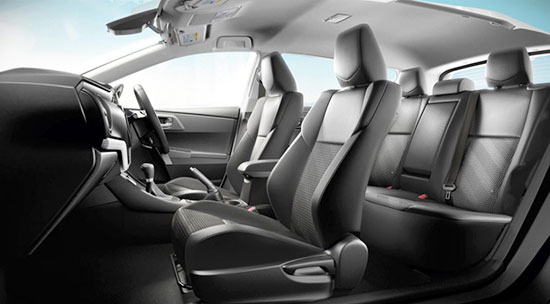
The fourth-generation Tarago was a family-first vehicle. The cabin used a flexible seating layout with sliding second-row seats, and higher trims added features such as a center touchscreen infotainment system, a color LCD driver display and automatic headlights. Because the van was built on a car platform, it drove and rode more like a large wagon than a commercial van, which was its central selling point for private buyers and taxi operators alike.
The Earlier Generations
The Tarago reached Australia in February 1983 as a rebadged TownAce/MasterAce van and was sold in that form until 1990. The second generation, from 1990 to 2000, was the mid-engined Previa, an aerodynamic shape with the engine mounted under the front seats and near-even front-to-rear weight distribution. The third generation, sold from 2000 to 2006, moved the engine to the front and shared its underpinnings with the Camry, which lowered the floor and made access easier.
Why the Tarago Lost Ground
Once Australia’s best-selling people mover, the Tarago was overtaken by cheaper, more modern rivals. In the first four months of 2019 the Kia Carnival recorded 2,272 sales, roughly ten times the Tarago’s volume for the same period. Toyota’s response was to replace the dedicated car-based van with the HiAce-based Granvia rather than develop another passenger-car platform.
Summary for Buyers
The 2019 Tarago is the last of a 36-year nameplate in Australia, sold in GLi, GLX and Ultima grades with a 2.4-liter four-cylinder or a 3.5-liter V6. It is a comfortable, car-based seven- or eight-seater, but it trailed newer and cheaper rivals by the end of its life. Buyers weighing a used Tarago against a Granvia or a Kia Carnival should balance the older van’s simpler engineering against the newer models’ equipment.