The Toyota uBox is not a production car, and there was never a 2019 model. It was a single concept vehicle unveiled on 12 April 2016 at the SAE World Congress at the Cobo Center in Detroit, designed, engineered and hand-built by graduate students at Clemson University in partnership with Toyota Motor North America. Toyota writes the name as uBox.
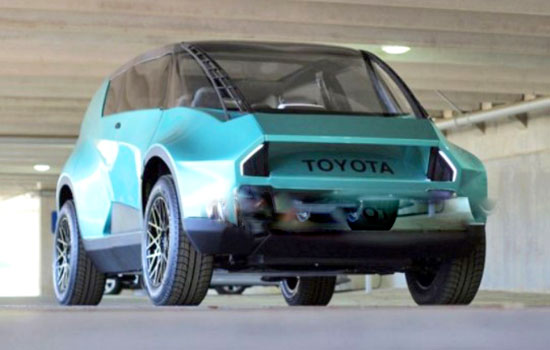
What the uBox actually was
The uBox was the sixth vehicle produced under Deep Orange, a graduate program at Clemson University’s International Center for Automotive Research (CU-ICAR). Toyota’s press release describes it as the result of a two-year collaboration between Toyota Motor North America designers and engineers and Clemson students. The build team consisted of 16 Clemson engineering students and two design students from ArtCenter College of Design, according to SAE’s report on the unveiling.
About 20 technology and supplier companies provided products, funding and mentoring to the team that designed, engineered and built the vehicle.
Deep Orange is structured as a two-year capstone experience: each student cohort takes a vehicle from a market brief through design, engineering and a physical build. The uBox, also called Deep Orange 6, was the sixth vehicle in the series. Toyota supervised and approved the technology implementation, while the students did the design and build work.
Toyota has never explained the name in detail, and it is not an acronym; the concept was presented simply as the uBox.
Why it existed
Deep Orange puts students through the entire vehicle development process, from market research and design studies to engineering and manufacturing. “Deep Orange gives students hands-on experience with the entire vehicle development process, from identifying the market opportunity through the vehicle build,” Johnell Brooks, an associate professor in Clemson’s graduate engineering program, said at the time. Toyota framed the uBox as a concept aimed at Generation Z, specifically a young entrepreneur who wants utility and recreation at the weekend and office space or work use during the week.
A drivable concept, not a show model
The uBox was a drivable concept rather than a static display, which is unusual for a student project. SAE’s report notes that CU-ICAR graduate students were responsible for the structural roof design, the functional layout of the pultruded roof members, torsional rigidity and roof-crush compliance, and system assembly, while Toyota management supervised and approved the technology.
Design and engineering highlights
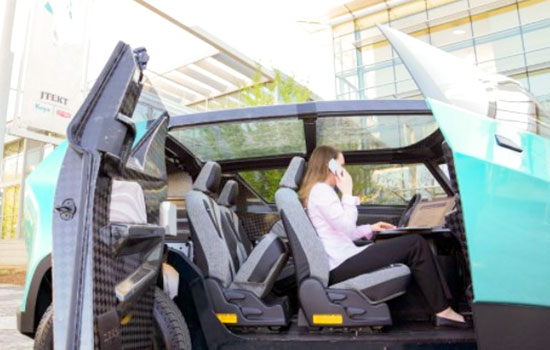
The most technically interesting feature was a curved glass roof supported by composite carbon-fibre rails bonded with aluminum. The students developed a pultrusion technique to make the roof structure, which Toyota’s executive program manager Craig Payne described as an industry-first manufacturing technique achieved by students. The uBox also had a flexible interior: a flat floor, and nesting and removable seats that could be rearranged to create a mobile office or to haul bulky cargo. Vents, dashboard and display bezels were designed to be personalized.
- A curved glass roof supported by composite carbon-fibre rails bonded with aluminum
- A pultruded roof structure, an industry-first manufacturing technique for a student project according to Toyota
- A flat interior floor with nesting and removable seats
- Customizable vents, dashboard and display bezels
- 110-volt AC outlets inside and outside the vehicle
- An all-electric powertrain

How the Toyota-Clemson collaboration worked
Toyota Motor North America provided designers, engineers and management oversight, while Clemson provided the student team and the CU-ICAR facilities. ArtCenter College of Design contributed two transportation-design students. Supplier and technology companies added parts, funding and mentoring. This is the same model Toyota has used for other Deep Orange projects, and it gives the company a way to explore ideas for future customers without committing a production program.
Electric powertrain and outlets
The uBox was all-electric. Because it carried a large battery, the team also fitted it with 110-volt AC outlets both inside and outside the cabin, so the vehicle could act as a mobile power source for consumer electronics, power tools and other devices. Autoweek’s report on the concept and Clemson’s student newspaper The Tiger both described this as a central part of the pitch to an entrepreneurial, outdoor-oriented buyer.
What happened after 2016
The uBox was shown at the SAE World Congress from 12 to 14 April 2016 and then remained a one-off show vehicle. It never entered production, and Toyota never assigned it a model year. No uBox was built for sale in 2017, 2018 or 2019, and none is available today.
Because Deep Orange is an academic program, each vehicle it produces is a one-off. There is no parts catalog, factory or dealer network behind the uBox. The program has continued with later cohorts and different industry partners, but the uBox itself was never scheduled for production and Toyota never published a launch date or a price for it.
Why the ‘2019’ label is wrong

The uBox is a good example of a recurring pattern on car blogs: a student or show concept is published with a future model year attached to it, and later pages treat that invented year as fact. The uBox was a 2016 concept with no production plan, so a “2019 Toyota uBox” could not exist. It was also not a preview of a specific Toyota production model.
What Toyota actually sells
For an electric Toyota, buyers today have the bZ4X. The uBox remained a demonstration of what the Deep Orange students and Toyota engineers could build together, and the program has continued since with new student teams and new industry partners. If you are interested in the real small Toyotas of that era, see the 2019 Toyota 86 Review and the 2019 Toyota Wigo Review, or return to Car Review for more.