There was no 2019 Toyota Verso. Toyota built the Verso, a compact multi-purpose vehicle (MPV), from 2009 until 2018, and the model was withdrawn in Europe in 2018 without a direct replacement. The 2019 model year that this nameplate is sometimes credited with never existed. What follows is the accurate history of the Verso, the specifications of the car as it was last sold, and the options that stand in for it today.
What the Toyota Verso Was
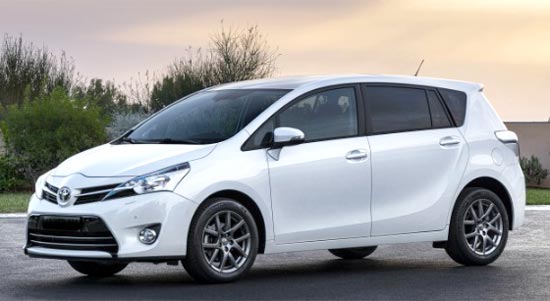
The Verso was a five- or seven-seat compact MPV, positioned above the smaller Verso-S (also called Space Verso) in Toyota’s European range. It succeeded the Corolla Verso and was unveiled at the 2009 Geneva Motor Show, reaching showrooms later that year. Toyota Motor Europe stopped production in 2018; a related, China-only version called the E’Z had already ended in 2017. The name comes from the English word “versatility.”
The Verso was marketed in Europe, Morocco, South Africa, China and Israel. Toyota did not sell it in Japan, and it was not offered in North America, where the similar Matrix served the same role. A facelifted version appeared at the 2012 Paris Motor Show with styling shared with the E180 Auris. Across its life the Verso was assembled in Turkey, at Toyota Motor Manufacturing Turkey in Arifiye, Sakarya.
The Corolla Verso Predecessor
The Verso name first appeared on the Corolla Verso, a compact MPV sold in Europe from 2001. A second-generation Corolla Verso followed in 2004, based on the Corolla platform and offered with up to seven seats. Toyota also offered a larger Avensis Verso (badged SportsVan in some markets). The 2009 Verso replaced all of these with a dedicated model built on the Toyota New MC platform, which it shared with contemporary Corolla and Auris models.
Engines and Dimensions
The Verso was offered with a range of gasoline and diesel four-cylinder engines. The gasoline choices were a 1.6-liter and a 1.8-liter unit with Valvematic variable valve timing; the diesels were a 1.6-liter, a 2.0-liter and a 2.2-liter turbocharged D-4D, the last also available in a higher-output D-CAT form. Power was sent to the front wheels through a six-speed manual or Toyota’s Multidrive S continuously variable transmission.
| Attribute | Toyota Verso (AR20) |
|---|---|
| Production | 2009–2018 (Europe); 2011–2017 (China, as E’Z) |
| Body style | 5-door MPV, 5 or 7 seats |
| Layout | Front-engine, front-wheel drive |
| Platform | Toyota New MC |
| Wheelbase | 2,780 mm (109.4 in) |
| Length | 4,440–4,450 mm (174.8–175.2 in) |
| Width / height | 1,790 mm / 1,620–1,640 mm |
| Engines | 1.6 / 1.8 L gasoline; 1.6 / 2.0 / 2.2 L diesel |
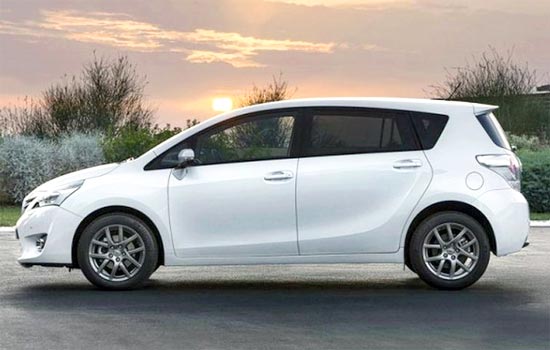
For its size, the Verso packed a long wheelbase — 109.4 inches, longer than the contemporary Corolla sedan — which is what freed up the interior space that defined the model. The trade-off was a taller, boxier body that prioritized headroom and easy access over aerodynamics and styling.
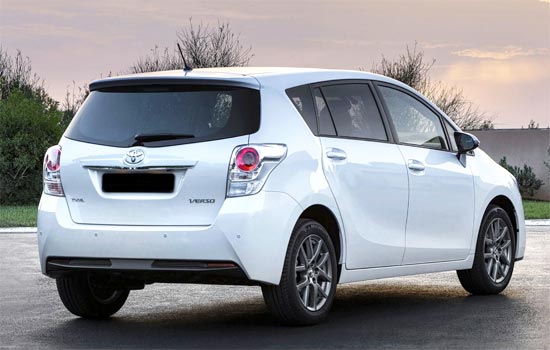
Styling changed with the 2012 facelift, which gave the Verso a front end closer to the Auris of the time, with a sleeker grille and revised lights. Whichever version is chosen, the Verso reads as a compact people carrier rather than a sporty car; its proportions are tall and upright, and visibility out of the boxy glasshouse is a strong point for urban driving.
Interior and Seating
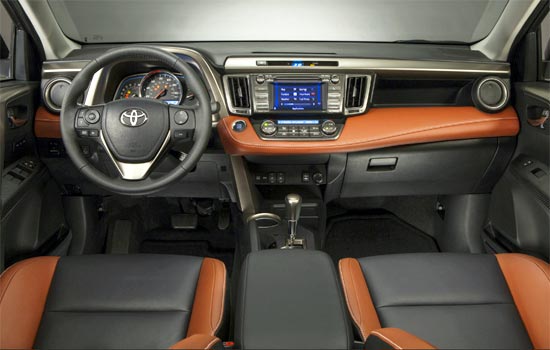
The Verso’s main draw was its flexible interior. It could be ordered with five or seven seats, and the middle row could slide and fold, while the rearmost pair folded flat into the floor. That made the car practical for families who needed occasional extra seats rather than a permanent three-row layout. The cabin followed conventional Toyota ergonomics of the period, with a raised seating position and a large windshield that suited the MPV’s role as a family transport. Storage was generous, with cubbies and trays spread through the cabin.
Safety
The Verso did well in independent crash testing. In Euro NCAP’s 2010 assessment the car earned an overall five-star rating, scoring 89 percent for adult occupant protection and 75 percent for child occupant protection. European media at the time described it as among the safest vehicles in its class. Later versions added Toyota Safety Sense features as the technology rolled out across the range.
Sales and Why the Verso Was Discontinued
By the late 2010s European buyers had largely shifted from compact MPVs toward small crossovers, which offered similar space and a higher driving position with more fashionable styling. The Verso’s European sales peaked at 37,679 units in 2010, held between roughly 32,000 and 34,000 a year through 2014, then slipped to about 25,000 in 2017 and just 6,633 in 2018. Toyota chose to end production in 2018 rather than develop another MPV generation. Toyota’s own C-HR and RAV4 crossovers, and later the Corolla Cross, took over the space the Verso had occupied.

What Buyers Can Choose Instead
There is no new Verso to buy. Shoppers who want a compact Toyota with family-friendly packaging now look to crossovers such as the C-HR, the Corolla Cross or the RAV4, or to the ProAce City van-based family car in markets where Toyota offers it. On the used market, Versos from roughly 2009 to 2018 remain available in Europe; a late diesel example is the common choice for high-mileage use, while the 1.8-liter gasoline suits lower-mileage buyers. Buyers should check the service history, as the diesel engines require diligent maintenance.
For those cross-shopping other Toyota family cars, related coverage includes the 2019 Toyota Corolla SE Review and the 2019 Toyota Avalon Limited Review. More general Car Review coverage is also available on this site.