The Toyota Vitz is the name used in Japan for the model sold internationally as the Toyota Yaris, a subcompact hatchback. The 2019 Vitz belongs to the third generation, coded XP130, which was sold in Japan from December 2010 until December 2019, when Toyota replaced it and dropped the Vitz name in favor of Yaris for the 2020 model. The third-generation car was facelifted twice in Japan, most notably in January 2017, when a hybrid version was added to the range.
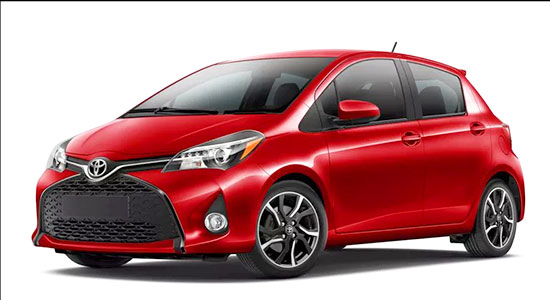
The 2019 Vitz and the XP130 Generation
The XP130 Vitz was launched in Japan on 22 December 2010, alongside European production of the equivalent Yaris from 2011. It remained exclusive to Toyota Netz dealerships in Japan, as earlier Vitz generations had been. The 2019 car is the second-facelift version introduced in January 2017, which brought Toyota Safety Sense C as an option and, for the first time, a hybrid grade. Toyota rebranded the model as the Yaris for 2020 to broaden its appeal beyond the younger buyers the Vitz name had attracted.
Engine Range

The XP130 Vitz was offered in Japan with a choice of four-cylinder and three-cylinder gasoline engines, plus a hybrid. The engines ranged from a 1.0-liter 1KR-FE three-cylinder, through a 1.3-liter 1NR-FE or 1NR-FKE four-cylinder, to a 1.5-liter 1NZ-FE four-cylinder. From January 2017 a hybrid model used a 1.5-liter 1NZ-FXE engine paired with an electric motor, the same hybrid system family used in the Toyota Aqua. Transmission choices varied by engine and market and included a five- or six-speed manual, a four-speed automatic and, in Japan, a CVT, while the hybrid used an eCVT. The smaller-displacement engines also let Japanese buyers choose a lower annual road tax bracket.
Exterior and Dimensions

The third-generation Vitz is a compact five-door hatchback measuring about 3,945 mm (155.3 in) long in 2017 to 2019 form, 1,695 mm (66.7 in) wide and 1,490 to 1,530 mm (58.7 to 60.2 in) tall, on a 2,510 mm (98.8 in) wheelbase, with curb weight from about 970 to 1,130 kg. A notable design feature was a single front windshield wiper rather than the usual pair. Toyota reduced aerodynamic drag to a coefficient of about 0.285. Front- and all-wheel-drive versions were sold in Japan, and the taller body of the AWD model partly explains the range of heights.
Interior and Equipment

The XP130 interior relocated the instrument cluster to sit directly in front of the driver and increased cabin space over the previous generation. The facelifted car could be equipped with the Toyota Safety Sense C package, which included lane departure alert, automatic high beam and a pre-collision system that warned between roughly 15 and 140 km/h and could apply the brakes between about 10 and 80 km/h. Up to nine airbags were fitted, including front and rear side-curtain airbags and front seat-cushion airbags. Grades in Japan included the F, U, Jewela and, in earlier years, the sporty RS.
Sporty Versions and the GR Series
Toyota gave the Vitz a sporty variant for much of its life. The RS model was offered in the early years, and in September 2017 Toyota launched its new GR series, which replaced the older G Sports line and included both a Vitz GR Sport and a Vitz GR. These versions added revised suspension, bodywork and badging, and the GR name went on to become Toyota’s global performance sub-brand. High-performance GRMN editions with turbocharged or supercharged engines were also built in limited numbers, though they sat far above the standard Vitz range.
Availability and the Yaris Name Change

The 2019 Vitz was sold in Japan under the Vitz name, while the same car was sold as the Yaris in Europe, Australia and North America, where the XP130 generation continued into 2020. In 2020 Toyota introduced the XP210 Yaris and retired the Vitz badge in Japan, ending a name that had been used since 1999. Since the third-generation car ended production at the end of 2019 in Japan, a 2019 Vitz is now a used vehicle, and buyers should expect the compact dimensions, modest engines and strong fuel economy typical of the model.
Hybrid Model
The Vitz Hybrid introduced in January 2017 combined a 1.5-liter 1NZ-FXE engine with an electric motor and a small battery, using the same Hybrid Synergy Drive family as the Aqua and Prius c. It offered lower fuel consumption than the gasoline models and used an eCVT rather than a conventional automatic, becoming the most efficient model in the Vitz range.
Markets and the Yaris Name
Outside Japan the XP130 was sold as the Yaris. European production began at Toyota’s Onnaing plant in France in June 2011, and from 2013 to 2019 that plant also built cars for the United States, Canada and Puerto Rico. In Japan a sharp drop in Vitz sales, from roughly 160,000 a year to about 87,000, prompted Toyota to adopt the Yaris name for the 2020 model in order to appeal to a broader and older group of buyers.
Different markets took different engine and trim mixes: European Yaris buyers could choose 1.0-liter, 1.3-liter and 1.5-liter gasoline engines and a 1.4-liter diesel, while Japan focused on the 1.0-, 1.3- and 1.5-liter gasoline units plus the hybrid. The sporty GR and GRMN versions, developed through Toyota’s Gazoo Racing program, were produced in limited numbers and are now collectible. Any 2019 Vitz is a used car rather than a current model.