The 2020 Toyota Highlander was the fourth generation of Toyota’s three-row mid-size crossover. Toyota unveiled it on April 17, 2019 at the New York International Auto Show, and U.S. sales began later that year for the 2020 model year. The redesign moved the Highlander to the TNGA-K platform that also underpins the Camry, RAV4 and Avalon, replaced the previous V6 hybrid with a four-cylinder hybrid, and made Toyota Safety Sense 2.0 standard. It succeeded a third generation that had been on sale since the 2014 model year.

What Was New for 2020
Toyota treated the 2020 Highlander as a ground-up redesign rather than a facelift. The most significant changes were structural and under the hood:
- A switch to the TNGA-K platform, with a body roughly 2.4 inches longer than before and all of the added length dedicated to rear cargo space
- Toyota Safety Sense 2.0 fitted as standard on every trim, adding Lane Tracing Assist and Road Sign Assist to the existing pre-collision system, radar cruise control and lane departure alert
- A new 2.5-liter four-cylinder hybrid powertrain in place of the outgoing V6 hybrid
- The four-cylinder gasoline engine was dropped, leaving the 3.5-liter V6 as the only gas option
- An available 12.3-inch touchscreen, which Toyota said was the largest in the segment at launch
- A choice of seven- or eight-seat layouts
Exterior Design
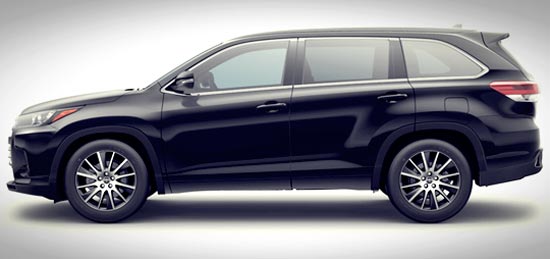
The 2020 Highlander adopted a more conservative face than the model it replaced, with a smaller trapezoidal grille and slimmer LED headlights separated from the grille. Blacked-out A-pillars created a ‘floating roof’ effect. At the rear, two-piece wraparound taillights and sculpted corners gave the SUV a cleaner look. The overall silhouette stayed close to the third-generation model, so the redesign was easiest to spot in the details.
Interior, Seating and Cargo
The Highlander came in seven- and eight-seat configurations. The seven-seat version used second-row captain’s chairs, while the eight-seat version used a second-row bench. Toyota said the redesigned second row could slide further to improve access to the third row. Available equipment included a panoramic sunroof, a power tailgate, heated and ventilated front seats, leather upholstery, a head-up display and a JBL audio system. Third-row space remained tight, which is typical of the class.

Powertrains: A 295-HP V6 and a 243-HP Hybrid
The standard engine was a 3.5-liter V6 (Toyota code 2GR-FKS) producing 295 horsepower and 263 lb-ft of torque, matched to an eight-speed automatic transmission and a choice of front- or all-wheel drive. Toyota carried this engine over from the previous generation, where it had been introduced as part of a mid-cycle update.
The hybrid paired a 2.5-liter four-cylinder with two electric motors for a combined 243 horsepower, driving through an electronically controlled continuously variable transmission (eCVT). Front-wheel drive was standard on the hybrid, and an all-wheel-drive hybrid was also offered. The new hybrid system was a smaller, more efficient design than the V6 hybrid it replaced.

Fuel Economy
The U.S. Environmental Protection Agency rated the 2020 Highlander as follows:
- V6, front-wheel drive: 20 mpg city, 28 mpg highway, 23 mpg combined
- V6, all-wheel drive: 20 mpg city, 27 mpg highway, 23 mpg combined
- Hybrid, front-wheel drive: 36 mpg city, 35 mpg highway, 36 mpg combined
- Hybrid, all-wheel drive: 35 mpg city, 35 mpg highway, 35 mpg combined
The hybrid was the efficiency leader of the range, beating the V6 by roughly 13 mpg combined while giving up around 50 horsepower. Toyota’s own material described the gas V6 as returning up to 24 mpg combined in its most efficient configuration.
Dimensions and Towing
The fourth-generation Highlander rode on a 112.2-inch wheelbase, and Toyota quoted a curb weight of roughly 4,370 pounds for the V6 all-wheel-drive model. Maximum towing capacity was 5,000 pounds, and maximum payload was about 1,565 pounds. Those figures put the Highlander in line with other mid-size three-row crossovers such as the Honda Pilot and Ford Explorer.
Hybrid vs. V6: What the Numbers Show
The two powertrains served different buyers. The V6 offered 295 horsepower and a 5,000-pound tow rating, which made it the choice for buyers who needed to pull a trailer. The hybrid made 243 horsepower but returned 36 mpg combined in front-wheel-drive form, a large advantage over the V6’s 23 mpg combined. Over typical annual mileage the fuel savings were substantial, though the hybrid carried a higher purchase price and could not match the V6’s towing figure. The hybrid also used a continuously variable transmission rather than the V6’s conventional eight-speed automatic.
Pricing and Trim Levels
At launch Toyota priced the 2020 Highlander from $34,600 for the base L model, about $2,770 more than the cheapest 2019 Highlander. The LE started at $36,800, and the hybrid line began at $38,200. Higher gas trims included the XLE, Limited and Platinum, while the hybrid range topped out near $50,000. All-wheel drive was available on most trims.

What Buyers Can Expect
Because the 2020 Highlander was the first year of the fourth generation, it is one of the better-equipped early examples on the used market. The fourth generation continued with annual updates for several model years before the nameplate moved on to a new generation. Buyers shopping a used 2020 should check whether the vehicle is the V6 or the hybrid, since the two have very different running costs, and confirm whether the vehicle has the seven- or eight-seat layout.