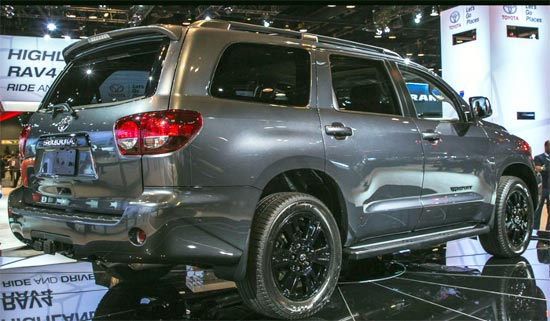
The 2020 Toyota Sequoia was a full-size, three-row SUV built on the same body-on-frame architecture as the Tundra pickup. It belonged to the long-running second generation (XK60), which began with the 2008 model year and continued through 2022. The 2020 model year is notable for adding the first TRD Pro trim to the Sequoia line and for bringing modern connectivity and driver-assistance features to an otherwise familiar package.

Where the 2020 Sequoia Fits
The Sequoia launched for 2001 as Toyota’s first mainstream full-size SUV in North America, sharing its frame, engine and dashboard with the Tundra. A second generation followed for 2008, with a three-trim lineup of SR5, Limited and Platinum. A light refresh for 2018 added standard LED lighting, three new colors and trim-specific grilles, plus an optional TRD Sport package. The 2020 model was a further update of that design rather than a redesign.
Powertrain and Performance
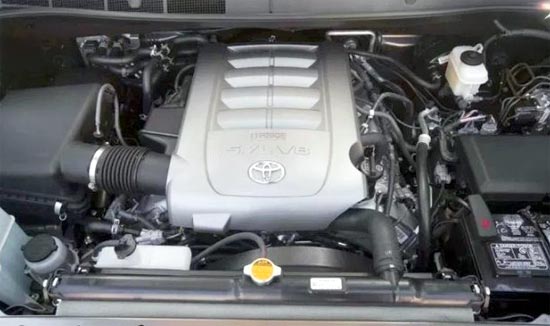
Every 2020 Sequoia used a 5.7-liter 3UR-FE V8 engine paired with a six-speed automatic transmission, producing 381 hp at 5,600 rpm and 401 lb-ft of torque at 3,600 rpm. Rear-wheel drive was standard and four-wheel drive was offered across the range. Fuel economy was rated at 13 mpg in the city and 17 mpg on the highway in two-wheel-drive form, and about 14 mpg combined with four-wheel drive.
TRD Pro and New Features for 2020
The headline addition for 2020 was the TRD Pro package, an off-road oriented trim with aluminum-bodied internal-bypass Fox shock absorbers, 18-inch forged alloy wheels, a heritage “TOYOTA” grille, Rigid Industries fog lamps, a tube-style roof rack and TRD carpet mats. Toyota also made Apple CarPlay and Android Auto available and introduced the Toyota Safety Sense-P suite, which bundled forward collision warning with automatic braking, lane keeping assist, adaptive cruise control and blind spot monitoring.

Size, Seating and Towing
The second-generation Sequoia seated seven or eight passengers in three rows and weighed about 5,730 lb. Cargo space behind the third row was roughly 18.9 cubic feet. Maximum towing capacity was 7,400 lb when properly equipped. As with other large body-on-frame SUVs, the third row was tight for adults and best suited to shorter trips, and the power-folding third row made it easier to open up load space.
Pricing
Manufacturer’s suggested retail prices for the 2020 Sequoia trim levels were as follows:
- SR5: $49,980 (2WD) / $53,205 (4WD)
- TRD Sport: $52,695 (2WD) / $55,920 (4WD)
- Limited: $58,990 (2WD) / $62,215 (4WD)
- TRD Pro: $64,105 (4WD only)
- Platinum: $66,020 (2WD) / $69,245 (4WD)
These figures excluded destination charges and options.
The 2023 Redesign
The second-generation Sequoia was finally replaced for the 2023 model year. The third-generation SUV moved to Toyota’s GA-F platform, switched to a solid rear axle, and adopted a 3.4-liter twin-turbocharged hybrid V6 as its powertrain in most trims. Towing capacity rose to between 9,300 and 9,520 lb depending on trim, and a new flagship Capstone trim joined the lineup alongside the SR5, Limited, Platinum and TRD Pro.
Buying a 2020 Sequoia Today
A used 2020 Sequoia offers V8 power, eight-passenger capacity and strong towing hardware, at the cost of fuel economy. Its safety and infotainment updates make it more usable than earlier second-generation cars, while the 2023-and-newer model brings the hybrid V6 and higher towing ratings. Buyers should compare both generations against the Toyota 4Runner and Land Cruiser, which bookended the Sequoia in Toyota’s North American SUV lineup until the Land Cruiser’s US withdrawal after 2021.
Second-Generation Background
The second-generation Sequoia debuted at the 2008 Los Angeles Auto Show and went on sale shortly afterward. It switched from the first generation’s 4.7-liter V8 to a choice of a 4.6-liter or 5.7-liter V8, and by the 2019 model year only the 5.7-liter remained. Toyota refreshed the design for 2018 and again for 2020, stretching a generation that ultimately ran 15 model years. Over that run the lineup gained a Platinum trim at launch, a TRD Sport package for 2018 and the TRD Pro trim for 2020, while the 5.7-liter V8 and six-speed automatic were shared with the Tundra throughout.
The 2020 Sequoia’s cabin shared its dashboard with the contemporary Tundra and provided three rows of seating. Standard items included a tilt-and-telescoping steering wheel, power windows and door locks, keyless entry and, on higher trims, leather upholstery, a power liftgate and a premium audio system. A rear-seat entertainment system and navigation were among the options. With all three rows in use, cargo space behind the third row measured about 18.9 cubic feet, and the power-folding third row made it easier to open up load space.
How It Compared
Within the full-size SUV class, the 2020 Sequoia competed with the Ford Expedition, Chevrolet Tahoe and Nissan Armada. Its main advantages were Toyota reliability and the proven 5.7-liter V8; its main drawbacks were fuel economy of 13 to 14 mpg combined and an older interior design than some rivals. The TRD Pro trim added genuine off-road hardware, including Fox internal-bypass shocks, that most competitors did not offer on their family-oriented models. The Sequoia’s 5.7-liter V8 delivered strong low-end torque for towing, but rivals with turbocharged engines, such as the Expedition, offered better fuel economy and more modern cabins. Buyers who prioritized running costs or the latest technology often chose those competitors, while buyers who valued Toyota durability and a naturally aspirated V8 tended to stay with the Sequoia.
Related coverage includes the 2019 Toyota Sequoia Limited Price and Review and 2019 Toyota Sequoia Specs and Rumors.