The fifth-generation Toyota GR Supra brought the Supra name back to showrooms after the previous A80 model ended production in 2002. The car made its undisguised world debut at the North American International Auto Show in Detroit in January 2019 and went on sale in the summer of that year as a 2020 model. Toyota developed it with BMW, and the Austrian contract manufacturer Magna Steyr assembled every car in Graz. This article covers the 2020 GR Supra’s engine, performance, dimensions, fuel economy and pricing using manufacturer figures and independent road-test data.
Return of a Nameplate
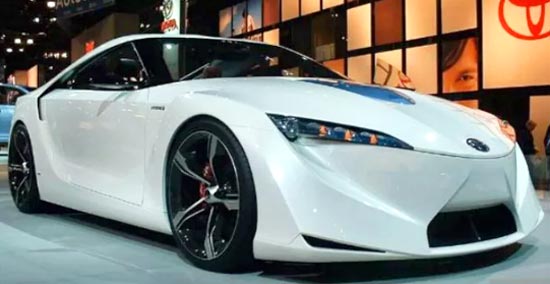
Toyota let the fourth-generation Supra, the A80, go out of production in 2002. The company applied to register the Supra name again in 2010, and Tetsuya Tada, the chief engineer of the Toyota 86, said in 2012 that president Akio Toyoda had asked him to build a Supra successor as soon as possible. The replacement eventually came through a joint program with BMW, and the GR Supra shares its platform, engine family and its Austrian assembly line with the G29 BMW Z4. Its styling drew on Toyota’s own FT-1 concept. The “GR” in the name stands for Gazoo Racing, Toyota’s motorsport division, and the 2020 Supra was the first global GR model.
Production began in March 2019 at the Magna Steyr plant in Graz, Styria. Toyota reported that the first car off the line was a matte-gray model with red mirror caps and a red-and-carbon interior. Deliveries in the United States started in the summer of 2019. Toyota sold 2,884 Supras in the United States during 2019 and 5,887 during 2020.

Engine and Powertrain
Every 2020 GR Supra used a 3.0-liter twin-scroll single-turbocharged inline-six. The dual-overhead-camshaft, 24-valve engine had an aluminum block and head, direct fuel injection and continuously variable valve timing on both the intake and exhaust camshafts. Toyota rated it at 335 hp between 5,000 and 6,500 rpm and 365 lb-ft of torque from 1,600 to 4,500 rpm. The twin-scroll turbocharger and an electric wastegate helped the engine deliver its torque low in the rev range.
Power went to the rear wheels through an eight-speed automatic transmission with paddle shifters, a manual mode and a launch-control function. A sport-calibrated electric power steering system, an active rear sport differential and an active exhaust were standard across the range. In its own instrumented testing, Car and Driver recorded a zero-to-60-mph time of 3.8 seconds and a standing quarter mile of 12.3 seconds at 113 mph. Toyota’s own estimate for zero to 60 mph was 4.1 seconds, and top speed was electronically limited to 155 mph.

Dimensions, Chassis and Exterior
The GR Supra rode on a 97.2-inch wheelbase and measured 172.4 inches long, 73.4 inches wide and 50.9 inches tall — a short, wide, low-slung coupe with a two-seat cabin. Curb weight was 3,397 pounds, which Toyota translated into a power-to-weight ratio of 10.14 pounds per horsepower. Double-joint MacPherson struts handled the front and a multi-link independent layout handled the rear, supported by an Adaptive Variable Suspension and hollow front and rear stabilizer bars. Nineteen-inch forged-aluminum wheels carried Michelin Pilot Super Sport tires, sized 255/35 ZR19 at the front and 275/35 ZR19 at the rear.
The body was a three-door liftback, with a built-in rear spoiler, a wide low grille and six-lens auto-leveling LED headlights. The steering took 2.1 turns from lock to lock and the turning diameter was 34.67 feet.

Interior and Equipment
Inside, the Supra was a strict two-seater focused on the driver. The 3.0 Premium and Launch Edition added an 8.8-inch touchscreen with navigation and a touchpad controller, a 12-speaker, 500-watt JBL audio system, a full-color head-up display, heated sport seats, carbon-fiber trim and wireless Apple CarPlay compatibility. A Driver Assist Package bundled full-speed dynamic radar cruise control, a blind-spot monitor, rear cross-traffic alert and parking sensors with an automatic braking function. Cargo volume behind the seats was 10.2 cubic feet.

Fuel Economy and Running Costs
The EPA rated the 2020 GR Supra at 24 mpg in the city, 31 mpg on the highway and 26 mpg combined, figures that Kelley Blue Book also lists for all three grades. The turbocharged six required premium unleaded fuel, and the car carried a 13.7-gallon tank.
Price and Trim Levels
Toyota offered the 2020 Supra in three grades. The base 3.0 listed at $49,990, the 3.0 Premium at $53,990 and the Launch Edition at $55,250, all before a $930 delivery, processing and handling fee. The Launch Edition was based on the Premium and limited to 1,500 cars for the United States. A lighter 2.0-liter turbocharged four-cylinder, rated at 258 hp and 400 Nm (about 295 lb-ft) of torque, joined the lineup for the 2021 model year, so the 2020 car was offered with the inline-six only. Buyers cross-shopping the platform could also consider the G29 BMW Z4, which is built on the same line in Graz.
Car and Driver’s instrumented test also recorded a 5-to-60-mph rolling start of 4.6 seconds, a 70-to-0-mph stopping distance of 148 feet and 1.07 g of lateral grip on its skidpad. The magazine later named the GR Supra to its 10Best list for 2020. Michelin Pilot Super Sport summer tires were standard, and the car used an electric parking brake.
Markets and the 2.0-Liter Option
Toyota launched the GR Supra in the United States, Europe and Asia during 2019. U.S. sales reached 2,884 cars in 2019 and 5,887 in 2020, according to delivery figures compiled on Wikipedia. In Europe, Toyota expanded the range in early 2020 with a second engine: a 2.0-liter turbocharged four-cylinder producing 258 hp (190 kW) and 400 Nm of torque. That version was lighter and less expensive than the six-cylinder car, but it was not offered in the same form in every market.