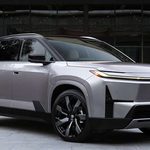
Toyota launched a new Harrier in 2020, and a hybrid sat at the center of the plan. Buyers in North America know the same vehicle by another name — the second-generation Venza. That overlap is the key to understanding the “2021 Toyota Harrier Hybrid”: the car is real, it was revealed in April 2020 and went on sale that June, and in the United States and Canada it arrived for the 2021 model year wearing a Venza badge.

What the 2021 Harrier Actually Is
The 2021 Harrier is the fourth generation of the nameplate, coded XU80. Toyota announced it on April 13, 2020, and it went on sale in Japan on June 17, 2020. It rides the GA-K version of Toyota’s New Global Architecture, the same family of underpinnings used by the RAV4 (XA50) and the Lexus NX (AZ20). Compared with the outgoing model, the XU80 grew wider and longer in wheelbase while sitting lower overall. The Harrier is a five-seat, mid-size crossover SUV aimed at comfort and refinement rather than heavy towing or serious off-road use.
The Harrier Hybrid Powertrain
The hybrid pairs a 2.5-liter A25A-FXS four-cylinder with electric motors. On its own the gasoline engine makes 131 kW (176 hp) and 221 Nm (163 lb-ft) of torque, and Toyota quotes a combined system output of 215 to 219 hp. Power reaches the road through an electronically controlled continuously variable transmission (eCVT). Front-wheel drive is standard, and the E-Four system adds a rear electric motor for all-wheel drive. A compact battery pack, rather than a large plug-in unit, keeps the packaging tidy under the cargo floor.
The Redesign Dropped the Turbo
One of the biggest changes for the XU80 generation was under the hood: Toyota dropped the turbocharged engine that had been offered in the previous Harrier, the XU60. The fourth-generation range relies instead on a naturally aspirated 2.0-liter gasoline four-cylinder making about 126 kW (169 hp) and the 2.5-liter hybrid. In Japan these engines are spread across S, G and Z grades. Dropping the turbo simplified the lineup and pushed buyers toward the more efficient hybrid, which became the volume seller.

Dimensions and Practicality
The XU80 Harrier measures roughly 4,740 mm long, 1,855 mm wide and 1,660 mm tall, on a 2,690 mm wheelbase. Curb weight runs from about 1,620 kg to 1,770 kg depending on the powertrain and drivetrain. Ground clearance is around 195 mm in most markets, and the fuel tank holds about 55 liters. Inside, there is seating for five and a load area that prioritizes everyday practicality over maximum volume.
The North American Twin: Venza
Harrier and Venza are the same car in different markets. Toyota unveiled the second-generation Venza in North America on May 18, 2020, and it reached dealerships in September 2020 as a 2021 model. Unlike the Japanese Harrier, the North American Venza was offered only as an all-wheel-drive hybrid. It produces 219 net system horsepower and was rated at 39 mpg combined by the EPA. Pricing opened at $32,470 for the LE, $36,000 for the XLE and $39,800 for the Limited, before the delivery fee. Both versions are built at Toyota’s Takaoka plant in Japan.

Release Dates by Market
Because the Harrier and Venza use different names and launch timings, model-year language can be confusing. In Japan the new SUV went on sale in June 2020 and is simply called the Harrier. In North America the same vehicle went on sale in September 2020 as the 2021 Venza. A reference to a “2021 Toyota Harrier Hybrid,” then, most likely means either the Japanese-market XU80 hybrid or, for North American readers, the 2021 Venza. A plug-in hybrid Harrier followed in Japan in September 2022, sharing its system with the RAV4 Prime and adding a much larger battery.
How the Harrier Compares
As a two-row mid-size crossover, the Harrier competes with premium-leaning five-seat SUVs rather than three-row family haulers. Its relationship to the RAV4 is mechanical rather than visual: they share the GA-K platform, but the Harrier has a longer wheelbase and a more upscale interior. Against the Lexus NX, which also uses GA-K, the Harrier undercuts it on price while offering a similar footprint. The hybrid is the pick of the range, delivering instant low-speed response from the electric motor and fuel economy that is strong for the class.

Technology and Safety
Standard safety technology on the North American Venza included Toyota Safety Sense 2.0, which bundles adaptive cruise control, lane departure alert with steering assist, automatic high beams and a pre-collision system with pedestrian detection. On higher grades, buyers could add a 12.3-inch touchscreen with JBL audio, a digital rear-view mirror and a head-up display. Blind spot monitoring with rear cross-traffic alert was standard across the line.
Fuel Economy
In North America the Venza, which shares the Harrier’s hybrid system, was rated at 40 mpg city, 37 mpg highway and 39 mpg combined. That is unusually strong for a mid-size all-wheel-drive crossover and is one of the main reasons Toyota offered the Venza only as a hybrid. Japanese-market Harrier hybrids use the same powertrain, so buyers there can expect comparable efficiency, helped in part by the car’s aerodynamic body and its front- or all-wheel-drive layout.
Trim Grades and Interior
In Japan the Harrier was sold in S, G and Z grades, with a Leather Package available on the upper two. In North America the Venza came in LE, XLE and Limited trims. The interior seats five and emphasizes quietness and comfort, with available features including a 12.3-inch touchscreen, a digital rear-view mirror and a head-up display. Toyota positioned the Harrier above the RAV4 in refinement while keeping it below the Lexus NX in price.