The Camry Atara SX is not a global Toyota model, and it is not a Canadian one. “Atara” was a grade name Toyota used on Australian-market Camrys and Aurions between 2012 and 2017, and it had disappeared from the range before the 2019 model year. The car Toyota Australia sold in 2019 carried different grade names, and none of them was called Atara SX. Anyone searching for this name is really looking at two different generations of the same car.

There Was No 2019 Toyota Camry Atara SX
Toyota Australia introduced the Atara badge with the XV50 Camry in 2012. The local line-up then used the names Altise, Atara S and Atara SL, and the related Aurion sedan used Atara S, Atara SL and Atara Sport. Australian production of the Camry and Aurion ended in 2017, and when the all-new, Japanese-built XV70 Camry went on sale in Australia in late 2017, Toyota replaced those names with a new set: Ascent, Ascent Sport, SX and SL.
That means the “Atara” part of the name belongs to the 2012–2017 generation, while the “SX” part belongs to the 2018-onward generation. A single car called the Camry Atara SX was never built or sold, in Canada or anywhere else.
Where the Atara Name Came From
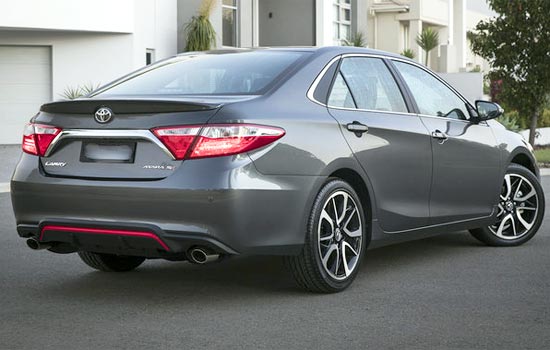
For the Australian XV50 Camry, the Atara S and Atara SL were the sportier, better-equipped gasoline models, sitting above the volume-selling Altise. The Atara S used a 2.5-liter naturally aspirated four-cylinder, and the Atara SL added features such as low-speed autonomous emergency braking, blind-spot monitoring and rear cross-traffic alert. The same Atara naming was applied to the Aurion, which was the Australian V6 version of the Camry and which was sold alongside it.
The Cars That Wore the Atara Badge
The Atara models were, in effect, the premium tier of Australia’s locally built Camry range. The XV50 measured 4,850 mm in length, 1,835 mm in width and 1,470 mm in height on a 2,775 mm wheelbase, and the Atara S ran 17-inch alloy wheels, a leather-wrapped steering wheel and a sports-tuned automatic. This is the car that the name “Atara S” actually describes, and the related Atara SL added the full suite of driver aids.
Buyers searching for a “Camry Atara SX” online are usually trying to match a name they have seen on a used listing. The correct way to read those listings is to check the year: an Atara S or Atara SL is a 2012–2017 XV50 car, while an SX or SL from 2018 onward is the newer XV70. The two are unrelated in platform, engine and equipment.
Toyota has not reused the Atara name since. The badge survives only on used cars and in online listings, where it is sometimes wrongly applied to later models. Shoppers should treat the year and the platform, not the badge, as the guide to what they are actually buying.
From Local Build to Import
For decades Australia had built the Camry at Toyota’s Altona plant in Victoria. Local manufacturing ended in October 2017, ending more than 50 years of Toyota car production in the country. From then on the Camry was imported from Japan, which is why the 2019 Australian car shares its bones with the North American and Japanese Camry of the same generation rather than with the old Australian-made model.
The 2019 Australian Camry Range
The car Toyota Australia sold in 2019 was the eighth-generation, TNGA-based Camry. It came in four core grades — Ascent, Ascent Sport, SX and SL — with the sportier SX and the range-topping SL available as a gasoline four-cylinder, a hybrid or, for the SL, a V6. Prices at the time ran from about AUD 31,500 for the Ascent to roughly AUD 48,500 for the SL. All versions were front-wheel drive, and every car was a four-door sedan.
The move to a new grade structure reflected a broader change: the Camry was no longer a locally built, fleet-oriented car but an imported, global model. Toyota also used the switch to bring the V6 back to the Camry nameplate after the Aurion’s retirement.
Interior and Equipment
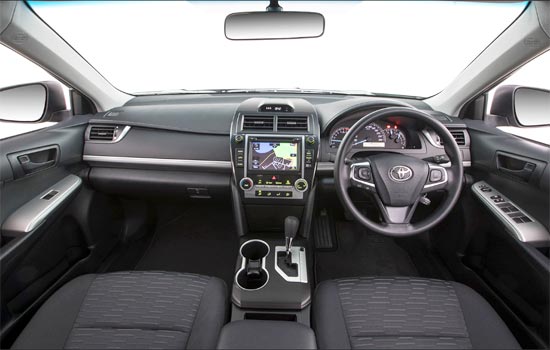
The 2019 Camry cabin used a driver-focused dashboard with a standard touchscreen infotainment system, a reversing camera and dual-zone climate control on higher grades, plus a suite of active-safety features under the Toyota Safety Sense banner. The SL added leather trim, a premium audio system and a head-up display. The SX sat in the middle of the range, above the Ascent models and below the SL.
Engines and Performance
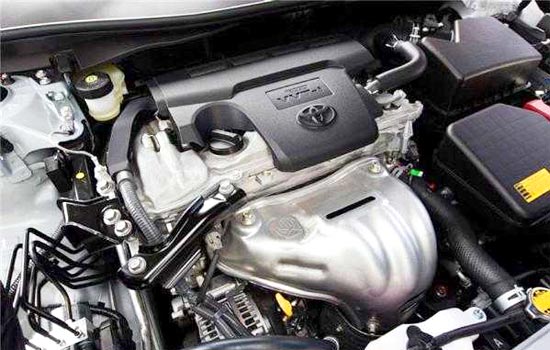
The 2019 Australian Camry offered three powertrains. The 2.5-liter four-cylinder gasoline engine produced 133 kW (about 178 hp) and 231 Nm. The hybrid paired a 2.5-liter engine with an electric motor for a combined 160 kW (about 215 hp). The SL V6 used a 3.5-liter engine rated at 224 kW (about 300 hp) and 362 Nm. Transmissions were a six-speed automatic, an eight-speed automatic for the V6, and a continuously variable transmission for the hybrid.
Why It Was Never a Canadian Model
The Atara name was specific to Australia and New Zealand, so a Canadian-market Camry was never badged that way. Canadian buyers received the North American Camry, built in Georgetown, Kentucky and in Japan, in trims such as LE, SE and XLE. Readers can compare it with the closely related, U.S.-market models in our 2019 Toyota Camry Redesign, Review article and our 2019 Toyota Camry Atara R page. This feature is part of our wider Toyota Review coverage.