The Toyota Fortuner is a mid-size, body-on-frame SUV built on the same IMV platform as the Hilux pickup and the Innova MPV. The second-generation Fortuner, model codes AN150 and AN160, went into production in July 2015 and remained on sale through the 2019 model year in essentially its original form. This article details the engines, dimensions and pricing of the 2019 Fortuner, which was a carryover rather than a redesigned model.

Was the 2019 Fortuner a New Generation?
No. The second-generation Fortuner launched in 2015 and ran largely unchanged until a facelift arrived in 2020, which brought revised styling and, in some markets, an uprated 2.8-liter diesel. The 2019 model therefore used the original second-generation body and powertrain line-up. The Fortuner is sold across Asia, Africa, Latin America and Australia, where it sits below the Land Cruiser Prado and above the RAV4.
Related SUV coverage includes the 2019 Toyota Rush Philippines Release Date and Review and the 2019 Toyota Tacoma Redesign and Review.
Engine Line-up
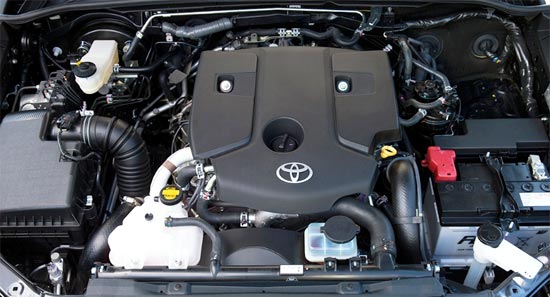
The Fortuner was offered with several engines depending on the market. The most common were two diesels. A 2.4-liter 2GD-FTV four-cylinder turbodiesel made 147 hp and 400 Nm of torque, as listed by Toyota Philippines and Toyota Saudi Arabia. A larger 2.8-liter 1GD-FTV turbodiesel produced 174 hp and 450 Nm in the specification sold in markets such as India, while Toyota later offered an uprated version making 201 hp and 500 Nm. Gasoline choices in some markets included a 2.7-liter 2TR-FE four-cylinder making 164 hp and 245 Nm, and a 4.0-liter 1GR-FE V6 making 235 hp and 376 Nm. Transmissions were a five- or six-speed manual or a five- or six-speed automatic.
Exterior and Dimensions

The second-generation Fortuner measured 4,795 mm long, 1,855 mm wide and 1,835 mm tall, on a 2,750 mm wheelbase, with a 80-liter fuel tank and seating for seven across three rows. It was built on a ladder frame with a live rear axle, giving it genuine off-road ability and towing capacity. The 4×4 versions used a part-time four-wheel-drive system with a low-range transfer case, and higher trims added a locking rear differential.
Interior and Equipment
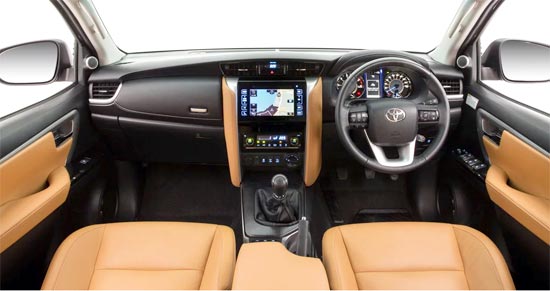
Inside, the 2019 Fortuner offered three rows of seats, with the third row folding to expand cargo space. Equipment varied by market and trim, but the model was typically available with a touchscreen infotainment system, automatic climate control, leather upholstery on higher grades and a suite of driver-assistance features on the top trims. Buyers should check the exact grade and market, because equipment lists differed significantly between countries such as the Philippines, Indonesia, India, Thailand and Australia.
Price and Release Date

The 2019 Fortuner went on sale in each market at different times, with the model year being a continuation of the existing generation. In the Philippines, pricing for 2019 started at PHP 1,633,000 for the 2.4-liter manual and reached PHP 2,286,000 for the 2.8-liter automatic. Prices and specifications varied widely by country, so regional pricing should be confirmed against the local distributor.
Key Specifications
| Specification | 2019 details |
|---|---|
| 2.4 diesel | 2GD-FTV, 147 hp / 400 Nm |
| 2.8 diesel | 1GD-FTV, 174 hp / 450 Nm |
| 2.7 gasoline | 2TR-FE, 164 hp / 245 Nm |
| 4.0 gasoline V6 | 1GR-FE, 235 hp / 376 Nm |
| Transmissions | 5- or 6-speed manual; 5- or 6-speed automatic |
| Drive | Rear-wheel drive or four-wheel drive |
| Wheelbase | 2,750 mm |
| Length | 4,795 mm |
| Seats | 7 |
| Fuel tank | 80 liters |
Markets and Positioning
The Fortuner is part of Toyota’s IMV project for emerging markets, sharing its ladder-frame platform with the Hilux pickup and the Innova MPV. It is positioned below the Land Cruiser Prado and above the RAV4 in the markets where both are sold, and it is offered across Southeast Asia, India, the Middle East, Africa, South America and Australia. Because it is built and assembled in multiple countries, trim names, equipment and pricing differ from one market to the next even within the same model year.
A gasoline V6 and a 2.7-liter gasoline four were offered in markets such as the Middle East and South America alongside the diesels. In markets where only the 2.4-liter diesel was common, the 2.8-liter gave noticeably stronger performance and higher towing capability. The model received a facelift in 2020, so the 2019 Fortuner represents the original second-generation design rather than the updated front and rear styling.
The 2.8-liter diesel gave the Fortuner noticeably stronger performance and higher towing capability than the 2.4-liter unit, which is why it was the engine most buyers of the higher trims chose. In markets such as the Philippines the range spanned from the 2.4-liter manual at the entry point to the 2.8-liter automatic at the top, with prices rising accordingly. The gasoline engines were aimed at markets where diesel fuel is less common or less favored, such as parts of the Middle East and South America.
Because the Fortuner is built on the same IMV ladder frame as the Hilux, it shares much of its running gear, which helps parts availability and durability. That construction also gives it towing capability and off-road ability beyond what a car-based crossover of the same size can offer, at the cost of a heavier, firmer ride.
Equipment and trim names differed by market within the same model year, so buyers should compare specific vehicles rather than model years alone. The 2019 Fortuner represents the pre-facelift second generation; the 2020 update changed the styling and, in some markets, brought the more powerful 2.8-liter diesel.