The Toyota 86 is a two-door, 2+2 sports coupe developed jointly by Toyota and Subaru and assembled at Subaru’s Gunma plant in Japan. In North America it was sold as the Scion FR-S from 2012 to 2016 and afterward as the Toyota 86, while Europe and several other markets used the GT86 badge. The 2019 model year belongs to the first generation (chassis code ZN6 for Toyota, ZC6 for Subaru), which was produced from 2012 until 2021.

What the 2019 Toyota 86 Is
The 86 was refreshed for the 2017 model year, so the 2019 car is a late first-generation example rather than an all-new design. It kept the same rear-wheel-drive layout and naturally aspirated flat-four engine. Toyota did not offer the 86 with a turbocharger, a turbocharged 1.5-liter sedan, or a production convertible; the FT-86 Open shown as a concept in 2013 remained a study only. In 2019 buyers chose between a six-speed manual and a six-speed automatic, and the car changed little from the 2017 update until production ended. Related reading on this site includes the 2019 Toyota FT-1 Review.
Development, Naming and Motorsport
The production 86 debuted at the December 2011 Tokyo Motor Show, with development led by chief engineer Tetsuya Tada, and the first cars were assembled on 2 February 2012 before sales began in March and deliveries in April. The name refers to the engine’s 86 mm by 86 mm bore and stroke, to the 86 mm exhaust tip, and to the earlier AE86. Toyota sold the car alongside the closely related Subaru BRZ, and the two are distinguished mainly by their front grilles and bumpers. In Australia a one-make Toyota 86 Racing Series has run since 2016, and the car has been widely used in club and drift competition.
The Scion FR-S Chapter
From 2012 until 2016 the car was sold in the United States and Canada under Toyota’s youth-oriented Scion brand as the FR-S, a name taken from its front-engine, rear-wheel-drive, sport layout. Scion used fixed pricing with dealer-installed accessories rather than factory options, so the FR-S came in a single standard trim with color and transmission as the main choices. Toyota allocated Scion 10,000 units of the 2013 model year while Subaru was limited to about 6,000 BRZ coupes. When the Scion brand was retired in 2016, the car was folded back into Toyota showrooms as the Toyota 86.
Engine, Power and Transmission

The 86 uses a 1,998 cc horizontally opposed four-cylinder engine, coded 4U-GSE by Toyota and FA20 by Subaru. It is naturally aspirated and combines Subaru’s flat-four architecture with Toyota’s D-4S dual injection system and a 12.5:1 compression ratio. From the 2017 update, manual cars produced 205 hp and 156 lb-ft of torque, while automatic cars were rated at 200 hp and 151 lb-ft. The final drive ratio on manual cars was changed from 4.10 to 4.30. A Torsen-style limited-slip differential was standard on most versions. The optional six-speed automatic, derived from the unit used in the Lexus IS 250, offered Sport, Snow and Normal modes.
Chassis, Dimensions and Weight
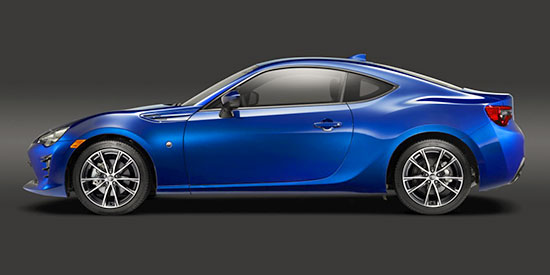
The 86 rides on a 2,570 mm (101.2 in) wheelbase and measures about 4,240 mm (166.9 in) long, 1,775 mm (69.9 in) wide and 1,285 to 1,320 mm (50.6 to 52.0 in) tall. Weight starts at roughly 1,190 kg (2,624 lb). The low-mounted boxer engine and front-engine, rear-drive layout give a near-even 53/47 front-to-rear weight distribution. Suspension is by MacPherson struts at the front and double wishbones at the rear, and the body is quoted with a 0.27 drag coefficient. Most cars used dual-piston front and single-piston rear sliding calipers with 294/290 mm ventilated discs, while Performance Package cars moved to four-piston front and two-piston rear fixed calipers.
Interior and Equipment
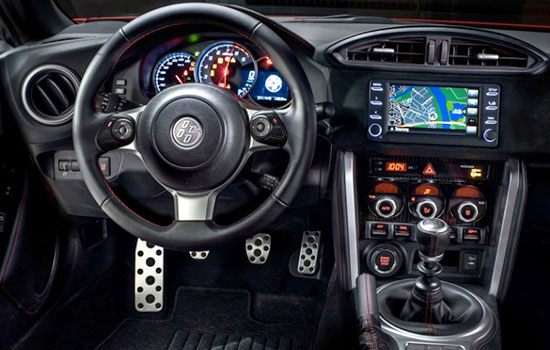
The cabin seats four in a 2+2 arrangement, with low-mounted front seats and fold-down rear seats that increase cargo space. Base models came with cloth upholstery and an all-black interior, while top trims added leather and Alcantara upholstery, heated seats, automatic climate control and push-button start. Trim names varied by market: Japan used the RC, G, GT86 and GT Limited grades, Australia the GT and GTS, and the United States the base 86 and GT. A 2020 Hakone Edition, named for Japan’s Hakone Turnpike and finished in Hakone Green with bronze wheels, was the final special version of the first generation.
Fuel Economy
According to the U.S. Environmental Protection Agency, the 2019 Toyota 86 with the six-speed manual returned 21 mpg city, 28 mpg highway and 24 mpg combined, while the six-speed automatic was rated at 24 mpg city, 32 mpg highway and 27 mpg combined. Both are listed as using premium gasoline.
What Replaced the First-Generation 86
Toyota ended production of the first-generation 86 and GT86 in March 2021. Its replacement, the second-generation GR86, arrived in 2021 and switched to a 2.4-liter flat-four producing 231 to 235 PS (roughly 228 to 232 hp) with 250 Nm of torque. The same platform continued to underpin the Subaru BRZ, and both cars kept the rear-wheel-drive layout.
Buying a Used 2019 Toyota 86
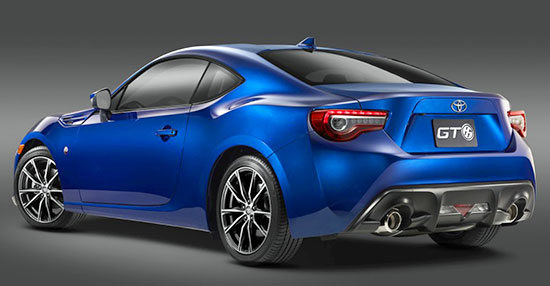
Because first-generation production ended in 2021, a 2019 86 is now a used car rather than a current model. Shoppers should expect a rear-wheel-drive coupe with a naturally aspirated engine, a manual or automatic gearbox and a limited-slip differential. Toyota built the car alongside the Subaru BRZ, so the two share most mechanical parts and can be cross-shopped. Because the 86 is a popular platform for tuning, inspect any car carefully for aftermarket modifications and check the service history for the maintenance the flat-four requires. See more model coverage in our Car Review section.