There was no 2019 Toyota Hilux concept. The Hilux is a long-running production pickup, not a show car, and the 2019 model belongs to the eighth generation that Toyota introduced in 2015 and facelifted for 2018. In 2019 the Hilux was one of the world’s best-selling pickups, but it was not sold in the United States or Canada, where Toyota offers the Tacoma instead.

Was There a 2019 Hilux Concept?
No. Toyota did not build or sell a model called the Hilux Concept. The Hilux nameplate dates back to 1968 and has been through eight generations, of which the 2019 car is part of the eighth. Toyota unveiled the eighth-generation Hilux in 2015, and it received a significant facelift in 2018 with a new front end and updated equipment.
The confusion is easy to understand: the Hilux is sold in roughly 180 countries and is frequently updated by region, so a “new Hilux” appears somewhere almost every year. A facelift or a special edition, however, is not a new concept car.
The 2019 model year in most markets was a carryover of the facelifted eighth-generation truck, with the biggest visual change being the revised grille and bumper introduced in 2018. Toyota Australia also applied an “Aussie-styled” front end to selected SR and SR5 models.
Interior and Equipment
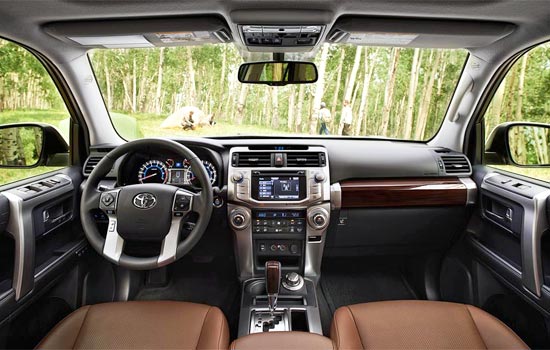
The Hilux cabin was designed for work first. It used a straightforward dashboard with a touchscreen infotainment system on mid and upper trims, air conditioning, cruise control and a multi-information display. Higher grades such as the SR5 added leather trim, climate control, keyless entry and a reversing camera.
Toyota offered the Hilux in single-cab, extra-cab and double-cab bodies. The double cab seated five and was the most popular choice for buyers who used the truck as a family vehicle as well as a workhorse. The single cab and extra cab prioritized bed length and payload over passenger space.
Exterior and the 2018 Facelift
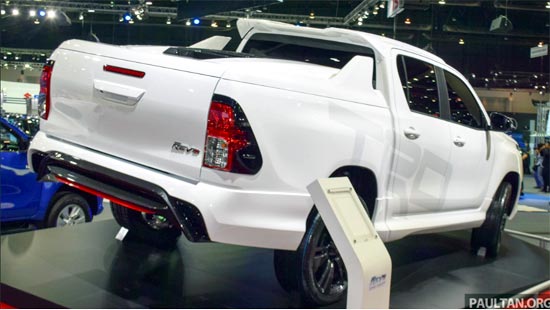
The 2018 facelift gave the Hilux a bolder front end with a larger grille that angled down into the bumper, a design some observers compared with the Tacoma. It also brought revised headlights and, in some markets, new wheel designs and trim levels such as the special-edition Rugged and Rugged X in Australia.
The Hilux was built as a body-on-frame truck, so it kept a tall, upright stance and a separate ladder chassis. The 2019 truck measured 5,345 mm long, 1,855 mm wide and 1,815 mm tall in double-cab form, on a 3,085 mm wheelbase, with about 310 mm of ground clearance on four-wheel-drive models.

Engines and Drivetrain
The mainstay engine in most markets was the 2.8-liter four-cylinder turbo-diesel coded 1GD-FTV. In manual form it produced 130 kW, or about 174 hp, and 420 Nm of torque from low in the rev range, which is what gave the truck its strong towing and hauling ability.
| Engine | Output | Fuel |
|---|---|---|
| 2.8 L 1GD-FTV turbo-diesel I4 | 130 kW (174 hp); 420 Nm | Diesel |
| 2.4 L 2GD-FTV turbo-diesel I4 | Lower-output workhorse unit | Diesel |
| 2.7 L 2TR-FE gasoline I4 | Entry-level gasoline option | Gasoline |
Buyers chose between a six-speed manual and a six-speed automatic transmission, and between rear-wheel drive and a part-time four-wheel-drive system with a two-speed transfer case. Four-wheel-drive models were the ones most buyers wanted for towing and off-road work.

Towing, Payload and Dimensions
Towing capacity was one of the Hilux’s headline numbers. Depending on body style, engine and transmission, the 2019 Hilux was rated to tow between about 2,500 kg and 3,500 kg with a braked trailer. The strongest figures — 3,500 kg — applied to four-wheel-drive 2.8-liter diesel models with the manual gearbox, while automatic versions and lighter 2.4-liter trucks were rated lower. The claim that the Hilux could tow “about 3 tons” is therefore broadly right for the more capable variants.
The Hilux was also rated to carry roughly a tonne in the bed on many variants, which is why it was widely used as a commercial vehicle, on farms and by utility companies around the world. The trade-off for that ruggedness was a firmer ride than car-based pickups such as the Honda Ridgeline.
Markets and Availability
The Hilux was sold across Thailand, Australia, New Zealand, Europe, the Middle East, Africa, Latin America and Southeast Asia. It was not offered in the United States or Canada, where Toyota instead built the Tacoma, a related but separately engineered truck aimed at North American buyers.
The Hilux’s global reach is one of the reasons it is so well known: it has been the best-selling vehicle of any kind in several countries, and its reputation for durability has made it a common choice for remote-area work. That reputation, rather than any concept-car debut, is the real story of the 2019 Hilux.
In safety terms, Australian-market Hilux models carried a five-star ANCAP rating in this era, though the rating applied to specific model years and was updated over time as the tests changed.
Because the Hilux was sold so widely, its specification differed enormously between markets. European and Australian buyers generally got the 2.8-liter diesel, while some Asian and Middle Eastern markets offered the smaller 2.4-liter diesel or a 2.7-liter gasoline as the entry engine.
Readers can compare the Hilux with its North American relative in our 2019 Toyota Tacoma TRD Pro Review and with the Highlander in our 2019 Toyota Highlander Price and Review. This feature is part of our wider Car Review coverage.