The 2019 Toyota Prius c Hybrid was the last model year of Toyota’s smallest hybrid in North America. Every Prius c was a hybrid, so the “Hybrid” in the name describes the car’s only powertrain rather than a separate variant. Production for the US and Canadian markets ended after 2019, making this a discontinued model rather than the beginning of a new generation.
This article focuses on the hybrid powertrain itself—what engine and motors it used, how the system worked, and what efficiency it delivered—along with the 2019 model’s pricing and equipment.
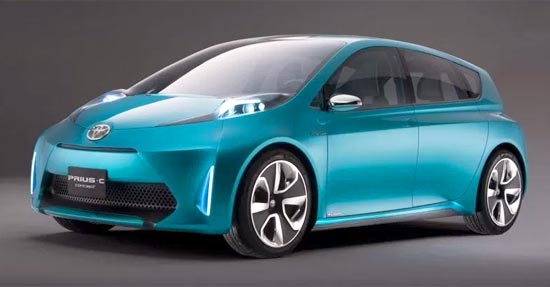
Overview
Toyota launched the Prius c for the 2012 model year as a subcompact five-door hatchback positioned below the standard Prius. It shared the Hybrid Synergy Drive concept but used a smaller, more efficient package. For its final year, Toyota reduced the lineup to L and LE trims and discontinued the model across the United States and Canada after 2019. The Corolla Hybrid served as its indirect replacement.
Powertrain and Engine Specs
The 2019 Prius c Hybrid combined a 1.5-liter four-cylinder Atkinson-cycle engine with an electric motor and a nickel-metal hydride battery. Toyota rated the gasoline engine at about 73 horsepower and the electric motor at roughly 60 horsepower; combined system output was 99 horsepower, with about 82 pound-feet of torque. Power went to the front wheels through a continuously variable transmission.
Atkinson-cycle operation improves thermal efficiency at the cost of low-end torque, which is why the electric motor is essential to the design: it fills in the torque the engine lacks at low speeds. That is the basic logic behind Toyota’s hybrid architecture, and the Prius c applied it at the smallest scale in the brand’s range.

How the Hybrid System Works
Like other Toyota hybrids, the Prius c could run on the gasoline engine, the electric motor, or a blend of both. It captured braking energy through regenerative braking to recharge the battery and did not require plug-in charging. The nickel-metal hydride battery was chosen for durability and cost rather than the higher energy density of lithium-ion.
The system used the same family of technology as the larger 2019 Toyota Prius C Review and the standard Prius, scaled down for a smaller car. Because the Prius c was light, the modest power output was adequate for city driving even though acceleration was leisurely.

Fuel Economy
The EPA rated the 2019 Prius c at 48 mpg city, 43 mpg highway, and 46 mpg combined on regular gasoline. Its strong city figure reflected the benefit of electric assist in stop-and-go driving, while the lower highway number showed how much the small engine worked at sustained speed. The combined rating placed it among the most fuel-efficient non-plug-in cars Toyota sold.
Trim Levels and Price
For 2019 the range narrowed to two trims: the L at $21,530 and the LE at $22,955, before destination. The L included 15-inch alloy wheels, LED headlights, automatic climate control, and a 6.1-inch touchscreen. The LE added keyless entry and ignition, navigation, satellite radio, and upgraded audio. The 2019 Toyota Sequoia Limited Price, Review page covers a very different end of Toyota’s range.

Interior and Dimensions
The 2019 Prius c seated five and offered about 17.1 cubic feet of cargo space behind the rear seats. It measured roughly 159.8 inches long on a 100.4-inch wheelbase, 68.6 inches wide, and 59.6 inches tall, with a curb weight near 2,530 pounds. Those compact dimensions suited city driving; for a general overview, see the site’s Toyota Review section.

Toyota identified the gasoline engine in the Prius c as the 1NZ-FXE, a 1.5-liter unit producing 54 kW (about 73 horsepower). The hybrid electric motor was rated at 45 kW, or roughly 60 horsepower, and the combination yielded the 99-horsepower total output. The engine ran on the Atkinson cycle, which holds the intake valve open longer to improve efficiency at the expense of peak power.
Because the electric motor delivers its torque instantly from a standstill, it compensates for the Atkinson-cycle engine’s weak low-end response. The continuously variable transmission then blends the two power sources, and the driver does not manage gear changes. This is the same operating principle Toyota uses across its hybrid range, applied here to the smallest and lightest car in the lineup.
The Prius c could operate in several modes without driver intervention. At low speeds and light loads it could run on electricity alone with the engine shut off. Under acceleration or at higher speeds it used the gasoline engine, often assisted by the electric motor. During deceleration and braking, regenerative braking turned kinetic energy back into electricity and stored it in the battery. That combination is why the car performed better in city driving than many conventional subcompacts.
Toyota positioned the Prius c as an urban car rather than a highway cruiser. Its 99-horsepower total output made merging and passing deliberate rather than brisk, and the small engine worked harder at sustained high speeds. For buyers whose driving was mostly short city trips, though, the low fuel consumption, simple operation, and low purchase price outweighed those limitations.
The Prius c’s hybrid system required no special maintenance beyond that of a conventional car, and the model’s small size kept running costs low. Toyota positioned it below the standard Prius in price while offering the same core hybrid technology, and the 2019 model’s $21,530 starting price made it the least expensive new hybrid in the US lineup that year. For city-focused buyers, it represented the most affordable way to own a Toyota hybrid before the model was discontinued.