The Toyota Prius was a real, in-production model in 2019. The 2019 Prius belonged to the fourth generation, known internally as the XW50, which Toyota built from 2015 to 2022 and sold as the 2016 through 2022 model years. The 2019 car was a mid-cycle refresh rather than an all-new generation, and its headline change was the arrival of an available electric all-wheel-drive system called AWD-e.

The 2019 refresh
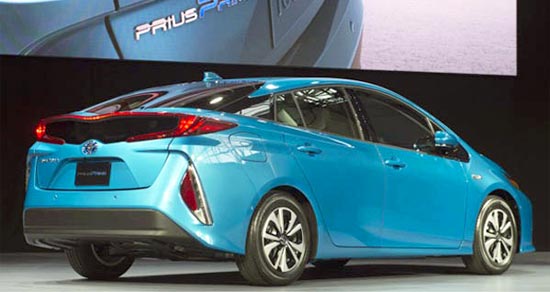
For 2019 Toyota gave the Prius updated front and rear styling, with a new front bumper, headlamp design and taillamp design. The car also adopted Toyota’s simplified grade names, dropping the old numerals in favor of L Eco, LE, XLE and Limited, and gained two new colors, Supersonic Red and Electric Storm Blue. The AWD-e version sported new foglamps and an LED accent lamp, and used a two-tone 15-inch alloy wheel.
Inside, the 2019 Prius received piano-black accents around the shifter, on the steering wheel and on the center console cover. Toyota also added two extra USB ports, enlarged the Qi wireless phone charging tray to fit larger phones, and made a heated steering wheel standard on the XLE, XLE AWD-e and Limited grades.
Powertrain
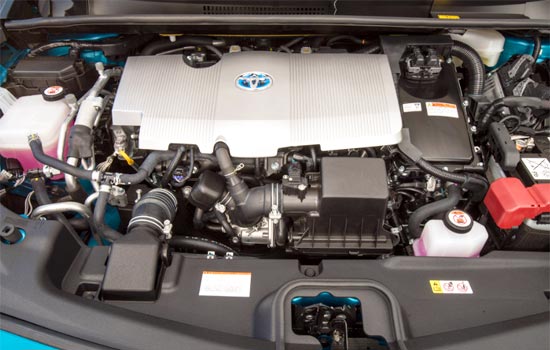
- Engine: 1.8-liter 2ZR-FXE four-cylinder, Atkinson cycle, rated at about 95 hp on its own
- Hybrid system: Toyota Hybrid Synergy Drive (power-split) with two motor/generators
- Combined output: 121 hp
- Transmission: electronically controlled continuously variable transmission (eCVT)
- Drive: front-wheel drive, or available AWD-e

The Prius uses Toyota’s Hybrid Synergy Drive, a power-split system that combines the output of the gasoline engine with two motor/generators through an electronically controlled planetary-type continuously variable transmission. There is no conventional torque-converter automatic and no clutch between the engine and the wheels.
Fuel economy
Fuel economy is the Prius’s defining attribute. The front-wheel-drive L Eco grade was rated at 58 mpg city, 53 mpg highway and 56 mpg combined. The other front-wheel-drive grades were rated at 54/50/52 mpg. The new AWD-e was Toyota-estimated at 52 mpg city, 48 mpg highway and 50 mpg combined, which Toyota described as making it one of the most fuel-efficient all-wheel-drive passenger cars available in the United States. Every 2019 Prius variant was rated at 50 mpg combined or better.
The AWD-e system
The AWD-e system uses an independent, magnet-less electric motor to drive the rear wheels, a first for Toyota. It operates from 0 to 6 mph to assist standing starts and then, when needed, at speeds up to 43 mph. Because there is no center differential and no front-to-rear driveshaft, the system adds little weight and no mechanical connection between the rear wheels and the engine. AWD-e models used a nickel-metal hydride battery, while front-wheel-drive versions used lithium-ion. Toyota estimated that AWD-e could account for as much as 25 percent of annual United States Prius sales.
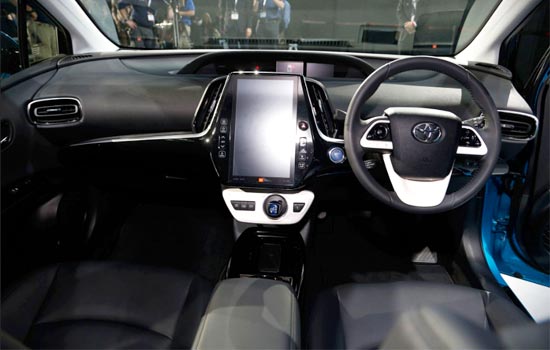
Interior, equipment and safety
Standard across the range was Toyota Safety Sense P, which bundled a pre-collision system with pedestrian detection, lane departure alert with steering assist, automatic high beams and full-speed-range dynamic radar cruise control. A backup camera, Bi-LED headlamps and LED rear combination lamps were also standard. The interior kept the Prius’s distinctive central instrument layout, with a 4.2-inch color multi-information display that gained an AWD-e indicator on all-wheel-drive cars. With the 60:40 split rear seatbacks folded, Toyota quoted up to 65.5 cubic feet of cargo space, or 62.7 cubic feet on the AWD-e.
Dimensions
- Wheelbase: 2,700 mm (106.3 in)
- Length: 4,570 mm (180.0 in)
- Width: 1,760 mm (69.3 in)
- Height: 1,470 mm (57.9 in)
- Curb weight: 1,365 to 1,397 kg (3,010 to 3,080 lb)
How the 2019 Prius fit the range
The fourth-generation Prius was the second Toyota to use the Toyota New Global Architecture (after the fourth-generation Prius itself introduced the platform). Its stablemate, the Prius Prime plug-in hybrid, was developed alongside it. The 2019 refresh kept the Prius competitive in a segment that was filling with new hybrid and electric rivals, and the addition of all-wheel drive addressed a long-standing criticism that the car was only suited to mild climates.
Buying a 2019 Prius today
The fourth-generation Prius was replaced by the fifth-generation XW60 model for 2023, so a 2019 car is now a used purchase. The most sought-after version is the AWD-e, because it was a short-lived option available only from 2019 to 2022 and adds traction in cold or wet conditions without a large fuel-economy penalty. Related Toyota coverage is available in our 2019 Toyota Avalon XLE Plus review and 2019 Toyota Yaris engine review. For more models, see Car Review.
Trim walk
For 2019 the Prius came in four grades. The L Eco was the efficiency leader, using smaller tires to achieve its 56 mpg combined rating. The LE was the volume grade, available with either front-wheel drive or AWD-e. The XLE added heated SofTex-trimmed front seats, a heated tilt-and-telescopic steering wheel and the upgraded audio system, and was the highest grade in which AWD-e was offered. The Limited sat at the top of the range with the most equipment.
The Prius Prime plug-in
Alongside the standard Prius, Toyota sold the Prius Prime plug-in hybrid, which shared the same generation and body but added a larger battery and the ability to charge from the grid. The 2019 Prime was rated at 25 miles of electric range and 133 MPGe combined, so it could cover short trips on electricity alone. It was marketed as a separate model in the United States rather than as a Prius trim.
Batteries and packaging
The front-wheel-drive Prius used a 0.75 kWh lithium-ion battery, while AWD-e cars used a 1.2 kWh nickel-metal hydride pack. The two chemistries reflected different needs: the larger NiMH pack was chosen for the all-wheel-drive car partly for its cold-weather behavior, which suited the snowy markets the AWD-e was aimed at. Both packs sat under the rear seat, so they did not intrude on cargo space.