There was no 2019 Toyota Urban Cruiser of the original kind. The first Urban Cruiser was sold in Europe from 2008 to 2014, and after it was dropped the nameplate was not used again until Toyota revived it in India in 2020. That means 2019 fell in the gap when no new Urban Cruiser existed. To understand the name, it helps to separate the original small SUV from the later, unrelated models that reused the badge.
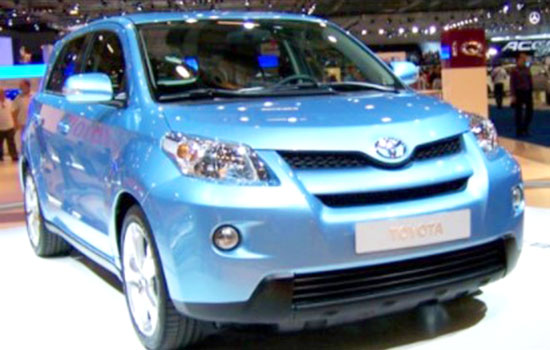
The Original Urban Cruiser (XP110; 2009–2014)
The original Urban Cruiser was the European version of the second-generation Toyota Ist, a model also sold in North America as the Scion xD. It was previewed at the Geneva Motor Show in March 2008 and was built on the same platform as the second-generation Toyota Yaris. In the UK it went on sale in May 2009 and remained available until December 2012, with 4,935 UK sales; in other European markets it continued until 2014. It competed in the then-new compact crossover segment, against cars such as the Nissan Qashqai. After a hiatus its place in Toyota’s European line-up was eventually filled by the Yaris Cross in 2021.
Interior
The Urban Cruiser seated five and combined the space and load flexibility of a compact hatchback with the raised driving position of an SUV. Because Toyota sold it in Europe as a single high-grade model, most cars came reasonably well equipped for the segment. The packaging followed the approach Toyota had developed on models such as the Yaris and iQ, making the most of a small footprint.

Exterior and Dimensions
The Urban Cruiser was a compact, urban-friendly five-door with rugged styling borrowed from the Land Cruiser. It measured 3,930 mm long, 1,725 mm wide and 1,525 mm tall in two-wheel-drive form, rising to 1,540 mm with all-wheel drive, on a 2,460 mm wheelbase. Those dimensions placed it firmly among the smallest crossovers, and the long wheelbase relative to its length gave it decent interior space for its size.

Engines and Drivetrain
Two engines were offered. The first was a 1.33-liter Dual VVT-i gasoline four-cylinder producing about 100 bhp (101 PS), with Toyota’s Stop & Start system and two-wheel drive; it emitted 129 g/km of CO2. The second was a 1.4-liter D-4D diesel producing about 89 bhp (90 PS), available only with all-wheel drive. Toyota claimed the diesel’s 130 g/km of CO2 was the lowest figure of any all-wheel-drive passenger car at the time. In the UK, both were offered in a single, high-specification equipment grade.

The Nameplate Returns (2020 Onward)
Toyota revived the Urban Cruiser badge in 2020 as a rebadged Maruti Suzuki Vitara Brezza, sold in India and Africa from 2020 to 2022. A further model, the Urban Cruiser Hyryder in India, arrived in 2022 as a rebadged Suzuki Grand Vitara and is marketed simply as the Urban Cruiser in South Africa and the Middle East from 2023. In 2024 Toyota added the Urban Cruiser Taisor, a rebadged Suzuki Fronx, and in 2024–2025 the Urban Cruiser BEV, a rebadged Suzuki e Vitara also called the Urban Cruiser Ebella in India. None of these is related to the original XP110 car.
What Buyers Can Buy Today
Because the original Urban Cruiser ended in 2014, buyers wanting a small Toyota crossover today are pointed toward the Yaris Cross, while the newer Urban Cruiser models serve specific markets such as India, South Africa and the Middle East. For readers comparing other Toyota models covered here, see the 2019 Toyota Fortuner Review and the 2019 Toyota Premio Review, or browse the Car Review index.

The Concept Behind the Name
Toyota first used the Urban Cruiser name on a concept car shown in 2006, which previewed a small, chunky crossover. The production XP110 that followed in 2008 turned that idea into a B-segment hatchback-crossover based on the Yaris and the second-generation Ist. It was designed for Europe’s fragmented compact-car market, where buyers were increasingly seeking distinctive, lifestyle-oriented vehicles rather than conventional superminis.
Market Context
The original Urban Cruiser arrived as the compact crossover class was still forming, competing with the Nissan Qashqai and a handful of others. Sales in the UK were modest, at fewer than five thousand over its main on-sale period, and the model was withdrawn as Toyota concentrated its European range around the Yaris, Auris and larger SUVs. Its natural heir in Toyota’s line-up, the Yaris Cross, did not appear until 2021, seven years after the original was discontinued.
The gasoline engine drove the front wheels only, while the diesel was paired exclusively with all-wheel drive, giving buyers a clear choice between maximum efficiency and extra traction. Both used a six-speed manual transmission in most markets. The low CO2 figures reflected the car’s light weight and small engines, and they were a central part of Toyota’s marketing for the model in Europe.
In Japan the same basic car continued as the Toyota Ist until March 2016, with its own engine range and trim levels, so the Urban Cruiser did not mark the end of the platform even after it left Europe. The Ist was eventually replaced in Toyota’s thinking by the Yaris Cross as well.
Key Specifications
| Item | Urban Cruiser XP110 |
|---|---|
| Gasoline engine | 1.33 L Dual VVT-i, about 100 bhp |
| Diesel engine | 1.4 L D-4D, about 89 bhp (AWD) |
| CO2 | 129 g/km (gasoline) / 130 g/km (diesel AWD) |
| Length / wheelbase | 3,930 mm / 2,460 mm |
| Seats | 5 |