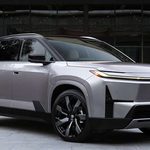
Toyota did not build a 2019 Venza. The first-generation Venza was discontinued after the 2015 model year in the United States, with export production continuing only until 2017, and the nameplate was absent from showrooms for several years before returning. Toyota revived it for the 2021 model year as an entirely different vehicle: a two-row, all-wheel-drive hybrid crossover. This article explains the gap, the real first-generation specs and what the second-generation car offered.
Why There Was No 2019 Venza
The Venza launched in 2008 and sold through the 2015 model year in the US, when Toyota announced it would be dropped. US-market production ended in June 2015, while cars built for export continued until 2017. There was therefore no 2016, 2017, 2018 or 2019 Venza sold in North America. The name did not come back until the second-generation model, which was unveiled online in May 2020 ahead of the 2021 model year.
First-Generation Venza (2009–2015)
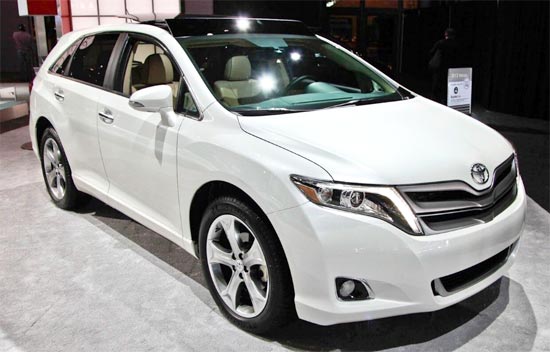
The first-generation Venza (model code AV10) was unveiled at the 2008 North American International Auto Show and built at Toyota Motor Manufacturing Kentucky in Georgetown. It was based on the XV40 Camry platform and shared that chassis with the Lexus RX, and it was designed at Toyota’s Calty studio in Newport Beach, California, from the FT-SX concept. More than 70 percent of its components came from US suppliers, and Toyota projected sales of 75,000 to 100,000 units a year.

Engines and Fuel Economy
Two engines were offered, both paired with a six-speed automatic transmission and available with front- or all-wheel drive:
- 2.7-liter 1AR-FE four-cylinder: 181–182 hp and 182 lb-ft of torque
- 3.5-liter 2GR-FE V6: 268 hp and 246–248 lb-ft of torque
- EPA fuel economy (2.7-liter): 21 mpg city and 29 mpg highway
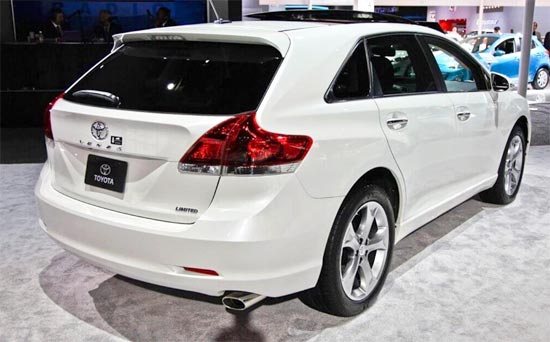
From the 2012 model year the Venza adopted three grades for the US market — LE, XLE and Limited. The LE and XLE could be ordered with either engine and either drivetrain, while the Limited came with the V6 only. A facelift for 2013 brought restyled wheels and the Toyota Entune multimedia system. Standard equipment included 19-inch alloy wheels on four-cylinder cars, 20-inch wheels on V6 cars, dual-zone climate control, an eight-way power driver’s seat and the Toyota Star Safety System.

Crossing Between Wagon and SUV
The Venza’s classification was never clear-cut. Toyota described it as blending the styling and comfort of a passenger car with the flexibility of a utility vehicle, while the EPA classified it as a sport utility vehicle. Some journalists called it a Camry station wagon. Toyota itself compared the Venza with mid-size sedans such as the Honda Accord and Nissan Altima rather than with SUVs, and positioned it below the three-row Highlander.
Safety
The Insurance Institute for Highway Safety named the Venza a Top Safety Pick in 2009 and again in 2010 and 2011, once roof-strength testing became part of the award. Standard safety content included seven airbags, vehicle stability control, traction control, electronic brakeforce distribution, brake assist, hill-start assist and a tire-pressure monitoring system, with LATCH anchors for the rear outboard seats.
Discontinuation
Toyota cited customer preference, segment competitiveness and falling sales when it ended first-generation production. US Venza sales peaked at 54,410 units in 2009 and had fallen to 21,351 by 2015. The last examples built for export left the line in 2017. For reference, the 2015 Venza listed from about $29,800 for an LE to roughly $40,840 for an all-wheel-drive Limited.

Second-Generation Venza (2021–2024)
The second-generation Venza was a rebadged version of the Japanese-market Toyota Harrier, built in Japan and sold in North America from the 2021 model year. Unlike the first car, it came only as a hybrid with all-wheel drive. The powertrain combined a 2.5-liter A25A-FXS four-cylinder engine with electric motors for a total system output of 215–219 hp, and Toyota quoted fuel economy of about 40 mpg combined. US sales rebounded to 61,988 units in 2021. The Venza was discontinued in North America after the 2024 model year and replaced by the Toyota Crown Signia.
What Buyers Can Choose Today
Anyone shopping for a “2019 Venza” should instead consider a first-generation 2009–2015 car if they want the V6 or the older wagon-like body, or a 2021 or newer second-generation Venza if they want the hybrid AWD crossover. The two generations share a name but almost nothing else, including platform, body style and powertrain. Related Toyota models worth comparing include the 2019 Toyota Corolla and the 2019 Toyota Vios.
Marketing and Trims
Toyota launched the first-generation Venza with the campaign “You’re More than One Thing. So is Venza,” and in Canada it appeared as a prize in the 2009 Tim Hortons “Roll Up the Rim to Win” promotion. The model reached Russian and Chinese markets in 2013. It was one of only two North America-built Toyota cars not sold in Mexico, the other being the Avalon.
Interior equipment on the first-generation car included a 13-speaker JBL sound system with Bluetooth, a voice-activated touchscreen navigation system with DVD playback, a rear-seat entertainment system with a nine-inch display and two wireless headphones, a panoramic glass moonroof and a power liftgate on higher trims.
Sales of the first generation were strongest early on: 54,410 units in the US in 2009, tapering to 21,351 by the 2015 model year as the crossover segment moved on. Canadian sales followed a similar curve, peaking at 13,159 units in 2011.