There was no 2020 Toyota A-BAT, and there never was a production A-BAT at any model year. The A-BAT was a concept pickup truck that Toyota revealed in December 2007 and displayed at the North American International Auto Show in Detroit in January 2008. It was a design study, not a vehicle that reached dealerships. This article explains what the concept was, what it was meant to demonstrate, and why it never went into production.

What the A-BAT Was
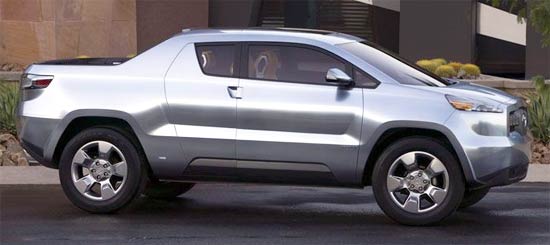
The A-BAT — short for Advanced Breakthrough Aero Truck — was a compact, four-seat pickup concept created by Toyota’s Calty Design Research studio in Newport Beach, California. Toyota presented it as a return to its compact-truck roots, and positioned it below the Tacoma in size terms. The truck used a unibody, car-based platform rather than the body-on-frame construction of Toyota’s larger pickups, a choice intended to give it car-like handling and a smoother ride in city traffic.
In its proportions the A-BAT was close to the RAV4 of the period: it measured 181.3 inches long, against 181.1 inches for the RAV4, and had a four-seat extended-cab layout. The concept was designed to appeal to buyers who wanted pickup utility without the size and fuel consumption of a full-size truck.
Hybrid Powertrain
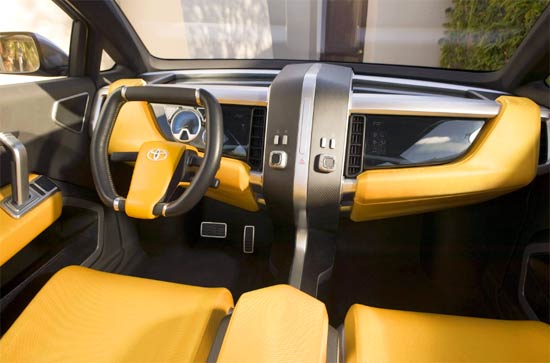
Under the skin, the A-BAT used Toyota’s Hybrid Synergy Drive mated to a four-cylinder gasoline engine, with reports describing it as a 2.5-liter inline-four. The combination was intended to deliver strong fuel economy and low emissions — unusual for a pickup at the time, when hybrid trucks were essentially nonexistent. It drove all four wheels, and the concept included a portable battery pack in the center console plus translucent solar panels set into the top of the instrument panel to help charge small electrical systems.
Exterior and Cargo Design
The A-BAT’s most distinctive feature was a mid-gate, similar to the one used on the Chevrolet Avalanche and Honda Ridgeline. It allowed cargo longer than the standard four-foot bed to pass through into the cab. With the mid-gate and the tailgate both open, usable length grew to about 96 inches, or eight feet. The concept rode on 19-inch wheels and used a smooth, aerodynamic body style influenced by the first-generation Prius rather than traditional truck styling. Its forward-looking lighting used LED technology to reinforce the high-tech theme.

Why It Was Never Built
The A-BAT was well received at its Detroit debut. In September 2008, the pickup-focused website PickupTrucks.com reported that Toyota had confirmed some form of the A-BAT could reach production, provided production costs did not rise unexpectedly; the same report noted that Toyota had canceled a light-duty diesel Tundra. The plan did not survive the global financial crisis and the collapse in pickup demand, and the A-BAT never advanced beyond a single concept. Toyota’s chief designers later revisited the idea of a compact hybrid pickup, but the concept itself remained a one-off.

What Buyers Can Get Instead
Toyota did eventually put hybrid power into pickups, though at a much larger scale than the A-BAT proposed. The company’s modern trucks, including the full-size Tundra, adopted hybrid powertrains well over a decade after the concept. There is no compact Toyota hybrid pickup on sale, so a buyer drawn to the A-BAT’s idea today is limited to the used compact-truck market or Toyota’s larger hybrid trucks. Buyers interested in other discontinued or concept vehicles from the same era can also look at the Camry Atara R and the 2020 Toyota Sienna AWD.
The Compact Truck It Was Meant To Be
When the A-BAT was shown, Toyota already sold the Tacoma in North America. The concept was smaller still, sitting below the Tacoma, and it was aimed at the compact-pickup space that the Ford Ranger and Chevrolet Colorado had vacated in the United States by that point. Toyota’s idea was to combine the practicality of a small truck with the efficiency and maneuverability of a car, a formula that later reappeared in car-based pickups such as the Honda Ridgeline.
Design and Technology
Calty’s designers took unusual inspiration for a truck. Rather than emphasizing ruggedness, they shaped the A-BAT with softer, more aerodynamic lines influenced by the first-generation Prius. The team also studied NATO all-terrain military trucks, whose forward seating position let designers maximize rear payload space within the concept’s compact footprint. Onboard technology included a portable battery pack in the center console, wireless internet access and translucent solar panels on top of the instrument panel that converted sunlight into electrical energy.
The Numbers
Toyota quoted a body length of 181.3 inches, within a fifth of an inch of the RAV4 of the same period, along with a four-seat extended-cab layout, a four-foot bed and 19-inch wheels. With the mid-gate and tailgate open, the load floor stretched to about 96 inches. The concept drove all four wheels through a Hybrid Synergy Drive system paired with a four-cylinder engine.
Why Compact Hybrid Trucks Were Hard
Even a well-received concept has to clear a business case. At the time, compact pickups were losing ground to larger trucks and to SUVs, and adding a hybrid system raised costs in a segment where buyers were price-sensitive. Toyota confirmed in 2008 that a production version was possible barring unforeseen costs, but the financial crisis that followed weakened demand for trucks and ended the plan. Hybrid powertrains did eventually reach Toyota’s trucks, arriving on full-size models years later rather than on a small car-based pickup.
The A-BAT also became part of Toyota’s broader public experimentation with hybrid technology in the years after the Prius made the company a hybrid leader. Concepts like the A-BAT tested how far that technology could stretch into trucks and utility vehicles before it was commercially ready.