The Toyota C-HR is a subcompact crossover that arrived in U.S. showrooms for the 2018 model year. For 2020, Toyota gave it a light styling refresh rather than a full redesign, keeping the same front-wheel-drive layout and the same single engine choice. The 2020 C-HR therefore carried over the mechanical package that defined the model while gaining updated looks and more standard technology.

What the C-HR Is
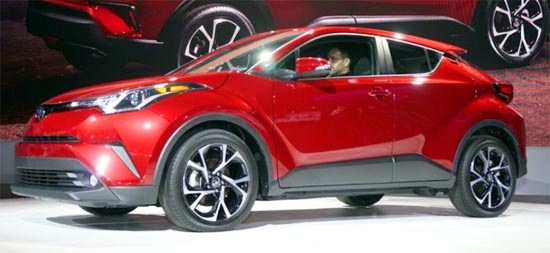
Toyota calls the C-HR a blend of sport coupe, hatchback and compact crossover. It was designed to stand out from more conventional small SUVs, with a highly sculpted body, a sloping roofline and hidden rear door handles. The name stands for Coupe High-Rider. The C-HR was originally developed for Toyota’s youth brand, Scion, but the Scion marque was discontinued in 2016 and the car launched under the Toyota badge instead.
Engine and Performance
In U.S. form the 2020 C-HR uses a 2.0-liter four-cylinder engine that produces 144 horsepower at 6,100 rpm and 139 lb-ft of torque at 3,900 rpm. Power goes to the front wheels through a continuously variable transmission (CVT) with a stepped Shift mode. The C-HR was not offered with all-wheel drive in the United States, and it was never sold with a manual gearbox there. Toyota describes the powertrain as tuned for efficiency and smoothness rather than outright acceleration.

What’s New for 2020
The 2020 update brought a restyled front fascia, new LED headlamps and fresh wheel designs. Android Auto compatibility became standard on all grades, joining the Apple CarPlay and Amazon Alexa support that was already fitted, and the entry LE grade also gained SiriusXM satellite radio. The top Limited grade added an eight-way power-adjustable driver’s seat and an adaptive front lighting system. Toyota introduced two new exterior colors, Supersonic Red and Hot Lava, and a new silver R-Code roof option.
Fuel Economy and Dimensions
The EPA rates the 2020 C-HR at 27 mpg city, 31 mpg highway and 29 mpg combined. The car measures about 173 inches long and rides on a 104-inch wheelbase, with seating for five and roughly 19 cubic feet of cargo space behind the rear seats. A 2.0-liter engine, front-wheel drive and a compact footprint put the C-HR among the more economical small crossovers of its year.
Interior and Technology
Inside, a standard 8-inch touchscreen sits high on the dashboard, and even the base LE comes with dual-zone automatic climate control, heated power mirrors and LED headlamps. The C-HR includes Toyota Safety Sense P as standard, which bundles a pre-collision system with pedestrian detection, lane departure alert with steering assist, automatic high beams and dynamic radar cruise control. The rear seat is a three-person bench with a 60/40 split-fold.

Trims and Pricing
Toyota sold the 2020 C-HR in three grades. The LE started at about $21,295, the XLE at about $23,330 and the Limited at about $26,350 before destination charges. Not all colors and trims were available in every region, and extra-cost paint colors were offered across the range.

The Hybrid and Other Markets
The engine described above is the U.S. specification. In Europe, Toyota also offered the C-HR with a 1.8-liter hybrid and, from 2020, a more powerful 2.0-liter hybrid, which were not sold in the United States. This means the C-HR was a much more fuel-efficient proposition in Europe than its American engine lineup alone would suggest.
Safety and Driver Assistance
Toyota made its Safety Sense P suite standard on every 2020 C-HR, so even the LE included automatic emergency braking with pedestrian detection, lane departure alert with steering assist, automatic high beams and full-speed dynamic radar cruise control. A rear backup camera, stability control and traction control were also standard. Blind spot monitoring and rear cross-traffic alert were available on higher grades. This level of standard active safety was unusual for an affordable subcompact crossover when the C-HR launched.
Living With the C-HR
The C-HR’s dramatic roofline shapes its practicality. Rear headroom and cargo space are tighter than in boxier rivals, and the small rear windows and dark trim can make the back seat feel enclosed. That trade-off is deliberate: Toyota prioritized style over maximum utility. Front-seat occupants have plenty of room, and the high driving position gives the crossover feel that buyers in this class expect. The ride is tuned for comfort rather than sportiness.
How It Compares
The 2020 C-HR competed with small crossovers such as the Honda HR-V, Mazda CX-3 and Hyundai Kona. Its strengths were distinctive styling and generous standard safety equipment; its weaknesses were the lack of all-wheel drive, modest cargo volume and an engine that prioritizes economy over speed. For buyers who valued looks and standard technology over maximum space, the C-HR remained a distinctive choice.
One point that often surprises buyers is that the U.S. C-HR was front-wheel drive only for its entire first generation. Shoppers who needed all-wheel drive for winter weather had to look at other Toyota crossovers, such as the RAV4, or at rival subcompact SUVs that offered it.
The C-HR Over Time
The C-HR was introduced in 2016 and reached the United States as a 2018 model. It stayed in production in this first-generation form for several years after 2020, including a later switch to hybrid-only power in some markets. The 2020 model therefore represents the first generation partway through its life, with the styling and equipment updates that refreshed it for the new model year.