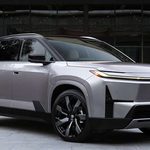
Toyota has used the Urban Cruiser name on several small crossovers since 2008. The version that reached buyers in 2020 was a subcompact SUV built and sold in India as a rebadged Suzuki Vitara Brezza, the product of the Toyota-Suzuki alliance. It went on sale in September 2020 and stayed in production until 2022. This article covers that model’s release date, pricing, engine specs and dimensions, and explains how it fits into the wider Urban Cruiser story.

What the Urban Cruiser Name Has Meant
The nameplate began with a concept car shown in 2006. The first production Urban Cruiser, model code XP110, was Toyota’s European version of the second-generation Toyota Ist, a small five-door crossover sold from around 2008 to 2014. After that model was retired, the name was reused for the India-market SUV in 2020, and later for other rebadged Suzuki models including the Urban Cruiser Hyryder and the Urban Cruiser Taisor.
The 2008 European car and the 2020 Indian car are therefore different vehicles with a shared name rather than successive generations of one design. The 2020 Urban Cruiser was based on the first-generation Suzuki Vitara Brezza, a sub-4-meter SUV that had been developed in India and built by Maruti Suzuki at its Gurgaon plant.

Release Date
Toyota Kirloskar Motor launched the Urban Cruiser in India on 23 September 2020. It was the second model to come out of the Toyota-Suzuki partnership in India, after the Glanza hatchback that had arrived in 2019. Deliveries to customers began in mid-October 2020. The vehicle was also exported to some right-hand-drive African markets from 2021, and Toyota built it through 2022.

Engine and Specifications
The 2020 Urban Cruiser used a single engine: a 1.5-liter four-cylinder gasoline unit from Suzuki’s K15B family, compliant with India’s Bharat Stage 6 emissions standard. It produced 77 kW, which Toyota and the Indian press quoted as 103 hp or 105 PS, along with 138 Nm of torque.
Buyers chose between a five-speed manual gearbox and a four-speed torque-converter automatic. Both were fitted with a 12-volt SHVS mild-hybrid system built around an integrated starter generator rated at 1.77 kW and a small lithium-ion battery. Claimed fuel economy under the Indian ARAI test cycle was 18.76 km/L for the manual and 17.03 km/L for the automatic. Because the engine displaced more than 1,200 cc, the car no longer qualified for India’s lower GST band for small gasoline engines.

Dimensions and Features
At 3,995 mm long, 1,790 mm wide and 1,640 mm high, with a 2,500 mm wheelbase and a curb weight of about 1,135 to 1,150 kg, the Urban Cruiser sat in India’s sub-4-meter SUV class. Toyota gave it its own grille, styled to echo the larger Fortuner, plus redesigned front and rear bumpers to distinguish it from the Vitara Brezza. Equipment on the mid-range model included dual-projector LED headlights, LED fog lamps and tail lights, automatic climate control, keyless entry with push-button start, a reversing camera, two airbags and ABS with electronic brakeforce distribution. Toyota backed the car with a three-year, 100,000-km warranty.

Price and Variants
Toyota sold the Urban Cruiser in three trims — Mid, High and Premium — each offered with either transmission. Prices at launch, ex-showroom Delhi, were:
| Variant | Transmission | Price (ex-showroom Delhi) |
|---|---|---|
| Mid | 5-speed manual | Rs 8.40 lakh |
| Mid | 4-speed automatic | Rs 9.80 lakh |
| High | 5-speed manual | Rs 9.15 lakh |
| High | 4-speed automatic | Rs 10.65 lakh |
| Premium | 5-speed manual | Rs 9.80 lakh |
| Premium | 4-speed automatic | Rs 11.30 lakh |
That put the Urban Cruiser a little above the equivalent Vitara Brezza, by roughly Rs 5,000 at most trim levels. It competed in a crowded sub-4-meter segment against the compact crossover class rivals of the day, including the Hyundai Venue, Kia Sonet, Tata Nexon, Mahindra XUV300 and Ford EcoSport, as well as the Vitara Brezza it was derived from. On the road the two shared engines, dimensions and most hardware, so the choice came down to styling, warranty and dealer network.
What Replaced It
Toyota retired the Brezza-based Urban Cruiser in 2022. It was effectively replaced by the Urban Cruiser Hyryder, a larger model based on the Suzuki Grand Vitara and launched in India in 2022, alongside the smaller Urban Cruiser Taisor. Buyers looking at the 2020 car today are shopping the used market, where it trades as a Vitara Brezza with Toyota badging and a longer factory warranty. Anyone comparing it with other Toyota small cars of the period may also look at models like the 2020 Toyota Yaris Hybrid and the revived 2020 Toyota Supra.
Toyota positioned the manual as the economy choice and the automatic as the convenience option. Because the four-speed automatic had fewer ratios than the six- and seven-speed gearboxes some rivals used, its claimed economy was lower despite the mild-hybrid assist, at 17.03 km/L against 18.76 km/L for the manual.
Interior and Equipment
The cabin followed the Vitara Brezza closely, with Toyota-logo trims and a dual-tone dashboard. Equipment on the higher trims included LED fog lamps, dual-tone alloy wheels, auto-folding and auto-dimming mirrors, a parking camera, automatic headlamps, rain-sensing wipers and a leather-wrapped steering wheel. The front center armrest slid and included storage. Safety provision was modest by modern standards: the launch lineup listed two airbags and ABS with electronic brakeforce distribution among its standard items.
Sales and Exports
Toyota built 7,600 Urban Cruisers in India in 2020, its first partial year, and 27,015 in 2021, according to sales data compiled on Wikipedia. The model was also exported to several right-hand-drive African markets from 2021; in South Africa it was marketed under the same Urban Cruiser name and reached 8,887 units in 2021 and 16,992 in 2022.
Compared with the Vitara Brezza it was derived from, the Urban Cruiser carried a small premium of roughly Rs 5,000 at most trim levels, offset in Toyota’s pitch by a standard three-year, 100,000-km warranty against the Brezza’s shorter two-year, 40,000-km cover. Mechanically the two cars were effectively identical, so buyers were choosing between dealer networks and warranty terms as much as between vehicles.