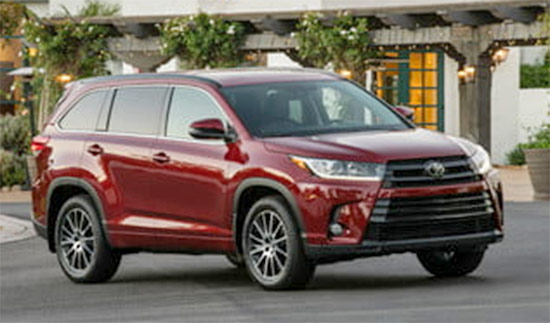
The 2021 Toyota Highlander Hybrid is the second model year of the fourth-generation Highlander’s hybrid variant, which went on sale in February 2020 as a 2020 model. There was no separate 2021 redesign; the fourth-generation Highlander was new for 2020, and the 2021 hybrid carried that design forward with a standard Toyota Safety Sense 2.5+ suite. This review covers the hybrid powertrain, fuel economy, dimensions, grades, pricing and availability of the 2021 Highlander Hybrid.
When the Highlander Hybrid Went on Sale
Toyota revealed the fourth-generation Highlander at the New York International Auto Show on April 17, 2019. The V6 gas model arrived at dealerships in December 2019 and the hybrid followed in February 2020, both for the 2020 model year. That makes 2020 the hybrid’s first model year, so the 2021 Highlander Hybrid is a carryover of the same vehicle rather than a new design. It rides on the TNGA-K platform and is built in the United States alongside the gas model.
Toyota has offered a hybrid Highlander since the first generation, when the Highlander Hybrid joined the line for the 2006 model year, as recorded in the model’s history. The fourth-generation hybrid that arrived for 2020 replaced that earlier V6-based system with a smaller four-cylinder engine, which is why the 2021 Highlander Hybrid makes 243 horsepower while returning better fuel economy than the older six-cylinder hybrid it replaced.
Hybrid Powertrain
The Highlander Hybrid paired a 2.5-liter four-cylinder gasoline engine with two electric motor-generators for a combined system output of 243 horsepower. The engine alone produced 186 hp at 6,000 rpm and 175 lb-ft of torque at 4,400 rpm. Power reached the wheels through an electronically controlled continuously variable transmission that uses a power-split device rather than belts or pulleys. A nickel-metal-hydride battery pack was mounted under the second-row seats, so the hybrid kept the same passenger and cargo space as the V6. Toyota offered front- and all-wheel drive; the all-wheel-drive hybrid used an independent rear electric motor with no mechanical connection to the front axle, which added traction at low speeds and in slippery conditions.
The hybrid offered Normal, Eco and Sport driving modes plus a short-distance EV mode for electric-only running at low speeds. A sequential shifting feature let the driver increase regenerative braking in steps, which helps on descents, and Predictive Efficient Drive used driving history and upcoming road information to manage when the battery charges and discharges.
Fuel Economy
According to the U.S. Department of Energy, the 2021 Highlander Hybrid was EPA-rated at 36 mpg city, 35 mpg highway and 36 mpg combined in front-wheel-drive form, and 35/35/35 with all-wheel drive. Those figures made it one of the more efficient three-row crossovers of its model year and well ahead of the V6, which was rated at 21/29/24 in front-drive form and 20/27/23 with all-wheel drive.
Dimensions and Practicality
According to Cars.com, the 2021 Highlander Hybrid shared its dimensions with the V6 model: a 112.2-inch wheelbase, a 194.9-inch overall length, a 76.0-inch width and a 68.1-inch height, with 8.0 inches of ground clearance. The hybrid was rated to tow 3,500 pounds, and its battery packaging meant it lost no cargo or passenger room compared with the gas model.
Grades and Pricing
The 2021 Highlander Hybrid came in four grades: LE, XLE, Limited and Platinum. There was no hybrid L and no hybrid XSE, which was a V6-only grade. The hybrid usually added roughly $1,400 to the price of a comparable V6 model. The Hybrid LE started at about $38,410 for front-wheel drive, and the range-topping Hybrid Platinum reached about $48,365 before destination charges. Every hybrid included Toyota Safety Sense 2.5+, blind-spot monitoring with rear cross-traffic alert, three-zone climate control and an eight-inch touchscreen with Apple CarPlay and Android Auto.

Seating and Interior
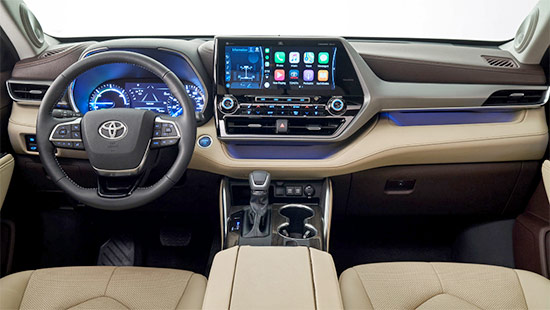
Seating was for seven or eight depending on grade. The Hybrid LE could be ordered with a second-row bench for eight passengers, while the XLE and Limited came with captain’s chairs and offered the bench as an option; the Platinum used captain’s chairs only. Cargo measured 16.0 cubic feet behind the third row, 48.4 cubic feet behind the second row and 84.3 cubic feet with both rows folded. Limited and Platinum grades added acoustic front side glass to cut road noise and ambient LED cabin lighting.
Warranty and Ownership
Toyota covered hybrid-related components that need repair for defects for 8 years or 100,000 miles, and the hybrid battery for 10 years or 150,000 miles, whichever comes first. The basic new-vehicle warranty ran 36 months or 36,000 miles, and the powertrain was covered for 60 months or 60,000 miles. ToyotaCare added scheduled maintenance for two years or 25,000 miles and two years of roadside assistance.

How It Compares
The Highlander Hybrid competes with other three-row family crossovers, but few of its rivals matched its combination of 243 hp and 36 mpg combined. Buyers who did not need the third row could compare it with the smaller 2021 Toyota Highlander range, while Toyota’s broader SUV line included the 2020 Toyota Fortuner for buyers in markets where it is sold. Across Toyota’s lineup, the Highlander Hybrid sat at the efficiency-focused end of the three-row family.
Summary
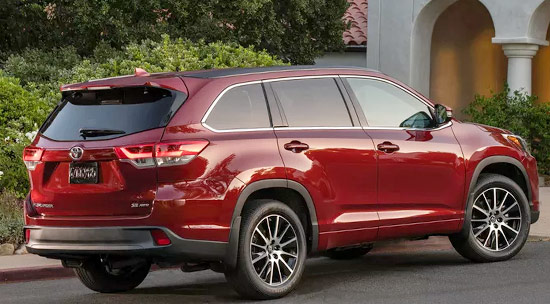
For the 2021 model year, the Highlander Hybrid was a familiar package: the second year of the fourth-generation model with no mechanical changes. Its appeal rested on 243 hp, up to 36 mpg combined, seating for seven or eight and standard active safety equipment, all without the reduced cargo space that some older hybrids carried.