The 2020 Toyota Fortuner was not an all-new model. It was the first facelift of the second-generation Fortuner, the body-on-frame, Hilux-based SUV that Toyota had introduced in July 2015. Toyota unwrapped the updated car in Thailand in June 2020, adding revised styling, a new range-topping Legender variant and a more powerful version of the 2.8-liter diesel. This article focuses on what changed in the redesign and what stayed the same, with figures from Toyota’s Thai-market launch as reported by the Bangkok Post. The broader model is reviewed in our 2020 Toyota Fortuner Review.

What the Redesign Changed
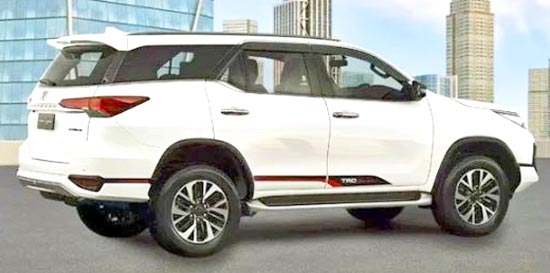
The update was a mid-cycle refresh rather than a new generation, so the underlying body-on-frame IMV platform and the 2,750 mm (108.3 in) wheelbase were carried over. Toyota redesigned the grille, headlights and bumpers at the front and retouched the rear end and the wheels. Inside, the instrument panel was redesigned and a more sophisticated audio system was fitted. Contemporary reporting said the goal was to give the Fortuner a more cohesive look alongside Toyota’s other global SUVs and to distance it visually from the Hilux Revo pickup on which it is based.
The mechanical package that carried over is the reason the Fortuner is prized in rough-road markets: a separate ladder frame, a live rear axle and, on four-wheel-drive versions, a dual-range transfer case. Buyers who valued that durability did not need the redesign to change, and Toyota kept it intact. The 2020 changes were therefore concentrated on appearance, cabin refinement and the diesel’s output rather than on the underlying structure.
Engine Upgrades
The 2020 redesign’s headline mechanical change was a retuned diesel. The 2.8-liter four-cylinder turbo-diesel was revised through electronic control unit tweaks to produce 204 hp (152 kW) and 500 N⋅m of torque, up from 177 hp and 450 N⋅m previously, with the torque band running from 1,600 to 2,800 rpm. The smaller 2.4-liter turbo-diesel was unchanged at 163 hp (121 kW) and 400 N⋅m. The basic powertrain layout stayed the same: six-speed manual or automatic transmissions and a choice of rear- or four-wheel drive.
Toyota said the higher output did not harm economy, claiming 13.9 km/L for the 2.8-liter with the automatic gearbox and four-wheel drive. The 2.8-liter engine was reserved for the new Legender variant and for higher-grade versions of the standard Fortuner, while the 2.4-liter remained the volume choice lower in the range.

Exterior and Dimensions
Because this was a facelift, the dimensions were largely unchanged. The second-generation Fortuner measures 4,795 mm (188.8 in) long, 1,855 mm (73.0 in) wide and about 1,835 to 1,850 mm (72.2–72.8 in) tall, and it continues to ride on a body-on-frame chassis with a live rear axle. The restyled front end, new lighting and revised bumpers gave the 2020 car a more modern and more premium appearance, while the proportions and packaging that make the Fortuner a practical seven-seater were retained.
Interior and Equipment
The cabin kept its three-row layout, with the rearmost seats folding to the sides rather than into the cargo floor. The redesigned instrument panel and upgraded audio were the main changes visible to occupants. Seven airbags were made standard across the range. The new Legender variant added premium features and a more luxurious trim, giving Toyota a direct answer to high-spec versions of rivals such as the Mitsubishi Pajero Sport and Ford Everest. Driver-assistance features including adaptive cruise control and lane-keep assist were offered on the top model.

Toyota also continued to offer the Fortuner with a wide spread of equipment by market. Base versions emphasize durability and value, while top trims such as the Legender provide leather upholstery, larger wheels and more technology. That range of specifications is one reason the Fortuner sells in so many countries: each market can be served with a version pitched at its own price point. The pre-facelift car is covered in our 2019 Toyota Fortuner Review.
Pricing and Variants
In Thailand, where the facelift launched, the Bangkok Post reported prices from 1.319 to 1.414 million baht for the three standard variants, all using the 2.4-liter engine, and 1.564 to 1.839 million baht across four Legender trims. That split let Toyota keep the entry price low with the 2.4-liter while positioning the Legender as a premium alternative. The facelift then rolled out to other markets through 2020 and 2021, with local specifications and prices varying by country according to taxes and equipment.

Markets and Availability
The Fortuner is sold across Asia, Africa, South America, the Middle East and Australia, and it is built in Thailand, Indonesia, India, South Africa, Argentina and other countries. It is not offered in Japan or the European Union, where Toyota instead sells the Land Cruiser Prado and other SUVs. Because so many markets assemble or import the Fortuner, the 2020 redesign reached buyers on different schedules and with different engine and transmission combinations.
Buying a 2020 Fortuner
For buyers, the 2020 facelift is a meaningful model-year marker: it is the point at which the uprated 2.8-liter diesel and the Legender trim arrived, so a 2020-or-later Fortuner may have more power than an earlier second-generation car. When shopping used, confirm which engine is fitted, check the four-wheel-drive system if equipped, review diesel service records and inspect the chassis for off-road damage. An overview of the wider range is available in our Toyota Review section.