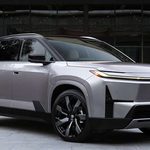
The 2027 Toyota Hilux is the ninth generation of the global Hilux pickup, and it is the most technically diverse Hilux ever built. Toyota’s European newsroom announced the all-new Hilux in June 2026 with a lineup spanning a diesel mild hybrid, a full battery-electric version, combustion engines for Eastern Europe, and a hydrogen fuel-cell model promised for 2028. One important caveat for American readers: the Hilux is not sold in the United States, where the Tacoma fills the same role.
What’s New for the Ninth-Generation Hilux
The new Hilux moves to a single Double Cab body style and standard all-wheel drive across the range, reflecting customer preference. Toyota describes a Tough x Agile design concept with a new frontal treatment, wider side steps, and revised rear steps. The cabin is completely new and, for the first time, draws on the styling of the Land Cruiser, adding a 12.3-inch Toyota Smart Connect multimedia display and a 12.3-inch digital combimeter on higher grades.
Hilux Hybrid 48V Powertrain and Specs
The volume powertrain for Western Europe is the Hilux 2.8 Hybrid 48V, a diesel mild hybrid. Per Toyota’s European newsroom, it produces 204 DIN hp (150 kW) and 500 Nm of torque, returns 9.7 to 10.0 l/100 km, and emits 254 to 262 g/km of CO2 on the WLTP combined cycle. Payload exceeds 1,000 kg and braked towing capacity is 3,500 kg. It also brings electric power steering to the Hilux for the first time in Europe.
The Electric Hilux BEV
The Hilux BEV is Toyota’s first battery-electric pickup and its first fully electric body-on-frame vehicle. It uses a 59.2-kWh water-cooled lithium-ion battery with 80 cells, mounted within the frame, and front and rear eAxles for permanent all-wheel drive. The front eAxle makes 80 kW and 205 Nm; the rear makes 128 kW and 268 Nm. Toyota quotes a WLTP combined driving range of up to 257 km and up to 380 km on the city cycle, with DC fast charging at 125 kW taking the battery from 10 to 80 percent in about 30 minutes. Payload is listed at 710 to 715 kg and braked towing at 1,600 kg, with a 700 mm wading depth and a de Dion rear axle.
Some early specifications circulating in the press, such as a nine-second 0-100 km/h time and a 140 km/h top speed, come from outlet reports rather than Toyota’s own release and should be treated as reported, not confirmed.
Dimensions, Interior, and Technology
For the Hybrid 48V, Toyota lists an overall length of 5,320 mm, a wheelbase of 3,085 mm, a width of 1,855 to 1,885 mm, and a height of 1,865 mm. The BEV shares the same length and wheelbase with a fixed 1,855 mm width and a slightly lower 1,845 mm height. Both use Toyota Safety Sense with functions enabled by the new electric power steering, including Lane Tracing Assist, plus a Blind Spot Monitor, Safe Exit Assist, and an Emergency Driving Stop System.
Price and Release Date
In the United Kingdom, Toyota announced on-the-road prices starting at £42,845 for the diesel 48V and £57,845 for the electric model, which qualifies for the country’s £5,000 plug-in van grant. Toyota said customer deliveries would begin in mid-June 2026 for the BEV and July 2026 for the diesel 48V. The Hilux is not offered in the USA. Reviews of earlier trucks here, such as our 2019 Hilux concept review and our Hilux diesel engine specs, show how far the nameplate has come from its 1968 roots.
The hydrogen fuel-cell Hilux, confirmed for a 2028 launch, would make the model Toyota’s most powertrain-diverse vehicle. Toyota says that once the fuel-cell version joins the range, the Hilux will offer more powertrain choices than any other Toyota on sale — a clear expression of the company’s multipath strategy.
Off-road ability carries over in spirit from the previous Hilux, including a 700 mm wading depth, 29-degree approach and 24-degree departure angles, and the ability to sit stationary in water for up to ten minutes. The BEV lowers ground clearance to 212 mm to make room for its underfloor battery.
In Europe, the Hybrid 48V is offered in Entry, Mid, High, and Invincible grades, while the BEV launches with Entry, Mid, and High equipment levels. The new truck is expected in Australia and other markets after its European debut; it remains absent from the United States, where the larger Tacoma is Toyota’s pickup.
Our Take
Toyota is being unusually honest about what the electric Hilux is for. A sub-260-km range and a 1,600-kg towing limit will not replace a diesel double cab for long hauls, and Toyota says as much, pitching the BEV at mining, forestry, airports, and other single-site fleets where vehicles return to base to charge. That is the right call. The mild-hybrid diesel remains the sensible global choice, and promising a fuel-cell version for 2028 gives buyers a hedge. North American shoppers should not get their hopes up: this truck is not coming, and the Tacoma is the answer here.
FAQ
Is there an electric Toyota Hilux?
Yes. The ninth-generation Hilux introduces the Hilux BEV, Toyota’s first battery-electric pickup, with a 59.2-kWh battery, dual-motor all-wheel drive, and a WLTP combined range of up to 257 km.
Will the 2027 Toyota Hilux be sold in the U.S.?
No. The Hilux is not sold in the United States. Toyota’s midsize pickup for the North American market is the Tacoma.
What engines does the 2027 Hilux offer?
Toyota’s European lineup includes the 2.8 Hybrid 48V diesel mild hybrid, the Hilux BEV, and diesel and gasoline engines for Eastern European markets, with a hydrogen fuel-cell model expected in 2028.
How much can the Hilux BEV tow?
Toyota lists a braked towing capacity of 1,600 kg for the electric Hilux, well below the 3,500 kg rating of the diesel 48V model.