2027 Toyota Venza Revival: Rumored Premium Crossover Return, PHEV Powertrain, and Trims
The 2027 Toyota Venza revival: rumored premium crossover return, PHEV powertrain, and trims story is attracting attention because the Venza name still occupies a distinctive place in Toyota’s history. Neither a conventional SUV nor a traditional station wagon, the Venza has repeatedly served as a more stylish, comfort-oriented alternative to the brand’s mainstream family crossovers. A third interpretation could take that formula further by combining premium materials, contemporary technology, and plug-in hybrid capability.
However, Toyota has not officially confirmed a 2027 Venza for the United States. Details circulating around the model—including its platform, output, trim structure, pricing, and production schedule—should therefore be treated as informed projections rather than established specifications. The strongest case for a revival is not simply nostalgia: demand remains healthy for upscale two-row crossovers that offer meaningful electric range without requiring drivers to depend entirely on public charging.
Why the Venza Name Could Return
The original Venza arrived for the 2009 model year as a wide, car-based crossover with five seats, available V6 power, and an unusually low roofline for a Toyota utility vehicle. It disappeared after the 2015 model year in the United States, then returned for 2021 as a far more efficient hybrid-only crossover closely related to the global Toyota Harrier.
That second-generation American-market Venza emphasized quietness, design, and fuel economy over maximum cargo capacity or rugged capability. It was discontinued after the 2024 model year as Toyota introduced the Crown Signia, another premium-leaning, hybrid, two-row crossover. Consequently, a Venza revival would need a clearly differentiated mission rather than functioning as a near-duplicate of the Crown Signia or RAV4.
A plug-in hybrid electric vehicle, or PHEV, provides the most logical distinction. Toyota could position a future Venza between the practical RAV4 and the more formal Crown Signia, giving it a sleeker body, an EV-capable powertrain, and a technology-rich cabin. That strategy would also complement fully electric products such as the 2027 Toyota bZ3C: Sleek Electric Crossover Coupe Range, Cockpit Screens, and Global Plans, allowing buyers to choose between battery-electric transportation and a plug-in model with gasoline backup.
Projected PHEV Powertrain and Performance
The most credible powertrain scenario is an evolution of Toyota’s established plug-in hybrid architecture. A 2.5-liter Atkinson-cycle four-cylinder engine could work with front and rear electric motors, an electronically controlled continuously variable transmission, and a lithium-ion battery mounted beneath the passenger compartment. The rear motor would provide electric all-wheel drive without a conventional driveshaft.
Existing Toyota PHEVs demonstrate what such a system could deliver. The previous RAV4 Prime produced 302 combined horsepower, while newer Toyota plug-in applications show that the company can tune similar components for either performance or efficiency. For a premium Venza, an estimated 300 to 320 horsepower would create brisk acceleration without undermining refinement. A projected zero-to-60-mph time in the 5.7-to-6.3-second range would be realistic, depending on final weight and battery output.
Electric range would matter more than a small improvement in acceleration. A target of approximately 42 to 50 miles would let many owners complete daily commuting and local errands without starting the gasoline engine. Once the usable battery charge is depleted, the vehicle would continue operating as a conventional Toyota hybrid rather than becoming dependent on a charging station.
Charging and Everyday Efficiency
A competitive revived Venza should include an onboard charger capable of replenishing the battery overnight from a 120-volt outlet and much faster from a 240-volt Level 2 unit. An 11-kW onboard charger would be desirable, although a lower-capacity system could reduce cost. DC fast charging is less essential for a PHEV because the gasoline engine covers long-distance travel, but scheduled cabin preconditioning and programmable charging should be standard.
Real-world economy would depend heavily on charging frequency. An owner who plugs in every evening might use little gasoline during the working week, while a driver who never charges would carry the battery’s extra mass without realizing its principal benefit. That distinction is critical: a PHEV is best understood as a vehicle with two complementary energy systems, not as a self-charging hybrid with a larger battery.
Expected Specifications at a Glance
| Category | Projected 2027 Venza | Why It Matters |
|---|---|---|
| Powertrain | 2.5-liter four-cylinder plug-in hybrid | Balances electric commuting with long-distance flexibility |
| Drivetrain | Electronic AWD | Adds traction without a mechanical rear driveshaft |
| Combined output | Approximately 300-320 hp | Would support premium-level passing performance |
| Electric range | Approximately 42-50 miles | Could cover a typical daily commute without gasoline |
| Seating | Five passengers | Preserves a spacious two-row layout |
| Estimated price | $43,000-$55,000 | Places it above mainstream hybrids but below many luxury PHEVs |
Every figure in the table is an editorial estimate, not a manufacturer announcement. Battery costs, tax policy, equipment packaging, and the relationship between the Venza and Crown Signia could substantially alter the final business case.
Exterior Design and Platform Possibilities
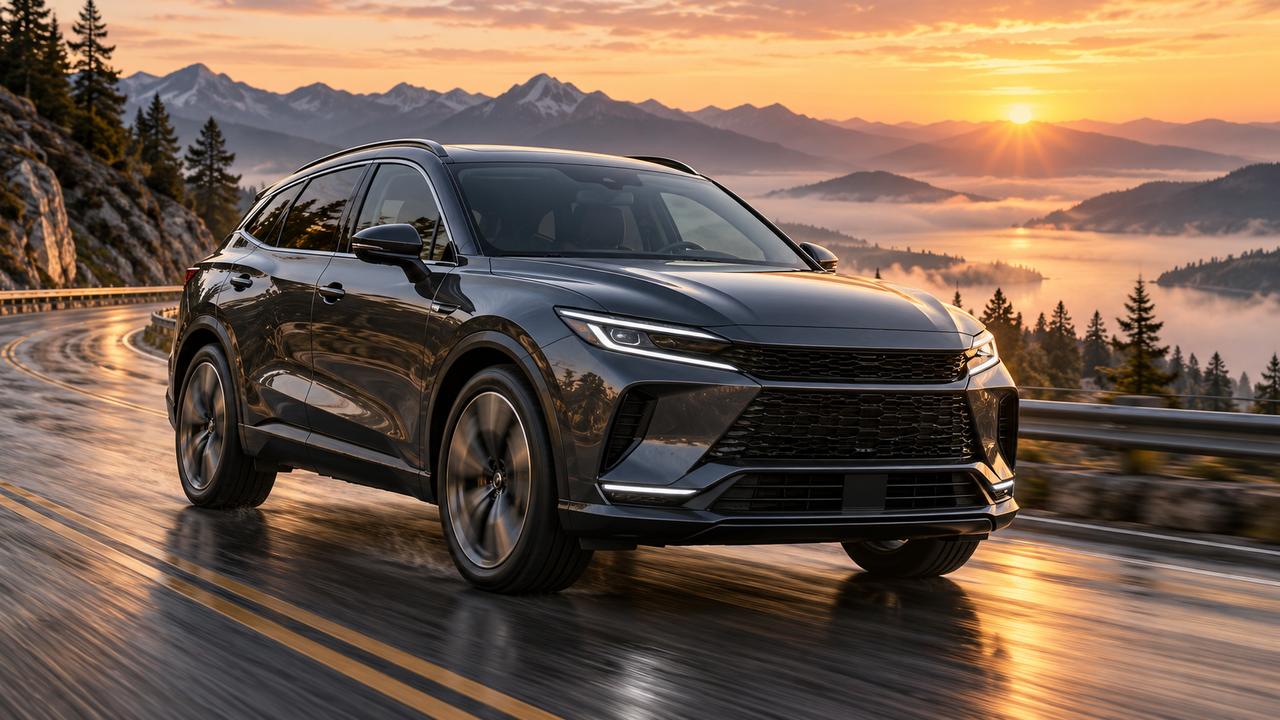
A revived Venza would likely use a development of Toyota’s modular GA-K architecture, which supports multiple midsize vehicles and electrified powertrains. Its proportions could remain lower and more flowing than those of a RAV4, with a tapered roof, sculpted rear quarters, flush or aerodynamically optimized door handles, and slim lighting elements.
Toyota would need to avoid sacrificing too much utility for style. The previous Venza’s cargo area was less accommodating than some similarly sized competitors, and a large traction battery could further affect floor height. Smart battery placement, a compact rear motor, and a broad hatch opening would be essential. Approximately 30 cubic feet of cargo room behind the second row would make the vehicle useful, though still unlikely to challenge boxier SUVs.
The likely visual theme would be polished rather than aggressive. Toyota can reserve overt motorsport character for vehicles such as the 2027 Toyota GR Yaris Evolution: Lightweight Aero Tweaks, 300 HP Output, and Availability. The Venza’s role would instead favor aerodynamic efficiency, restrained detailing, and a planted stance.
Interior, Technology, and Comfort
The cabin would be central to the revived model’s premium claim. Expected features include a 12.3-inch or larger central touchscreen, a configurable digital instrument cluster, wireless smartphone integration, over-the-air software capability, and multiple USB-C ports. A head-up display and digital rearview mirror could appear on upper trims.
Material quality would need to exceed mainstream Toyota standards through soft-touch surfaces, convincing synthetic leather, precise switchgear, and effective noise insulation. Toyota could also revive an electrochromic panoramic roof similar in concept to the Star Gaze roof offered on the previous Venza. Unlike the family-focused 2027 Toyota Sienna Hybrid: Refresh Changes, Luxury Captain Chairs, and All-Weather AWD, the Venza would prioritize intimate two-row comfort rather than maximum passenger count.
Battery packaging can affect rear-seat foot room and cushion height, so specifications alone will not determine comfort. Door opening width, seat-bottom angle, outward visibility, and suspension tuning will shape the ownership experience. A well-executed Venza should feel calm on broken pavement while maintaining accurate steering and disciplined body control.
Possible Trim Levels and Pricing
LE or XLE PHEV
An entry model priced near $43,000 could include electronic AWD, heated front seats, a power liftgate, Toyota Safety Sense, wireless phone connectivity, and a comprehensive charging interface. Toyota may use the XLE badge instead of LE to reinforce the vehicle’s upscale positioning.
Limited PHEV
A Limited trim in the upper-$40,000 range could add ventilated seats, upgraded upholstery, a panoramic roof, premium audio, a surround-view camera, additional acoustic glass, and enhanced parking assistance. This would likely be the volume specification for buyers seeking near-Lexus amenities without moving into a luxury-brand showroom.
Nightshade or Platinum
A Nightshade edition could introduce dark exterior trim, distinctive wheels, and model-specific interior accents. A Platinum flagship approaching $55,000 might offer adaptive dampers, upgraded lighting, semi-automated parking, and the full driver-assistance suite. Toyota’s expanding use of appearance-led derivatives is already visible in models such as the 2027 Toyota Grand Highlander Nightshade: Blacked-Out Styling, Hybrid Max Specs, and Price.
Safety and Driver Assistance
A 2027 model would be expected to include a later generation of Toyota Safety Sense. Likely functions include automatic emergency braking with pedestrian and cyclist detection, adaptive cruise control, lane-centering assistance, road-sign recognition, blind-spot monitoring, and rear cross-traffic alert.
More advanced trims could add front cross-traffic warning, a driver-monitoring camera, lane-change assistance, and low-speed hands-free support under tightly controlled conditions. Buyers should remember that such systems remain assistance technologies: weather, faded lane markings, blocked sensors, and complex construction zones can limit performance.
Market Position and the Case for Revival
A PHEV Venza would enter a crowded garden of electrified crossovers, competing not only with plug-in models from Hyundai, Kia, Ford, and Mitsubishi, but also with Toyota’s own hybrids. Its success would depend on clear product spacing. It must be more elegant and refined than a mainstream compact SUV, less expensive than a comparable Lexus, and more EV-capable than a conventional hybrid.
The greatest obstacle is internal overlap. The Crown Signia already covers much of the upscale two-row territory, while the RAV4 plug-in hybrid offers performance and utility. Toyota could solve that problem by making the Venza the design-led PHEV specialist: lower, quieter, and richer inside, with electric range treated as a core feature rather than an optional powertrain upgrade.
Final Outlook
The rumored 2027 Toyota Venza revival is plausible because its proposed ingredients align with current market needs: two-row practicality, premium presentation, all-wheel drive, and enough electric range for daily use. Yet plausibility is not confirmation. Until Toyota announces the vehicle, prospective specifications, prices, trims, and release timing remain speculative.
If approved, the strongest version would not simply resurrect an old badge. It would refine the Venza formula into a sophisticated plug-in crossover that bridges conventional hybrids and fully electric vehicles. With roughly 300 horsepower, more than 40 miles of electric range, a quiet five-seat cabin, and disciplined pricing, a reborn Venza could grow into one of Toyota’s most compelling electrified offerings for 2027.