2027 Toyota Compact Cruiser EV: Retro Off-Roader Styling, Battery Architecture, and Expected MSRP
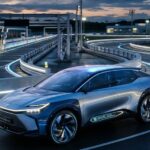
The 2027 Toyota Compact Cruiser EV: retro off-roader styling, battery architecture, and expected MSRP are subjects of intense interest because the original concept combined three qualities rarely found in one electric vehicle: genuinely compact dimensions, recognizable Toyota off-road heritage, and an adventurous design that did not resemble a conventional urban crossover. First revealed during Toyota’s large-scale battery-electric vehicle presentation in December 2021, the Compact Cruiser EV appeared to preview a spiritual successor to compact utility models such as the FJ Cruiser, early Land Cruiser derivatives, and the small but capable Toyota Blizzard sold in Japan.
Toyota has not formally confirmed a production Compact Cruiser EV for the 2027 model year. Consequently, specifications, pricing, range, and launch timing remain projections rather than final factory data. Yet the concept’s popularity, Toyota’s expanding battery-electric strategy, and growing demand for attainable adventure vehicles make a production interpretation plausible. If approved, it could sit below the bZ4X and future electric Land Cruiser-class models while challenging compact EVs from Jeep, Kia, Hyundai, Volvo, and emerging Japanese and Chinese manufacturers.
From Design Study to Potential Production Off-Roader
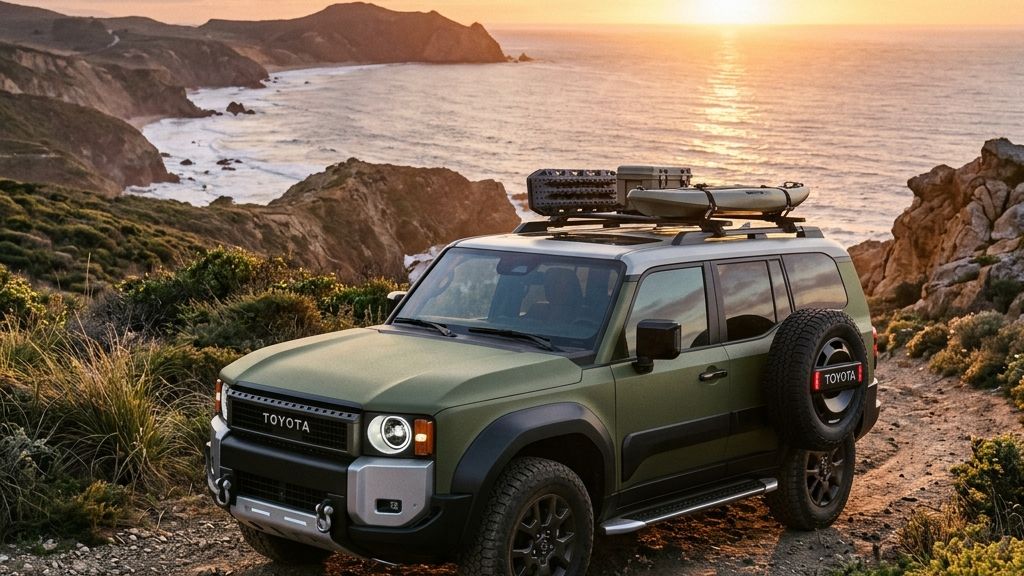
The Compact Cruiser EV was developed by Toyota’s European design operation in Nice, France. Its visual character proved strong enough to earn the 2022 Car Design Award for concept vehicles. That recognition matters because it demonstrated that the model’s appeal extended beyond nostalgia. Designers created a clear, functional-looking shape with short overhangs, a tall greenhouse, prominent wheel arches, and a nearly vertical front fascia.
Unlike the larger and more luxurious vehicles expected at the upper end of Toyota’s future range—such as the 2027 Toyota Century SUV: Ultra-Luxury Japanese Limousine Crossover Specs and Bespoke Price—the Compact Cruiser EV would likely emphasize simplicity, durability, and manageable proportions. Its business case would depend on delivering personality without the price, weight, and complexity of a full-size electric SUV.
A production model would inevitably lose some concept-car details. Toyota would need to revise the bumpers, lighting elements, mirrors, wheels, door handles, and external accessory mounts to comply with pedestrian-protection, visibility, durability, and crash-safety regulations. Even so, the core silhouette could survive because its upright surfaces and geometric body are central to the vehicle’s identity.
Retro Off-Roader Styling With Functional Potential
Land Cruiser and FJ Cruiser Influences
The concept’s compact rectangular body recalls several generations of Toyota utility vehicles without directly copying one. Its horizontal grille panel, squared wheel openings, contrasting roof, skid-plate-style lower trim, and chunky rear pillars evoke the FJ Cruiser and classic Land Cruiser models. A roof rack and side-mounted equipment reinforce the expedition theme, while the bright accent colors present the vehicle as youthful rather than militaristic.
Short front and rear overhangs could provide useful approach and departure angles, especially if the production version retains meaningful ground clearance. Approximately 200 to 220 millimeters of clearance would be realistic for an adventure-oriented crossover, although Toyota has published no official figure. The battery enclosure would require substantial underbody protection, and the suspension geometry would need to balance trail clearance against aerodynamic efficiency and road comfort.
This would probably not be a ladder-frame crawler in the tradition of the Land Cruiser or Hilux. Buyers seeking heavy-duty towing, long-range rural operation, and diesel torque would still be better served by a truck such as the 2027 Toyota Hilux GR Sport: Rugged Diesel Hybrid Specs, Wide Track Suspension, and Global Price. The Compact Cruiser EV would instead target camping routes, snow-covered roads, beaches, forestry tracks, and daily urban driving.
A Practical, Washable Cabin
Toyota has not shown a production-ready interior, but the exterior theme suggests a cabin built around straightforward controls and durable materials. Likely features include rubberized storage trays, water-resistant upholstery, a configurable cargo floor, physical switches for climate and off-road functions, and multiple charging outlets for outdoor equipment. Recycled fabrics and plant-derived or low-impact trim materials could support Toyota’s sustainability messaging, provided they meet stringent ultraviolet, abrasion, temperature, and stain-resistance standards.
A compact footprint does not necessarily mean unusable interior space. A dedicated EV platform can reduce front powertrain volume and create a longer cabin relative to overall length. However, an upright body and all-terrain tires impose efficiency penalties. Toyota’s engineers would therefore need to manage airflow around the roof rails, wheel arches, mirrors, and rear corners without smoothing away the concept’s rugged character.
Expected Battery Architecture and Electric Drivetrain
The largest technical uncertainty concerns platform choice. A near-term vehicle could use a shortened evolution of Toyota’s e-TNGA architecture, which supports front-, rear-, and all-wheel-drive electric layouts. A later 2027 launch might instead benefit from Toyota’s next-generation modular BEV engineering, more advanced electronic systems, and improved battery packaging. Either approach would place a structural battery pack beneath the passenger compartment to lower the center of gravity and free cabin space.
An entry model could employ one front motor, while the version most consistent with the concept would use two motors for electric all-wheel drive. Dual-motor control can react rapidly to wheel slip and distribute torque without a mechanical driveshaft. Proper calibration would matter more than headline output: progressive accelerator response, effective hill-descent control, brake-based wheel-slip management, and selectable terrain modes would determine how confidently the vehicle performs away from pavement.
A usable battery capacity of roughly 55 to 70 kWh is credible for this class. That could support an EPA-estimated range near 230 to 280 miles, depending on tire choice, motor configuration, temperature, and aerodynamics. Aggressive all-terrain tires and a roof rack could reduce highway range noticeably. Toyota may prioritize long-term battery durability over record-setting charging speed, potentially using conservative thermal and state-of-charge limits.
| Category | Expected Specification | Real-World Significance |
|---|---|---|
| Vehicle type | Compact five-door electric SUV | Smaller and easier to maneuver than a traditional off-roader |
| Battery | Approximately 55-70 kWh usable | Balances range, weight, cost, and underbody clearance |
| Estimated range | 230-280 miles EPA | Adequate for commuting and moderate-distance outdoor travel |
| Drive layouts | Single-motor FWD and dual-motor AWD | Allows an affordable base model and a trail-focused flagship |
| Expected output | Approximately 180-300 horsepower | Competitive performance without excessive energy consumption |
| DC fast charging | Roughly 150-200 kW peak | Potential 10-80 percent session in about 25-35 minutes |
| Expected MSRP | Approximately $35,000-$45,000 | Positions it between urban EVs and larger electric SUVs |
These figures are informed estimates, not confirmed Toyota specifications. Battery chemistry could also vary by trim. An affordable version may use lithium iron phosphate cells for lower cost, strong cycle life, and reduced reliance on nickel and cobalt. Longer-range or higher-output variants could use nickel-rich lithium-ion cells with greater energy density. Toyota’s solid-state battery program remains strategically important, but cost and production scale make conventional liquid-electrolyte cells more likely for an attainable compact SUV in 2027.
Charging, Cold Weather, and Outdoor Use
For North America, compatibility with the SAE J3400 charging connector would be expected as the industry transitions toward that standard. Battery preconditioning linked to route planning would help the vehicle achieve more consistent fast-charging performance in winter. A heat pump could also preserve driving range by reducing the energy required to warm the cabin.
Bidirectional or external power capability would be especially valuable. An onboard outlet could run lights, a refrigerator, cooking equipment, or tools at a campsite. Vehicle-to-home functionality would be more complex and market-dependent, but it would strengthen the practical case for a battery large enough to serve as temporary household backup power.
Expected MSRP, Trims, and Market Position
A plausible American starting MSRP is approximately $35,000 to $38,000 for a front-wheel-drive model before destination fees and incentives. A better-equipped dual-motor version could cost $40,000 to $45,000, while a specialized trail trim with underbody armor, all-terrain tires, additional drive modes, and accessory hardware might approach $48,000.
That pricing would be crucial. If the Compact Cruiser EV moves too far beyond $45,000, it risks competing with larger crossovers offering more range and cargo capacity. Toyota must also account for battery sourcing and assembly rules that determine eligibility for regional incentives. Leasing could remain attractive if purchase incentives are unavailable or if buyers are concerned about resale values and rapidly evolving battery technology.
The vehicle would occupy a distinct position from a comfort-oriented electrified crossover or a potential plug-in hybrid such as the 2027 Toyota Venza Revival: Rumored Premium Crossover Return, PHEV Powertrain, and Trims. Its strongest competitors would be characterful compact SUVs rather than anonymous high-range EVs. Styling, accessory support, trail capability, and Toyota’s durability reputation could therefore matter as much as acceleration or maximum charging power.
What Toyota Must Get Right
- Preserve the concept’s identity: The upright roof, compact proportions, strong wheel arches, and simple front graphic should remain recognizable.
- Protect the battery: Robust shielding, well-managed ground clearance, and reliable sealing are essential for gravel, snow, water, and rocky trails.
- Control weight: A smaller battery and efficient motors would produce better handling and trail behavior than an oversized pack chasing an unrealistic range figure.
- Deliver dependable charging: Stable charging curves and effective thermal conditioning are more useful than a brief, difficult-to-repeat peak rate.
- Keep the price attainable: The model’s appeal depends on being an accessible adventure EV, not a boutique lifestyle product.
Outlook
The Toyota Compact Cruiser EV remains a concept rather than a confirmed 2027 production vehicle, so buyers should treat release dates and specifications cautiously. Nevertheless, it represents one of Toyota’s most convincing opportunities in the electric market. Its blend of heritage-inspired styling, compact dimensions, dual-motor potential, and outdoor utility could distinguish it from smoother but less memorable crossovers.
If Toyota delivers approximately 250 miles of practical range, durable battery protection, competent all-wheel-drive calibration, and an MSRP near $40,000, the Compact Cruiser EV could become an appealing electric counterpart to the brand’s established off-road family. More importantly, it could prove that an efficient compact EV does not need to sacrifice visual character or a genuine sense of adventure.