The 2019 Toyota 86 — sold as the GT86 in Europe — was a rear-wheel-drive sports coupe developed jointly with Subaru. For 2019 it was not an all-new car. It remained part of the first generation that launched in 2012, and the headline change for the year was the limited-run 86 TRD Special Edition. The completely redesigned successor, renamed the GR86, did not arrive until 2021 as a 2022 model, so there was no new-generation GT86 for 2019.

Was There a New GT86 for 2019?
No. The first-generation 86/GT86 was produced from January 2012 through March 2021. Toyota’s replacement, the Gazoo Racing – badged GR86, made its world debut in April 2021 and went on sale for the 2022 model year with a larger 2.4-liter flat-four engine. The 2019 model was therefore a carryover year for the first generation, distinguished mainly by the addition of the TRD Special Edition grade. In the US the car was simply called the 86; GT86 was the name used in Europe, while the earlier Scion FR-S name was discontinued after 2016.
Engine and Powertrain
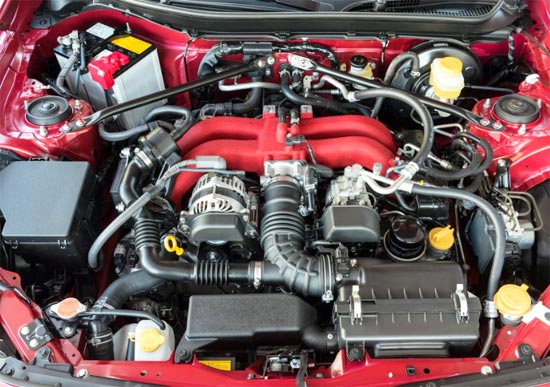
The 86 used a 2.0-liter horizontally opposed (boxer) four-cylinder engine with Toyota’s D-4S dual-injection system, combining direct and port injection. It produced 205 horsepower and 156 lb-ft of torque when paired with the six-speed manual transmission, or 200 horsepower and 151 lb-ft with the six-speed automatic. The engine’s square dimensions — equal 86 mm bore and stroke — gave the car its name, and they helped it make roughly 100 horsepower per liter of displacement. Drive went to the rear wheels.
Chassis balance was a priority: the car used a low center of gravity, a 53/47 front-to-rear weight distribution and a compact boxer engine mounted low to keep its mass close to the ground. Those choices were intended to make the 86 feel agile and predictable on a winding road rather than focused on outright straight-line speed.
The chassis used a sport-tuned MacPherson strut front suspension with strut tower bars and reinforced mounting brackets, plus a multi-link rear suspension with additional bracing. The layout was front-engine, rear-wheel drive, a configuration Toyota preserved to keep the car balanced and engaging.
Exterior and Design
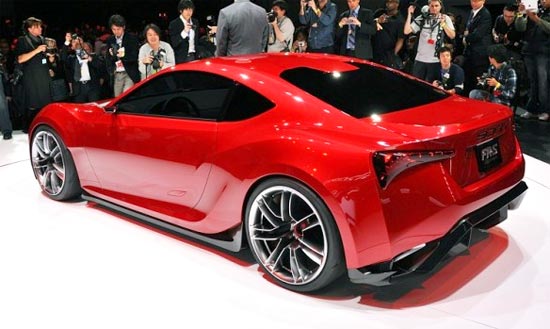
The 86 was a 2+2 fastback coupe with a low roofline and flowing front fenders inspired by Toyota’s classic 2000 GT. LED projector-beam headlights, color-keyed power mirrors, chrome-tipped dual exhaust and 17-inch twisted-spoke alloy wheels were standard across the range. The 86 GT added LED fog lamps, an aerodynamic floor undercover, heated mirrors and a matte-black rear wing with color-keyed end plates.
The 86 TRD Special Edition, finished exclusively in Raven black with a TRD tricolor graphic, added a TRD body kit with a front bumper, side sills, rear bumper and diffuser, plus a spoiler and a TRD exhaust with brushed stainless tips. It rode on exclusive 18 x 7.5-inch wheels with Michelin Pilot Sport 4 tires sized 215/40R18, and it used SACHS dampers and 12.8-inch front / 12.4-inch rear Brembo brakes.

Interior
Inside, the 86 offered sport bucket front seats and rear seats intended for occasional use, with a standard LATCH child-seat anchor system for front-facing child seats. Every 86 included a steering wheel with integrated audio controls and cruise control. The 86 GT and TRD Special Edition added dual-zone automatic climate control and a 4.2-inch TFT multi-information display that could show a G-force meter, a stopwatch, horsepower and torque curves, engine coolant and oil temperatures and fuel consumption. The Smart Key system with push-button start was standard on the GT and TRD Special Edition.
Rear-seat space was limited, as is typical of 2+2 coupes, but the front seats were generously bolstered for support during cornering. Cargo capacity was modest, and the fastback roof meant the 86 prioritized driving enjoyment over practicality.

Trims, Equipment and Pricing
For 2019, Toyota offered the 86 in three grades: the base 86, the 86 GT and the 86 TRD Special Edition. Pricing started at $26,455 for the base car, according to Kelley Blue Book, while the TRD Special Edition began at $33,340 and was limited to 1,418 units, sold only with the manual transmission. The EPA rated the manual car at 21 mpg city, 28 mpg highway and 24 mpg combined, with the automatic slightly higher at 24/32/27.
Safety
Every 2019 86 came with Toyota’s STAR Safety System, which included anti-lock brakes, electronic brake-force distribution, traction control, brake assist, vehicle stability control and smart stop technology. The supplemental restraint system included dual-stage front airbags, front seat-mounted side airbags and front and rear side curtain airbags. Toyota’s 36-month/36,000-mile basic warranty and a 60-month/60,000-mile powertrain warranty applied.
Unlike the hybrid and all-wheel-drive models elsewhere in Toyota’s lineup, the 86 stayed true to a simple formula: a naturally aspirated engine, a manual gearbox option and rear-wheel drive.
Heritage and the GR86
The 86’s name is a reference to the AE86, the rear-drive Toyota Corolla coupe sold in the United States in the mid-1980s and known in Japan as the hachi-roku. The modern 86 was developed with Subaru, which sold its own version as the BRZ, and the two cars were built at Subaru’s Gunma plant in Japan. When the first generation ended, Toyota replaced it with the GR86 for 2022, powered by a 2.4-liter flat-four producing 228 horsepower.
The car was sold under several names during its life — Scion FR-S in North America from 2012 to 2016, then Toyota 86 from 2017, GT86 in Europe and FT86 in a few markets — but the machine underneath was the same joint Toyota-Subaru design throughout.
Related Toyota Models
For Toyota’s other sports-car news from this era, see the 2019 New Toyota Supra Rumors Redesign and Review and the 2019 Toyota Supra Might Get A Manual Transmission and V-6 engine, or browse the Car Review index.