The Toyota Harrier is a mid-size crossover SUV that Toyota has sold in Japan since 1997; early export versions were rebadged as the Lexus RX before the two models separated. The 2019 Harrier belonged to the third generation, model code XU60, which was produced from November 2013 until May 2020. This article covers the verified engines, dimensions and Japanese pricing of the 2019 Harrier.
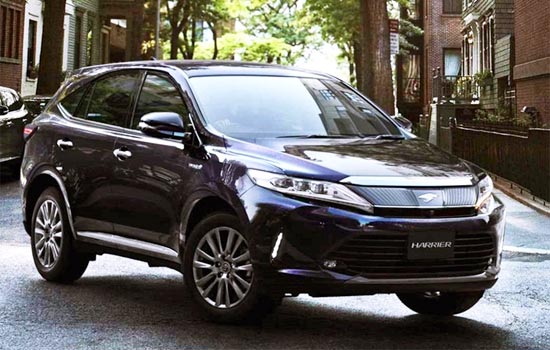
Third-Generation Harrier Overview
The XU60 Harrier debuted in December 2013 for gasoline models and in January 2014 for the hybrid. Unlike the earlier Harriers that shared their platform with the Lexus RX, this generation was built on the same New MC underpinnings as the RAV4 (XA40) and was related to the Lexus NX (AZ10). It was positioned as a more road-oriented, upmarket alternative to the RAV4. The line-up received a facelift in June 2017 that added a turbocharged engine and revised the trim range.
For more on the global Toyota SUV range, see the 2019 Toyota Fortuner Redesign, Review and Price and the 2019 Toyota Highlander Price and Review.
Engine and Drivetrain
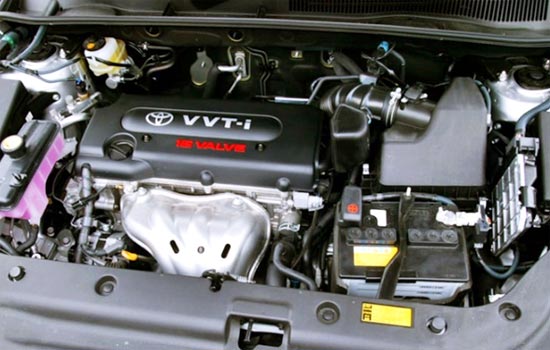
Three powertrains were offered for the 2019 Harrier. The base unit was a 2.0-liter 3ZR-FAE four-cylinder making 149 hp and 142 lb-ft of torque, driving through a Super CVT-i continuously variable transmission with seven-speed simulation. A turbocharged 2.0-liter 8AR-FTS four-cylinder produced 228 hp (231 PS) and 260 lb-ft, paired with a six-speed automatic. The hybrid combined a 2.5-liter 2AR-FXE engine with electric motors for a total system output of 194 hp, using an eCVT and all-wheel drive. Toyota’s Japanese data listed the turbo engine at 231 PS and 350 Nm, with JC08 fuel economy of 13.0 km/L. For background on continuously variable transmissions, see CVT.
Exterior and Dimensions

The third-generation Harrier measured 4,720 to 4,770 mm long, 1,835 mm wide and 1,690 mm tall, on a 2,660 mm wheelbase, with a curb weight between 1,560 and 1,810 kg. The turbocharged versions measured 4,725 mm long. The model used a smooth, coupe-like body with a distinctive grille-mounted emblem. The XU60 was the first Harrier officially sold outside Japan, reaching Singapore in July 2017 and Malaysia in November 2017. In both markets it was offered with the turbocharged 2.0-liter engine.
Interior and Equipment
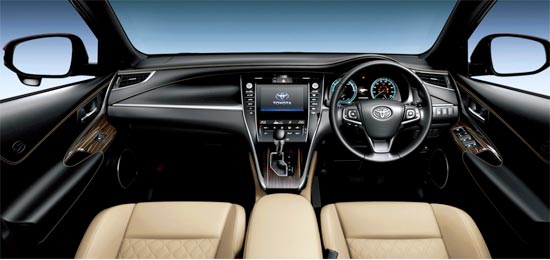
Japanese trim levels for the facelifted XU60 included Elegance, Premium and Progress, with a Metal and Leather Package available on the upper grades. The top Premium trim came with a JBL GreenEdge audio system and an 8-inch touchscreen infotainment system with navigation. Toyota Safety Sense P was standard across the range, bundling adaptive cruise control, lane departure assist, a pre-collision system and automatic high beams. The interior offered five seats with upmarket materials intended to bridge the gap between Toyota and Lexus.
Price and Release Date

The 2019 Harrier was part of the XU60 generation that ran until May 2020. Japanese list prices for the 2019 model, including consumption tax, started at 3,004,100 yen for the 2.0-liter two-wheel-drive Elegance, rising to 3,309,900 yen for the Premium and 3,850,000 yen for the Progress. Turbocharged and hybrid versions cost more. The Harrier was replaced by the fourth-generation XU80 in June 2020, which was also sold in North America and China as the Toyota Venza. The Harrier nameplate was never sold in the United States.
Key Specifications
| Specification | 2019 details |
|---|---|
| Base engine | 2.0-liter 3ZR-FAE, 149 hp / 142 lb-ft |
| Turbo engine | 2.0-liter 8AR-FTS, 228 hp / 260 lb-ft |
| Hybrid system | 2.5-liter 2AR-FXE, 194 hp combined |
| Transmissions | CVT (base); 6-speed automatic (turbo); eCVT (hybrid) |
| Drive | Front-wheel drive or all-wheel drive |
| Wheelbase | 2,660 mm |
| Length | 4,720 to 4,770 mm |
| Width | 1,835 mm |
| Curb weight | 1,560 to 1,810 kg |
| Seats | 5 |
Name and History
The Harrier is named after the eastern marsh harrier, a bird of prey found in Hokkaido and northern Honshu; until the XU60 generation a stylized bird emblem appeared on the grille. For its first export life, the Harrier was rebadged as the Lexus RX from 1998 until 2008, because Toyota had not yet launched Lexus as a standalone brand in Japan. From the third generation the Harrier became its own line, using RAV4 underpinnings rather than sharing the RX platform.
The XU60 was the first Harrier to be officially sold outside Japan, reaching Singapore and Malaysia in 2017. For a used buyer outside Japan, this means gray-import and officially delivered examples exist in parts of Southeast Asia, while the model otherwise remains a Japanese-market vehicle. The fourth-generation Harrier that followed in 2020 was also marketed in North America and China as the Toyota Venza, broadening the nameplate’s reach.
The Harrier’s appeal in Japan lay in its combination of coupe-like styling, upmarket materials and a platform shared with the RAV4, which kept running costs reasonable despite the premium positioning. The turbocharged 2.0-liter gave the strongest gasoline performance, while the hybrid prioritized efficiency and smooth low-speed response. All-wheel drive was available on the higher-powered versions, adding traction for wet or snowy conditions without turning the Harrier into a serious off-roader.
Because the model was sold mainly in Japan, buyers outside the country typically encounter it as a gray import. That makes documentation and service history especially important, and it means equipment can vary widely between individual cars, since Japanese-market options were often chosen individually rather than bundled into large packages.
The Harrier nameplate continued after 2020, but the XU60 generation covered here is the last to use the RAV4-derived New MC platform before the model moved to the newer TNGA-K architecture. That change, along with the adoption of the Venza name in North America, marks a clear dividing line between the 2019 Harrier and its successor.