The Toyota SW4 is the name used in Brazil and Argentina for the Toyota Fortuner, a body-on-frame SUV built on the Hilux pickup. It has been sold in Brazil since 2006. Unlike several other nameplates on this site, the 2019 SW4 genuinely existed: it belongs to the second generation of the Fortuner, coded AN150 or AN160, which was launched globally in July 2015 and reached Brazil in February 2016. Toyota sells the SW4 as a rugged, seven-seat family and off-road vehicle rather than a soft crossover.

What the SW4 Is
The Fortuner, and therefore the SW4, shares its ladder-frame platform and drivetrain with the Toyota Hilux, which gives it genuine off-road capability and a high towing rating. In Brazil and Argentina the model is badged SW4, while in most other markets it is the Fortuner. Argentine-market cars are assembled at Toyota Argentina’s plant in Zárate. The second generation offered five- and seven-seat configurations, with the seven-seat layout aimed at families who needed three rows.
Exterior and Dimensions
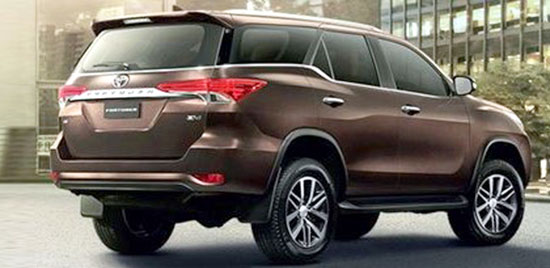
The second-generation SW4 is a large SUV: 4,795 mm long, 1,855 mm wide and 1,835 to 1,850 mm tall, on a 2,750 mm wheelbase. Curb weight runs from about 1,850 to 2,135 kg depending on engine and equipment, and the fuel tank holds 80 liters. Its tall stance, short overhangs and ground clearance mark it out as a truck-based SUV rather than a car-derived crossover, and the 4WD versions use a part-time transfer case with high and low ranges.
Interior
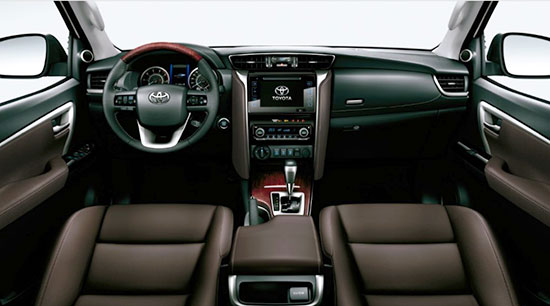
Inside, the SW4 is practical rather than luxurious. The second-generation cabin offers three rows in seven-seat form, with a folding third row to free up cargo space. Depending on grade and market, equipment includes touchscreen infotainment, automatic climate control, and an array of driver-assistance features such as forward collision warning and adaptive cruise control under Toyota’s Safety Sense packages. Materials are durable, reflecting the model’s workhorse roots.
Engines
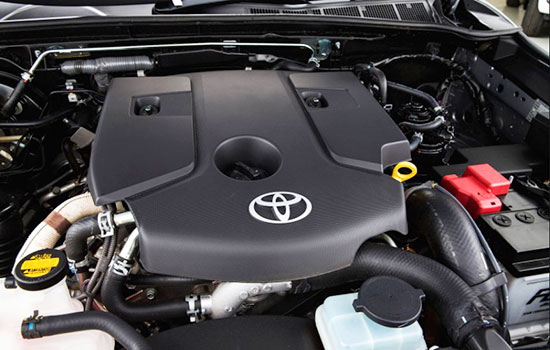
At its Brazilian launch in 2016 the second-generation SW4 was offered with a 4.0-liter 1GR-FE V6 gasoline engine or a 2.8-liter 1GD-FTV turbo-diesel. The V6 produced 235 hp at 5,200 rpm and 376 Nm at 3,800 rpm. The 2.8-liter diesel produced 177 PS at 3,400 rpm and 450 Nm of torque between 1,600 and 2,400 rpm in its original automatic form. A 2.7-liter 2TR-FE flex-fuel four-cylinder, rated at 164 hp and 245 Nm, later joined the range. Gearboxes included six-speed manual and six-speed automatic units, with five-speed automatics on some earlier diesel versions.
| Engine | Displacement | Power | Torque | Fuel |
|---|---|---|---|---|
| 2.7 L 2TR-FE | 2,694 cc | 164 hp (166 PS) | 245 Nm | Flex-fuel gasoline |
| 4.0 L 1GR-FE V6 | 3,956 cc | 235 hp (238 PS) | 376 Nm | Gasoline |
| 2.8 L 1GD-FTV diesel | 2,755 cc | 177 PS (174 hp) | 450 Nm | Diesel |
The 2019 Model Year
For 2019 the SW4 in Brazil was offered with the 4.0-liter V6 gasoline engine and the 2.8-liter turbo-diesel, in the well-equipped SRX grade with five- or seven-seat layouts. This generation was also sold in Argentina, where it was assembled locally. Buyers in 2019 could therefore choose between gasoline power and the torquey diesel, and between rear-wheel drive and four-wheel drive depending on market and trim.
Updates Since
Toyota facelifted the SW4 in Brazil on 24 November 2020, introducing the SR, SRV and SRX trim levels. At that point the SR and SRV used the 2.7-liter flex-fuel engine while the SRX used the 2.8-liter diesel. In November 2021 the 2.7-liter engine was dropped in Brazil and the 2.8-liter diesel became the sole engine, and a range-topping Diamond trim was added. A GR Sport version followed, and the diesel was uprated in some markets to 204 PS. For more on Toyota’s SUV line-up covered here, see the 2019 Toyota Fortuner Review and the 2019 Toyota Urban Cruiser Review, or browse the Car Review index.
First Generation (AN50/AN60; 2004–2015)
The Fortuner, and therefore the SW4, began production in November 2004 and reached Brazil in 2006. The first generation was offered there with a 3.0-liter 1KD-FTV diesel, a 4.0-liter 1GR-FE V6 gasoline, and a 2.7-liter 2TR-FE flex-fuel four-cylinder, depending on year and trim. Like the second generation, it was based on the Hilux and used a ladder frame, a solid rear axle and a part-time four-wheel-drive system.
Off-Road Capability and Towing
Because it shares the Hilux’s chassis, the SW4 is a genuinely capable off-roader rather than a car-based crossover. Four-wheel-drive versions use a transfer case with high and low ranges and, on some trims, a rear differential lock. That hardware, combined with the diesel engine’s torque, is why the model is popular with buyers who tow trailers or drive on rough roads in rural Brazil and Argentina.
In markets where both were offered, the diesel was generally the more economical and higher-torque choice, while the larger gasoline engines appealed to buyers wanting smoother, quieter performance. Whichever engine was fitted, the SW4’s drivetrain and suspension were tuned for load-carrying and durability rather than outright handling.
Key Specifications
| Item | Second-generation SW4 |
|---|---|
| Platform | Ladder frame derived from Toyota Hilux |
| Length / width / height | 4,795 / 1,855 / 1,835–1,850 mm |
| Wheelbase | 2,750 mm |
| Curb weight | 1,850–2,135 kg |
| Seats | 5 or 7 |
| Fuel tank | 80 liters |
Interior and Equipment
The SW4’s interior packaging prioritizes durability and space over luxury. Seven-seat models add a third row that folds to extend the load area, and the tall body gives generous headroom for every row. Higher grades such as the SRX add leather upholstery, a touchscreen infotainment system and automatic climate control, while lower trims keep equipment simpler to serve fleet and rural buyers.