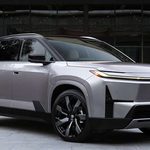
The Toyota Venza is a two-row, mid-size crossover that Toyota sold in North America for the 2009 through 2015 model years. Because US production ended in June 2015 and export production wrapped up in 2017, there was no 2019 Venza in the original lineup. The nameplate returned only for 2021, as a hybrid-only model, and was retired again after 2024 in favor of the Crown Signia.

Was There a 2019 Toyota Venza?
In 2015 Toyota confirmed that the first-generation Venza would be discontinued after the 2015 model year. The company cited customer preference, competitiveness within the segment and deteriorating sales. Production for the US market ended at Toyota Motor Manufacturing Kentucky in June 2015, while Venzas built for export continued until 2017. A vehicle advertised as a 2019 Venza therefore does not match any factory model year of the original car, as recorded by Wikipedia and MotorTrend.
What the First-Generation Venza Was
The Venza went on sale in late 2008 as a 2009 model. It used a car-based platform shared with the Camry and was positioned as a two-row alternative that sat between the RAV4 and the three-row Highlander. Instead of the tall, boxy shape of a traditional SUV, it used a lower, wagon-like body with seating for five. It was designed for and built in North America, and Toyota also built Canadian-market examples at the same Kentucky plant.

First-generation Venza at a glance
- Model years: 2009–2015 (US market); export production continued to 2017
- Body style: five-door, two-row mid-size crossover
- Layout: front-engine, front-wheel drive or all-wheel drive
- Engines: 2.7-liter four-cylinder; 3.5-liter V-6
- Assembly: Toyota Motor Manufacturing Kentucky, Georgetown, Kentucky
Powertrain and Layout
The Venza offered a choice of two engines: a 2.7-liter four-cylinder and a 3.5-liter V-6. Both could be paired with front-wheel drive or all-wheel drive. For its final 2015 model year the Venza started at $29,890 including destination, according to MotorTrend.

Inside the Cabin
The Venza’s selling point was passenger space and comfort rather than sportiness. The two-row layout and wagon-like profile gave it a large cargo area and easy access, and reviewers of the time described it as part crossover and part wagon. That packaging is the main reason used examples still appeal to buyers who want a roomy five-seat vehicle without the height of an SUV.

Sales and the Discontinuation Decision
Venza sales in the US peaked in the model’s first full year, 2009, at 54,410 units. Volume then fell to 29,991 in 2014 and 21,351 in 2015. In 2014 the Ford Edge sold 108,864 units and the Nissan Murano 47,301, which shows how much ground the Venza had lost in its segment. Toyota chose to end the model rather than fund a redesign, freeing capacity at the Kentucky plant for the Camry and Avalon.
The Venza Returns: 2021–2024
Toyota revived the Venza name for the 2021 model year with an entirely new, hybrid-only crossover related to the Japanese-market Toyota Harrier. That model used a 2.5-liter four-cylinder hybrid system with a combined 219 horsepower and standard all-wheel drive, and it was marketed as a fuel-efficient alternative to larger SUVs. As Car and Driver reported, Toyota discontinued the second-generation Venza after the 2024 model year and replaced it with the Crown Signia.

What Buyers Can Get Today
There is no new Venza on sale. A shopper who wants the original car is limited to the used market, where 2009–2015 Venzas are available with either engine and either drivetrain. A shopper who wants the nameplate’s hybrid successor can look for a used 2021–2024 Venza. Both are five-seat, road-oriented crossovers; neither offers three rows.
Related Toyota Models
The Venza sat alongside other global Toyota models, including the compact 2019 Toyota Vitz Redesign and Release Date and the European-market 2019 Toyota Verso Reviews.
How the Venza Compared With Its Rivals
In 2014, the year before it was dropped, Toyota sold 29,991 Venzas in the United States. Over the same period it sold about 267,698 RAV4s and 146,127 Highlanders, while the Ford Edge moved 108,864 units and the Nissan Murano 47,301. Those gaps are the context for the cancellation: the Venza was a niche two-row model squeezed between two much stronger Toyota nameplates, and it had not developed enough share in its segment to justify a redesign.
The Harrier Connection
The first-generation Venza was a North America-only model; Toyota’s Japanese line-up used separate names for its mid-size crossovers, including the Harrier. When the Venza name came back for 2021, the new vehicle was closely related to the then-current Toyota Harrier, which is why the second-generation car shared little with the original. Searchers looking for a 2019 Venza sometimes run into Harrier material from the same era, but the two model lines are distinct.
Summary for Shoppers
The Venza name covers two different vehicles separated by a five-year gap: a 2009–2015 crossover offered with a four-cylinder or a V6, and a 2021–2024 hybrid crossover that Toyota later replaced with the Crown Signia. Anyone searching for a 2019 Venza is looking at a year in which neither existed. The practical choice is between a used first-generation car, if the priority is a roomy gasoline two-row crossover, and a used second-generation hybrid, if fuel economy matters more. Toyota has not announced a third-generation Venza, and the Crown Signia that followed it is a different nameplate in a different size class.