The Toyota MR2 is a two-seat sports car that Toyota built from 1984 until 2007 across three generations. It holds a specific place in automotive history as the first Japanese rear-mid-engine, rear-wheel-drive production car, and it was sold around the world. Production ended with the third-generation model in July 2007, so there is no such thing as a 2020 Toyota MR2. This article covers the car that existed: its three generations, their verified specifications, and the models that filled its role afterward.

The Mid-Engine Formula
The MR2 was conceived as a small, economical and sporty car, not an exotic one. Its signature was a straight-four engine mounted transversely just ahead of the rear axle, driving the rear wheels. The layout gave it a low polar moment of inertia and sharp responses, and it came with four-wheel disc brakes and fully independent coilover suspension with MacPherson struts at each corner. The name stands for either “mid-ship run-about 2-seater” or “mid-engine, rear-wheel-drive, 2-seater”. In French-speaking markets the car was renamed simply Toyota MR, because the abbreviation sounded like an obscenity in French.
The design began as a 1976 project aiming for a car that was enjoyable to drive while still economical. Design work started in 1979, and a prototype called the SA-X was built in 1981. Testing took place in Japan and the United States, including on race circuits. All three generations complied with Japanese regulations on exterior dimensions and engine displacement, and the car arrived around the same time as rivals such as the Honda CR-X, the Pontiac Fiero and the Ford EXP.
Three Generations
The first generation, coded W10, was produced from 1984 to 1989 and offered 1.5- and 1.6-liter four-cylinder engines, the latter available with a supercharger. The second generation, the W20, was made from 1989 to 1999 and used larger 2.0- and 2.2-liter engines, including a turbocharged 2.0-liter. The third generation, the W30, ran from October 1999 to July 2007; in North America it was called the MR2 Spyder and in most of Europe the MR2 Roadster, and it was the only generation offered solely as a convertible. The 2020 Toyota Fortuner Redesign, Review and Engine Specs page shows how different Toyota’s modern SUV range looks beside a compact two-seater.
W30 Engine and Performance
The third-generation MR2 used a 1.8-liter 1ZZ-FE four-cylinder with variable valve timing, producing 138 bhp (140 PS; 103 kW) and 126 lb-ft (171 N⋅m) of torque. It weighed only about 996 kg (2,195 lb), which made it notably light for a modern sports car and the reason for its reputation for agile handling. A five-speed manual was standard, with a six-speed manual in Europe and a sequential manual transmission offered in several markets. Power output was modest, but the light weight meant the car did not need a large engine to be quick.

Exterior and Design
Each generation had its own character. The W10 was the boxy, angular original with a distinctive wedge profile. The W20 was smoother and larger, closer in spirit to a scaled-down Ferrari. The W30 was compact and open, with a short wheelbase and modest dimensions of 3,886 mm (153 in) long and 1,694 mm (66.7 in) wide. Across all three, the stance was wide and low, with short overhangs. The 2020 Toyota Urban Cruiser Review covers a very different kind of Toyota compact sold in a different era and market.

Interior and Chassis
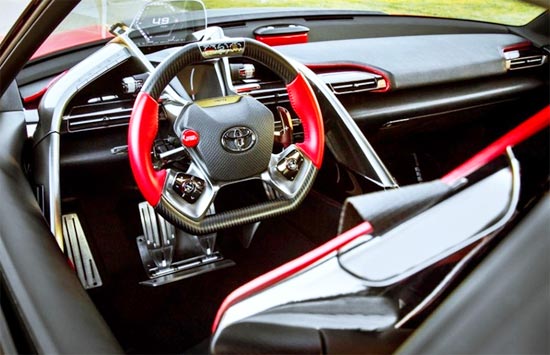
Being a mid-engined two-seater, the MR2 had a compact cabin with limited luggage space behind the seats. The W30’s dimensions were 2,451 mm (96.5 in) on the wheelbase, 1,694 mm (66.7 in) wide and 1,240 mm (48.8 in) tall. The engine sat between the driver and the rear axle, which limited both cargo room and noise isolation, but gave the car the balance and steering feel that owners valued. The suspension layout, with struts at each wheel, was carried through the generations with detail improvements rather than radical changes.
Price and the Used Market
The MR2 was always positioned as an affordable sports car rather than a luxury one, which is a large part of why it built a following. Because production ended in 2007, all examples are now used and buyers should check for accident damage, for signs of overheating on mid-engined cars, and for the condition of the roof mechanism on the W30 convertible. Values vary widely by generation and condition, and the turbocharged W20 models are the most sought after by enthusiasts. Full pricing history is not published by Toyota, so any figure depends on the individual car and its market.

What Replaced the MR2
Toyota did not build a direct successor. The affordable sports-car role passed instead to the GT86, which arrived in 2012, and later to the GR86. Those cars use a front-engine, rear-wheel-drive layout rather than the MR2’s mid-engine arrangement, so they are spiritual successors at best. Toyota has never announced a production replacement for the MR2.
The Rumored Revival
Talk of a new mid-engined Toyota has circulated for years. In March 2017 the magazine Evo reported that Toyota had expressed interest in a performance range that chief engineer Tetsuya Tada referred to as the “Three Brothers”, including a lightweight mid-engined sports car rumored to be a spiritual successor to the MR2. No such car has entered production, and Toyota has not confirmed one. Until it does, the MR2 remains a three-generation, 1984-to-2007 story. An overview of Toyota’s lineup is available in our Toyota Review section.