There was no 2020 Toyota Prius v. US sales of the Prius v ended after the 2017 model year, and global production finished in March 2021. The Prius v was a compact hybrid wagon sold as the Prius α in Japan and the Prius+ in Europe and Singapore. This article explains the model’s real production timeline and specifications, and what replaced it.

Why There Was No 2020 Prius v
Toyota discontinued the Prius v in the United States after the 2017 model year, as sales had fallen following the 2016 launch of the RAV4 Hybrid. Canadian sales continued a little longer, through 2018. Japanese production of the model, badged Prius α there, was announced for discontinuation on December 1, 2020, and ended in March 2021. There was therefore no new Prius v for shoppers in the US in 2020.
What the Prius v Was
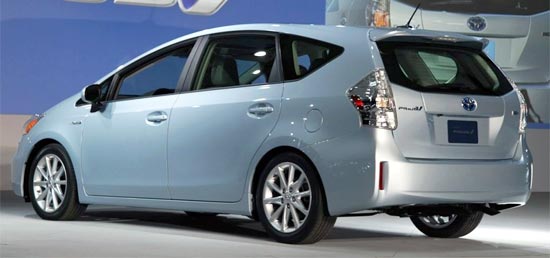
The Prius v (the “v” stands for versatility) was introduced in Japan in May 2011 and in the US in October 2011, with European deliveries following in June 2012. It was the first Prius variant spun off from the main Prius platform, built on the XW40 architecture related to the third-generation Prius. Toyota marketed it as a compact MPV with a standard full hybrid drivetrain and a body style closer to a small minivan than a sedan.

Naming and Markets
The model carried several names. In Japan it was the Prius α, in Europe and Singapore the Prius+, and in the Benelux countries the Grand Prius+. Daihatsu sold an OEM version in Japan as the Mebius from 2013 until February 2021. The US car was a five-seater, while European and Japanese versions offered a third row for seven occupants, using a space-saving lithium-ion battery mounted in the center console. Because neither the extra seats nor the lithium-ion battery were offered in the United States, American buyers could choose only the five-seat version, which is one reason the model stayed a niche product there. The seven-seat layout was aimed at markets where a compact hybrid people-mover made more sense than a wagon.
Powertrain and Fuel Economy
The Prius v used the same 1.8-liter Atkinson-cycle four-cylinder as the standard Prius, paired with a 60 kW electric motor and Toyota’s Hybrid Synergy Drive system through a planetary-gear transmission. Toyota added a “Pitch and Bounce” motor control to smooth longitudinal movement on undulating roads. Key figures:
- Engine: 1.8-liter 2ZR-FXE four-cylinder, 98 hp (73 kW) and 105 lb-ft (142 N·m)
- Combined hybrid system output: 134 hp (100 kW)
- Battery: 1.3 kWh nickel-metal hydride (five-seat models) or 1.0 kWh lithium-ion (seven-seat models)
- EPA fuel economy (US): 44 mpg city, 40 mpg highway, 42 mpg combined
- Drag coefficient: 0.29

Interior and Cargo
Cargo space was more than 50 percent larger than the 2010 Toyota Prius, at 34.3 cubic feet behind the rear seats. The wagon was five inches longer and one inch wider than the Prius hatchback, and it offered about 38 inches of rear legroom. Standard features included an electronic shift lever, push-button start, a back-up camera, hill-start assist and the Toyota Entune multimedia system, which debuted on the Prius v. Available options included LED headlamps, dynamic radar cruise control with a pre-collision system and a lightweight resin panoramic sunroof.
Safety
In the United States, the 2012 Prius v included Toyota’s Vehicle Proximity Notification System, a speaker that alerts pedestrians at speeds below about 15 mph, when the hybrid runs quietly on electric power. ANCAP testing of the 2015 Prius V in Australia awarded strong scores for frontal offset, side and pole impact protection, with good ratings for whiplash and pedestrian protection.

Markets and Discontinuation
Global Prius v/α/+ sales reached about 634,000 units by April 2016, led overwhelmingly by Japan with 428,400 and the United States with 148,079. US sales topped 40,000 in 2012 but had fallen to a few thousand before the model was dropped. As of 2017, the Prius v started at $26,675 and ran to $30,935 for the top Five trim.
What Replaced It
In the United States, the RAV4 Hybrid indirectly took the Prius v’s place when it arrived for 2016. The Prius v was not directly replaced in Europe, while in Australia and New Zealand the larger Kluger Hybrid filled the role from July 2021. Buyers who want a Toyota hybrid wagon or MPV today can look at the current Prius hatchback, the Corolla Hybrid, or the hybrid versions of the RAV4 and Corolla Touring Sports, depending on the market.
The Japanese Prius Alpha
In Japan, the Prius α was launched on May 13, 2011, with a monthly sales target of 3,000 units and a choice of five-seat and seven-seat bodies. Toyota reported 25,000 orders before sales began. Standard grades were the S and G, and a sporty G’s variant was added in 2014, replaced by a GR Sport version in November 2017. The Japanese nameplate was sold through all of Toyota’s domestic dealership channels.
The Prius v was a global program rather than a single-market car, but it was always a small seller outside Japan. Toyota positioned it for young families who wanted a hybrid with more space than the standard Prius, and it was the first Prius variant to be spun off from the core model’s platform.
Shoppers comparing Toyota hybrids may also want the 2019 Toyota Prius Review and the 2019 Toyota Prius Prime Price and Redesign.