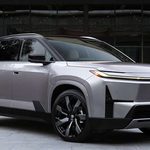
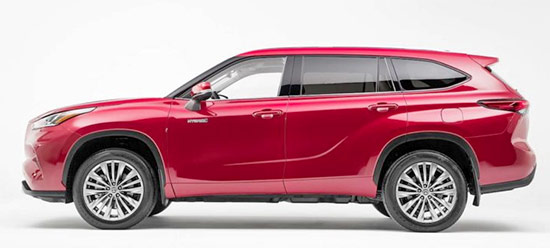
The 2021 Toyota Highlander Hybrid is the second model year of the fourth-generation hybrid. Toyota redesigned the Highlander for 2020, not 2021, and the 2021 hybrid carried the same 2.5-liter hybrid powertrain forward. This article focuses on the hybrid engine and its specifications, the release timeline, its fuel economy and what the numbers mean in practice.

Release and Availability
Toyota unveiled the fourth-generation Highlander at the New York International Auto Show on April 17, 2019. The gas V6 went on sale in December 2019 and the hybrid in February 2020, both as 2020 models. The 2021 Highlander Hybrid therefore reached dealerships in late 2020 as a carryover of that same vehicle, with no change to its engine, transmissions or battery. The only notable 2021 additions to the Highlander line were the V6-only XSE grade and a standard Toyota Safety Sense 2.5+ safety suite.
For 2021 the Highlander Hybrid was offered in LE, XLE, Limited and Platinum grades with front- or all-wheel drive. It was not available in the L grade or the new XSE grade, which was a V6-only model. Pricing started at about $38,410 for the front-drive LE and reached about $48,365 for the Platinum before destination charges.
The Hybrid Engine
The hybrid powertrain centers on a 2.5-liter DOHC four-cylinder gasoline engine with Toyota’s VVT-iE electric variable valve timing on the intake camshaft and VVT-i on the exhaust. The engine makes 186 hp at 6,000 rpm and 175 lb-ft of torque at 4,400 rpm on its own. It works with two electric motor-generators inside a transaxle, and Toyota quotes a total system output of 243 horsepower. The electric motors are mounted coaxially to reduce the size and weight of the unit and cut friction losses, and both motor-generators can charge the hybrid battery.
- Gasoline engine: 2.5-liter DOHC four-cylinder
- Engine output: 186 hp at 6,000 rpm, 175 lb-ft at 4,400 rpm
- Electric motors: two motor-generators (MG1 and MG2)
- Total system output: 243 hp
- Transmission: electronically controlled continuously variable (ECVT)
- Battery: nickel-metal-hydride, mounted under the second-row seats

Fuel Economy
Fuel economy was the hybrid’s strongest selling point. The U.S. Department of Energy rated the front-wheel-drive 2021 Highlander Hybrid at 36 mpg city, 35 mpg highway and 36 mpg combined, while the all-wheel-drive hybrid was rated at 35 mpg in each measure. By comparison, the 3.5-liter V6 Highlander returned 24 mpg combined with front-wheel drive and 23 mpg combined with all-wheel drive.

Front-Wheel Drive and All-Wheel Drive
Toyota offered the hybrid with either front-wheel drive or all-wheel drive. The all-wheel-drive version used a separate rear-mounted electric motor to drive the rear wheels, with no mechanical connection between the transaxle and the rear axle. That arrangement can send torque rearward during acceleration to reduce front-wheel slip and enhance cornering, and it adds traction on rough or slippery ground. It also avoids the weight and drag of a conventional driveshaft.
Driving Modes and Control
The 2021 Highlander Hybrid offered Normal, Eco and Sport driving modes plus a short-distance EV mode for electric-only running at low speeds. A sequential shifting feature let the driver increase regenerative braking in steps for more control on descents. Toyota also included Predictive Efficient Drive, which watches driving habits and upcoming road conditions to manage battery charge and discharge more efficiently.
Acceleration and Towing
Because the hybrid prioritizes efficiency, it is not the quickest Highlander. MotorTrend measured all-wheel-drive V6 Highlanders accelerating from 0 to 60 mph in roughly 7.2 to 7.4 seconds, and the hybrid is a little slower again. The trade-off is its far lower fuel consumption. The hybrid was rated to tow 3,500 pounds, compared with 5,000 pounds for V6 models fitted with the towing package.
How the Hybrid Compares to the V6
The choice between the two Highlander powertrains came down to priorities. The V6 offered 295 hp, a conventional eight-speed automatic, a 5,000-pound tow rating and a lower base price, but returned 24 mpg combined with front-wheel drive. The hybrid made 243 hp, towed 3,500 pounds and returned up to 36 mpg combined, at a premium of roughly $1,400 over the equivalent V6. For high-mileage drivers the fuel savings could offset the extra cost over several years, while the V6 remained the better choice for frequent heavy towing.
Dimensions
According to Cars.com, the Highlander Hybrid shared the V6 model’s footprint: a 112.2-inch wheelbase, a 194.9-inch length, a 76.0-inch width, a 68.1-inch height and 8.0 inches of ground clearance. It carried seven or eight passengers and offered 16.0 cubic feet of cargo space behind the third row, rising to 84.3 cubic feet with both rear rows folded. Because the hybrid battery sits under the second-row seats, none of that space is lost relative to the V6.

Summary
The 2021 Highlander Hybrid combines a 186-hp 2.5-liter engine with two electric motors for 243 hp total and up to 36 mpg combined. It went on sale as a 2020 model in February 2020, and the 2021 version carried the same mechanical package. Buyers who wanted the newest Highlander design at that point already had it: the fourth-generation model. Related coverage includes the 2021 Toyota Rush and the 2020 Toyota Fortuner, both listed on Toyota’s review pages.