The Toyota Vellfire is the sportier-styled twin of the Toyota Alphard, a large luxury people mover sold mainly in Japan and across Asia. The model is on its third generation, known internally as the AH30, which was produced from 2015 to 2023. A 2019 Vellfire is therefore a real vehicle: it is a third-generation example that went on sale as a running change rather than a redesigned model, because the AH30 generation was already several years old by then.
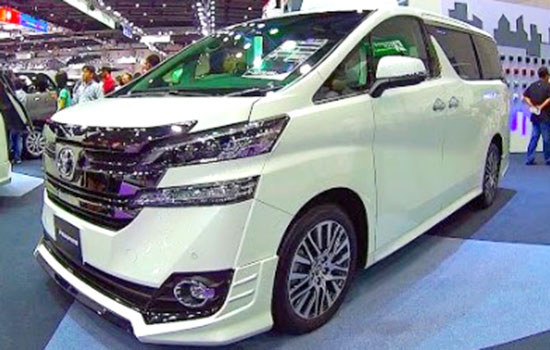
What the Vellfire Is
The Vellfire shares its body, platform and powertrains with the Alphard, Toyota’s flagship minivan, and adds a more aggressive front-end and lighting treatment to separate the two. Both are marketed as premium people movers rather than basic family vans. The third-generation cars were built on Toyota’s New MC platform, and the closely related Lexus LM luxury van of 2019–2023 was derived from the same generation, as documented on Wikipedia.
Toyota has kept the Alphard and Vellfire as a two-model strategy since 2008. In Japan they are sold through separate dealer channels, which is why the two vehicles look different despite sharing almost all of their mechanical parts. The Vellfire has traditionally been pitched as the driver-focused or more extroverted of the pair.
Third-Generation Timeline
Toyota released the third-generation Alphard and Vellfire in January 2015 with a redesigned body and two new engines. That generation ran through 2023, when it was replaced by the fourth-generation Alphard in June 2023. Within the AH30 run, the V6 engine and its transmission were updated for 2018, so a 2019 car uses the later mechanical specification: the 3.5-liter 2GR-FKS V-6 with a Direct-Shift eight-speed automatic, replacing the earlier 2GR-FE and six-speed unit.

Engines and Performance
The third-generation Vellfire was offered with three powertrains, depending on market and trim:
- 2.5-liter 2AR-FE four-cylinder: about 177–182 hp (132–134 kW), paired with a Super CVT-i automatic
- 2.5-liter 2AR-FXE four-cylinder hybrid: a combined output of roughly 197 hp with an e-CVT and available electric all-wheel drive
- 3.5-liter 2GR-FE V-6 (2015–2017): 270 hp (201 kW)
- 3.5-liter 2GR-FKS V-6 (2018–2023): 296 hp (221 kW) and 362 N·m (267 lb-ft), with an eight-speed automatic
Toyota quoted a 0–100 km/h (0–62 mph) time of 7.5 seconds for the later V-6. The hybrid trades outright power for lower fuel consumption and quieter operation, which is why it is the most common choice in dense city markets.
Interior and Packaging
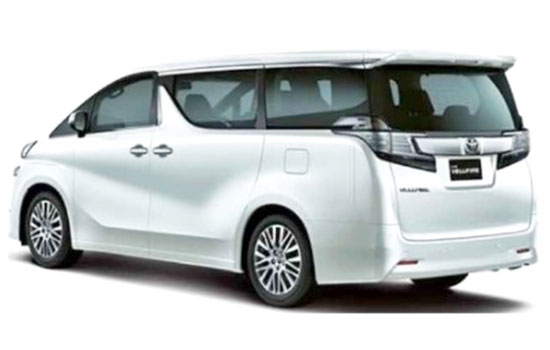
The Vellfire is configured as a seven- or eight-seat van, with a two-plus-two-plus-three layout. Higher trims use second-row captain’s chairs, and the top Executive Lounge grade was added for this generation for both the Alphard and the Vellfire. Its defining feature is a pair of sliding rear doors on a boxy body, which gives the cabin far more usable space than a comparably sized SUV.
Second-row comfort is the main selling point. On top trims the middle seats can recline, slide and extend footrests, turning the rear of the van into something closer to a lounge than a bench. That packaging is why the model is widely used as a chauffeur vehicle and corporate shuttle in Asia.
Where the Vellfire Is Sold
The Vellfire is a Japanese-market model that is also exported or parallel-imported to several Asian markets, including Hong Kong and parts of Southeast Asia. It has never been part of Toyota’s US or European lineups, so American and European buyers cannot order one new from a franchised dealer. Availability, not a fresh US model year, is the key fact behind most questions about the nameplate.

What Buyers Can Get Today
New or nearly new Vellfires are found mainly in Japan and select Asian markets, while used third-generation cars move through export and import dealers and are common in countries that allow gray imports. Buyers outside those markets who want a large Toyota van should look to the models Toyota actually sells locally, such as the HiAce-based Granvia or the Sienna, rather than the JDM Vellfire.

Related Toyota Models
Other large Toyota models discussed on this site include the 2019 Toyota Venza Rumors, Review and the 2019 Toyota Kluger Review.
Hybrid System and Electrification
The third-generation Vellfire’s hybrid option pairs an Atkinson-cycle 2.5-liter four-cylinder with two electric motors and a nickel-metal-hydride battery of about 1.6 kWh, driving through an e-CVT. The motors are a 105 kW front unit and a 50 kW rear unit, and some markets offer Toyota’s E-Four electric all-wheel-drive system, which uses the rear motor to drive the back wheels. The hybrid is the version most city buyers choose because of its quiet low-speed operation and lower fuel consumption.
Safety and Driver Assistance
Toyota progressively added its Safety Sense driver-assistance package to the Vellfire during this generation. Depending on trim, third-generation cars were available with features such as pre-collision warning, lane departure alert, adaptive cruise control, automatic high beams and a surround-view camera, alongside power sliding doors on the higher grades.
Summary for Shoppers
A 2019 Vellfire is a third-generation, Japanese-market people mover with a choice of a 2.5-liter four-cylinder, a 2.5-liter hybrid and a 3.5-liter V6, the last of those upgraded to 296 hp for 2018. It is not sold new in the United States or Europe, so buyers there depend on the used and import markets, where the hybrid and the 3.5-liter V6 are the two versions most often compared. Toyota replaced the third-generation model with the fourth-generation AH40 van in mid-2023, so a 2019 example is now several years old and should be assessed on condition rather than on being the newest design.