2027 Honda CR-V FCEV: Hydrogen Fuel-Cell Electric Crossover Range, Plug-In Specs, and Price
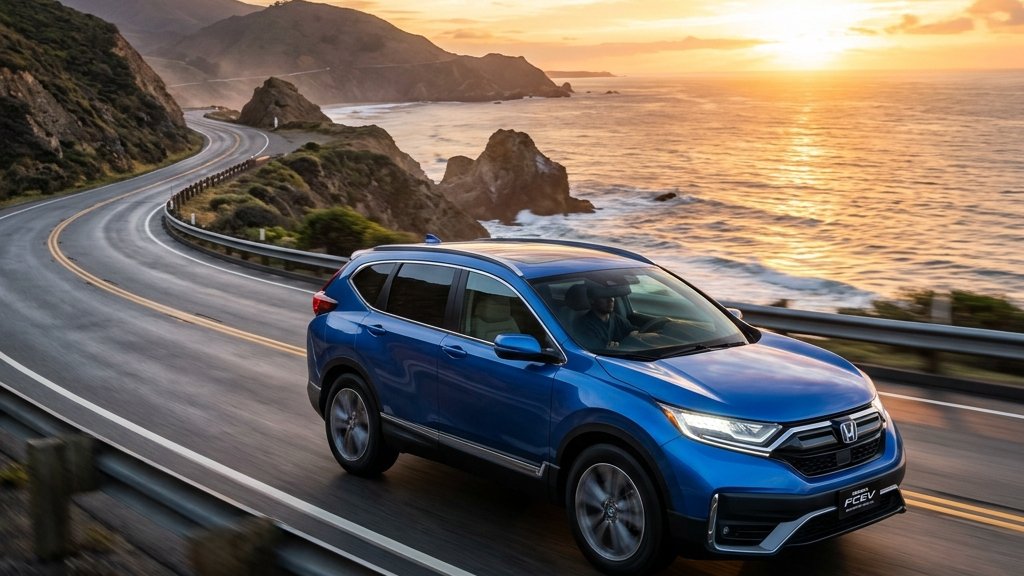
The 2027 Honda CR-V FCEV could become one of the most technically unusual crossovers on the American market: a hydrogen fuel-cell electric vehicle that can also be charged from a conventional plug. Rather than forcing drivers to depend entirely on California’s limited hydrogen network, Honda’s dual-energy strategy provides enough battery capacity for short local trips while retaining rapid hydrogen refueling for longer journeys.
Honda has not officially confirmed a 2027 model-year CR-V fuel-cell vehicle, so specifications and pricing for that year remain projections. The best guide is the California-market 2025 Honda CR-V e:FCEV, the first production plug-in fuel-cell passenger vehicle offered in the United States. If Honda extends the program through 2027, expect evolutionary improvements rather than a completely redesigned crossover.
Why the CR-V FCEV Matters
Fuel-cell vehicles are electric vehicles. Their wheels are driven by an electric motor, but instead of storing all their energy in a large battery, they generate electricity onboard through an electrochemical reaction between compressed hydrogen and oxygen. The principal tailpipe emission is water vapor.
The CR-V e:FCEV adds a significant twist: a 17.7-kWh lithium-ion battery and an external charging port. Its plug-in capability lets an owner complete many daily errands without consuming hydrogen. When the battery’s electric-only reserve is depleted, the fuel-cell system supplies electricity for continued driving. Regenerative braking can also return energy to the battery.
This architecture is especially relevant because hydrogen remains expensive and difficult to find. California is effectively the only US retail market with a meaningful network of public hydrogen stations, and even there, outages and supply interruptions can complicate ownership. A plug-in range of approximately 29 miles does not eliminate that problem, but it can substantially reduce visits to a hydrogen dispenser.
Expected 2027 Honda CR-V FCEV Specifications
Unless Honda announces a major mechanical revision, the 2027 vehicle would likely retain the current model’s front-mounted electric drive motor, front-wheel-drive layout, compact fuel-cell stack, 17.7-kWh battery, and two high-pressure hydrogen tanks. Honda could improve software calibration, thermal management, equipment, or efficiency without changing the underlying hardware.
| Specification | Current CR-V e:FCEV Reference | 2027 Expectation |
|---|---|---|
| Powertrain | Plug-in battery-electric and hydrogen fuel-cell system | Likely retained with calibration updates |
| Drive motor output | 174 hp and 229 lb-ft | Approximately 174–190 hp |
| Battery capacity | 17.7 kWh | Approximately 17.7–20 kWh |
| Electric-only range | 29 miles EPA | Approximately 29–35 miles |
| Total driving range | 270 miles EPA | Approximately 270–300 miles |
| Hydrogen capacity | Approximately 4.3 kg | Likely unchanged |
| Drivetrain | Front-wheel drive | Front-wheel drive expected |
| Charging | AC charging through a J1772 inlet | AC charging; connector strategy may change |
| Projected price | 2025 reference MSRP around $50,000 | Approximately $50,000–$55,000 before incentives |
The projected figures in the table are not official 2027 specifications. Range could move in either direction depending on battery usable capacity, vehicle weight, tire choice, software, and EPA testing. Honda might also continue offering the vehicle only through a subsidized lease rather than emphasizing conventional retail sales.
Range and Everyday Energy Use
Electric Range for Local Driving
An electric-only rating near 29 miles is modest beside a dedicated battery EV, yet it is useful in the context of a fuel-cell crossover. A driver with home charging could cover school runs, grocery trips, and shorter commutes on grid electricity. Charging overnight on a 240-volt Level 2 connection should be straightforward because the battery is much smaller than the pack in a long-range EV.
The CR-V’s battery mode also acts as a hedge against a temporarily unavailable hydrogen station. It is not a complete substitute, however. Drivers who regularly travel more than the plug-in range would still need reliable access to hydrogen, and the vehicle cannot simply switch to gasoline when a station closes.
Hydrogen Range and Refueling
The current vehicle’s 270-mile combined EPA range includes its battery-electric capability. Once the plug-in charge is exhausted, the practical hydrogen-supported distance is lower than that headline total. Weather, speed, climate-control use, elevation changes, and available hydrogen pressure can affect real-world results.
When a station is operating correctly, filling the tanks can take roughly three to five minutes—one of hydrogen’s strongest theoretical advantages over a large battery. The complication is station availability. Prospective lessees should study the stations near their home, workplace, and regular destinations rather than relying on a statewide network map.
Performance, Refinement, and Driving Character
With 174 horsepower and 229 lb-ft of torque in the current version, the CR-V e:FCEV prioritizes smoothness over speed. Immediate motor torque should make it responsive in urban traffic, but its battery, tanks, and fuel-cell hardware add weight. Buyers should expect adequate acceleration rather than the forceful launch delivered by many dual-motor battery EVs.
The absence of a conventional engine gives the crossover quiet low-speed operation. At higher loads, the fuel-cell air compressor, pumps, tires, and wind remain audible, although Honda’s experience with hybrids and the Clarity Fuel Cell should support polished transitions between battery and fuel-cell operation. Selectable regenerative-braking settings allow the driver to adjust deceleration and energy recovery.
Front-wheel drive is another limitation. The CR-V name is closely associated with all-weather family utility, but packaging a rear motor around hydrogen tanks would increase complexity and cost. Anyone requiring all-wheel drive for snow, unpaved roads, or steep terrain will find conventional hybrid and battery-electric alternatives easier to recommend.
Interior Practicality and Equipment
The fuel-cell model uses the familiar sixth-generation CR-V cabin architecture, providing supportive seating, clear controls, and a more conventional driving position than low-roof hydrogen sedans. Its crossover body is an important part of the concept’s appeal, yet the energy-storage hardware compromises utility. The rear hydrogen tanks occupy space that would otherwise contribute to cargo capacity, and the raised cargo floor creates a stepped load area.
A 2027 version would likely remain a well-equipped, five-seat model with heated front seats, dual-zone climate control, digital instrumentation, smartphone integration, driver-assistance technology, and external power capability. The current system can export electricity through a 110-volt outlet, potentially powering small appliances, tools, or campsite equipment.
Honda’s electrification experiments extend well beyond this crossover. Enthusiasts interested in the company’s performance direction can examine the 2027 Honda S2000 EV: Electric Roadster Revival, RWD Architecture, and Target Release. That potential sports car represents a very different application of electric propulsion: low-slung, battery-focused, and centered on driver engagement.
Expected Price, Lease Terms, and Availability
A projected 2027 price of $50,000 to $55,000 would place the CR-V FCEV far above mainstream CR-V hybrid trims. The technology, low production volume, specialized tanks, and fuel-cell components explain much of the premium. Actual transaction economics may depend more on lease support than MSRP.
Honda introduced the current version with a lease-oriented California program and substantial hydrogen-fuel benefits. Future terms could include fuel credits, maintenance assistance, or generous mileage allowances, but shoppers should never assume that an earlier promotion will carry into 2027. Incentives can change, and fuel credits do not solve station reliability.
Availability is likely to remain restricted to selected California dealers unless hydrogen infrastructure expands dramatically. Used-car resale value is another concern because the vehicle’s usefulness depends on a regional fueling network. Leasing can shift some depreciation and infrastructure risk back to the manufacturer.
How It Compares With Future Battery EVs
The CR-V FCEV’s chief strength is energy flexibility, but battery technology is advancing rapidly. The 2027 Toyota Solid-State Battery EV: Groundbreaking 700-Mile Range Technology Preview illustrates the industry’s ambition to combine very long range with shorter charging times. If those battery claims reach production at an attainable price, hydrogen passenger vehicles will face even greater pressure.
Lifestyle-oriented electric SUVs also compete through design and off-road identity. The 2027 Toyota Compact Cruiser EV: Retro Off-Roader Styling, Battery Architecture, and Expected MSRP previews the type of battery-electric crossover that could attract buyers who prioritize rugged styling and broader charging access.
At the opposite end of the market, the 2027 Toyota Century SUV: Ultra-Luxury Japanese Limousine Crossover Specs and Bespoke Price demonstrates how electrified powertrains can support refinement and prestige rather than merely efficiency. The Honda’s mission is narrower: proving that fuel-cell technology can work in a recognizable, family-friendly package.
Who Should Consider the 2027 CR-V FCEV?
- California drivers who live close to more than one dependable hydrogen station.
- Homeowners or renters with reliable overnight charging access.
- Commuters whose routine journeys fit within roughly 29 to 35 electric miles.
- Technology-focused lessees comfortable with limited production and infrastructure risk.
- Drivers who value quick refueling but do not need all-wheel drive or maximum cargo room.
It is a poor fit for apartment residents without charging, drivers far from hydrogen stations, frequent interstate travelers, or buyers seeking a vehicle they can confidently keep for a decade in any US region.
Final Assessment
The 2027 Honda CR-V FCEV could remain one of the industry’s most intellectually compelling electrified vehicles. Its plug-in battery addresses short daily trips, while the hydrogen system offers fast refueling and longer-distance capability without a massive battery pack. The crossover format is also more practical and marketable than earlier fuel-cell sedans.
Yet engineering ingenuity cannot overcome weak infrastructure by itself. A projected 270-to-300-mile total range, approximately 30 miles of plug-in driving, and a price near $50,000 would make the 2027 model technically credible, but its success would still depend on dependable hydrogen supply and aggressive lease support. For the small group of California drivers whose location and routine suit the technology, it could be a quiet, refined, low-emission experiment. For most buyers, a CR-V hybrid or widely supported battery EV will remain the simpler choice.