2027 Lexus LFA EV: All-Electric Flagship Supercar Concept, Solid-State Battery, and 0-60 Time
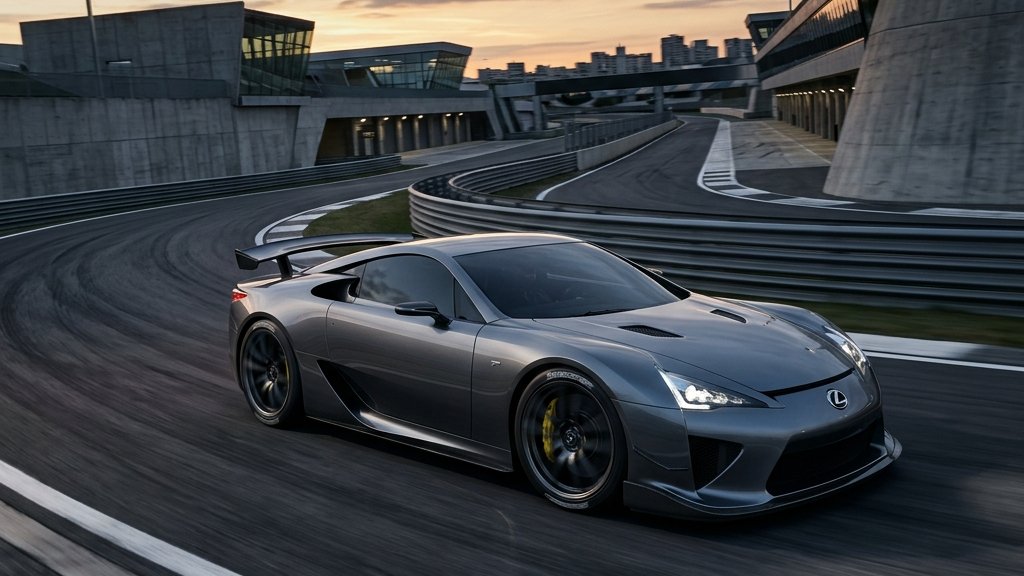
The 2027 Lexus LFA EV is expected to become the technological and emotional flagship of Lexus’s electric era. Previewed in spirit by the low-slung Lexus Electrified Sport concept, this proposed battery-powered supercar combines cab-rearward proportions, dramatic aerodynamics, and the promise of extreme acceleration with the possibility of next-generation solid-state battery technology. It is widely described as a spiritual successor to the original V10-powered LFA, although Lexus has not confirmed that the production model will carry the LFA name or arrive specifically for the 2027 model year.
That distinction matters. Lexus has confirmed its ambition to build an electric sports car inspired by the character of the LFA, while Toyota has publicly discussed commercializing solid-state batteries around 2027 or 2028. However, final specifications, pricing, production volume, and launch timing remain unannounced. The most credible interpretation is therefore not a fully confirmed production car, but an evolving flagship program representing the best performance, battery, and software technology available within Toyota Motor Corporation.
From the V10 LFA to an Electric Halo Car
Produced in a limited run of 500 examples between 2010 and 2012, the original Lexus LFA was a defining engineering project. Its naturally aspirated 4.8-liter V10 developed 552 horsepower in U.S. specification, revved to 9,000 rpm, and delivered a famously sharp exhaust note through a Yamaha-tuned acoustic system. Carbon-fiber-reinforced plastic formed much of its structure, helping Lexus acquire manufacturing knowledge that extended far beyond the car’s modest production total.
The LFA was not designed merely to win a horsepower contest. Its importance came from steering precision, compact packaging, low mass, and a sense that every control had been carefully calibrated. An electric successor must preserve that depth without relying on a high-revving engine for identity. Instant torque alone would not be enough; many modern EVs already produce dramatic straight-line acceleration. The new car must distinguish itself through response, repeatable performance, thermal stability, braking feel, and communication through the chassis.
Lexus revealed the Electrified Sport concept in December 2021 as part of Toyota’s broad battery-electric strategy presentation. Its long hood, deeply sculpted doors, abbreviated rear deck, and exceptionally low roof created a visual connection to traditional front-engine supercars, despite the freedom offered by an electric platform. Lexus also cited a targeted cruising range exceeding 700 kilometers, or roughly 435 miles, when using solid-state batteries, along with acceleration to 100 km/h in the low-two-second range.
Expected 2027 Lexus LFA EV Specifications
Because Lexus has not released a production specification sheet, the following figures separate officially previewed objectives from informed estimates. Range could change substantially under different testing standards: WLTP figures are generally more optimistic than U.S. EPA results, while high-speed driving, cold weather, and track use can reduce real-world EV range.
| Category | Expected or Previewed Detail | Technical Context |
|---|---|---|
| Vehicle type | Two-seat electric flagship supercar | Production name and body architecture remain unconfirmed |
| Drivetrain | Likely dual-motor all-wheel drive | Independent motor control could enable active torque vectoring |
| Estimated output | Approximately 700-1,000 horsepower | No official power figure has been announced |
| 0-60 mph | Estimated 2.0-2.5 seconds | Consistent with Lexus’s low-two-second 0-100 km/h target |
| Battery | Solid-state targeted; advanced lithium-ion possible initially | Commercial readiness, cost, and production yield will determine availability |
| Previewed range | More than 700 km, or about 435 miles | Concept target associated with solid-state battery technology |
| Construction | Carbon fiber, aluminum, and lightweight composites | Weight control will be essential for steering and braking performance |
| Estimated price | Potentially $250,000-$400,000 or more | Speculative and dependent on production volume and battery technology |
Solid-State Battery: The Potential Breakthrough
A solid-state battery replaces the flammable liquid or gel electrolyte used in conventional lithium-ion cells with a solid electrolyte. In theory, this can support higher energy density, faster charging, improved thermal resistance, and smaller battery packs for a given usable capacity. For a supercar, the most important benefit may not be headline range but reduced mass. A lighter pack improves acceleration, braking distances, steering response, tire life, and energy consumption simultaneously.
Toyota has discussed solid-state batteries capable of approximately 1,000 kilometers of cruising range in certain future EV applications, with more advanced iterations potentially extending that figure. The company has also highlighted rapid-charging goals under ideal conditions. Readers seeking the broader battery roadmap can examine the 2027 Toyota Solid-State Battery EV: Groundbreaking 700-Mile Range Technology Preview, which places the potential LFA successor within Toyota’s larger development strategy.
Nevertheless, solid-state technology faces difficult industrial challenges. Cell durability must remain consistent through repeated fast charging and hard discharging, manufacturing yields must rise, and costs must fall before meaningful production can begin. A flagship supercar is a logical early application because low production volumes and a high price can absorb expensive technology. Lexus could also launch the vehicle with advanced liquid-electrolyte lithium-ion cells and introduce a solid-state version later if the new chemistry is not ready.
Charging and Track Performance
Charging speed is only one part of the engineering equation. On a circuit, the battery and motors must repeatedly deliver high current without aggressive power reduction. Lexus will need sophisticated liquid cooling, carefully managed cell temperatures, powerful inverters, and effective brake cooling. A supercar that produces one astonishing launch but loses performance after several laps would not meet the standard established by the original LFA.
How Quick Could the Electric LFA Be?
Lexus’s stated low-two-second target for 0-100 km/h suggests an estimated 0-60 mph time of approximately 2.0 to 2.5 seconds, depending on tires, surface temperature, launch-control calibration, and rollout methodology. That would place the car among the quickest road-legal production vehicles, alongside high-performance electric models from Rimac, Tesla, Porsche, and Lotus.
Achieving that time does not automatically require four motors or a four-figure horsepower output. Traction becomes the limiting factor at low speeds, so precise torque delivery can matter more than maximum power. A dual-motor layout would reduce complexity and mass, while a tri- or quad-motor arrangement could provide more granular wheel control. Lexus may prioritize predictable handling and repeatability rather than pursuing the highest possible dynamometer figure.
- Active torque vectoring could rotate the car into corners without destabilizing the rear axle.
- Rear-biased power delivery could preserve the adjustable character expected from a Lexus flagship.
- Regenerative braking could supplement carbon-ceramic friction brakes while maintaining consistent pedal feel.
- Rear-wheel steering and adaptive dampers could improve both low-speed agility and high-speed stability.
- Advanced tire development would be essential to balance launch grip, steering feedback, range, and wet-weather safety.
Design, Cabin, and the Question of Character
The Electrified Sport concept uses the visual vocabulary of an exotic grand tourer rather than a cab-forward electric appliance. Its long front section may contain crash structures, cooling hardware, suspension components, and luggage space rather than an engine. Large side channels and a carefully shaped tail indicate that aerodynamic management will be central to both range and high-speed stability.
Inside, Lexus is likely to combine a low seating position with a driver-oriented digital cockpit, steer-by-wire technology, and software-defined drive modes. Toyota has also experimented with simulated gear changes in performance EV prototypes. Such a system could reproduce the rhythm of upshifts, downshifts, and changing torque delivery, giving drivers an additional layer of interaction without pretending that an electric motor is a combustion engine.
The flagship’s restrained, technical focus would contrast with the formal craftsmanship of the 2027 Toyota Century SUV: Ultra-Luxury Japanese Limousine Crossover Specs and Bespoke Price. It would also sit far beyond practical electrified crossovers such as the rumored 2027 Toyota Venza Revival: Rumored Premium Crossover Return, PHEV Powertrain, and Trims. Together, these vehicles illustrate how Toyota and Lexus could apply electrification differently across performance, chauffeur-driven luxury, and family transportation.
Price, Production, and Market Position
If approved for limited production, the electric LFA successor would probably be hand-built in small numbers. A starting price between $250,000 and $400,000 is plausible, but a carbon-intensive structure and early solid-state battery pack could push it higher. The original LFA carried a price near $375,000 in the United States, and its unusual leasing and purchasing arrangements were designed partly to discourage immediate speculation.
The competitive field will be formidable. Porsche is preparing electric sports-car technology, Mercedes-AMG is developing dedicated high-performance EV architecture, and specialist manufacturers already offer electric hypercars with immense output. Lexus’s opportunity is not to imitate those vehicles, but to combine Japanese material quality, long-term engineering discipline, and finely judged controls with genuinely usable range.
More accessible models will remain important to Toyota’s overall transition. A plug-in hybrid such as the proposed 2027 Toyota Venza Revival: Rumored Premium Crossover Return, PHEV Powertrain, and Trims would address buyers who still depend on combustion power for long trips, while an electric flagship can serve as a laboratory for batteries, motors, thermal systems, and vehicle software.
Final Assessment
The 2027 Lexus LFA EV has the ingredients of a landmark supercar: a low-two-second acceleration target, more than 700 kilometers of previewed range, lightweight construction, and the possible debut of Toyota’s solid-state battery technology. Yet its greatest challenge is emotional rather than numerical. The original LFA became memorable because its sound, steering, materials, and responses formed a coherent personality.
If Lexus can deliver comparable involvement through precise torque control, low mass, intelligent aerodynamics, and repeatable track performance, the electric successor will be more than a fast concept brought to production. It could demonstrate that an EV can possess the intricacy and sense of occasion associated with the finest combustion supercars. Until Lexus confirms the name, launch date, battery chemistry, price, and final performance figures, however, the 2027 Lexus LFA EV should be viewed as a compelling and technically credible forecast—not a finalized production specification.