2027 Audi RS6 Avant e-tron: All-Electric Super Wagon Performance Figures, Dual Motors, and Launch
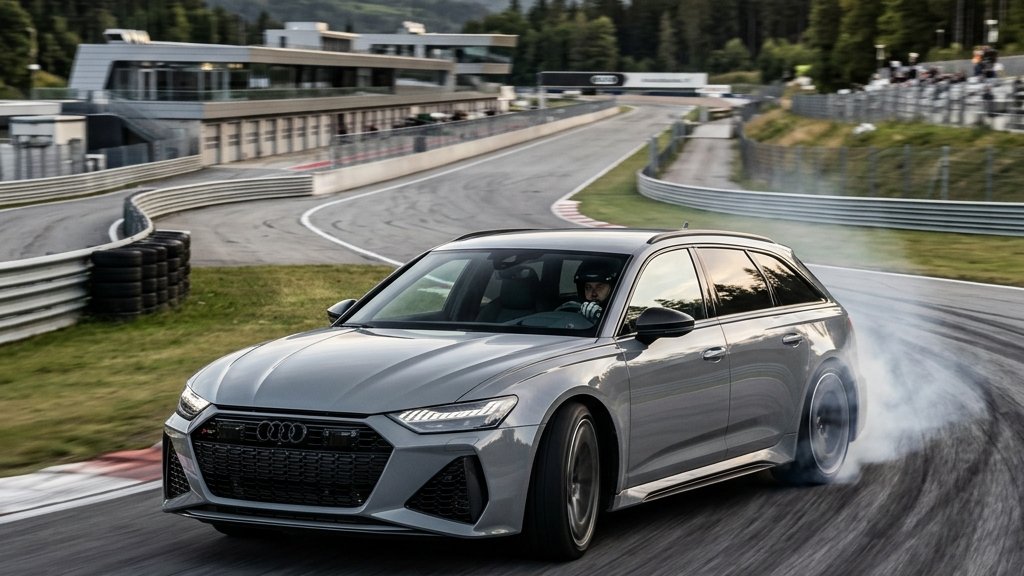
The 2027 Audi RS6 Avant e-tron is expected to reinterpret one of the world’s most celebrated performance wagons as a fully electric, dual-motor grand tourer. If it reaches production in the anticipated form, it will combine the long-distance utility and muscular proportions of the RS6 Avant with the rapid response, sophisticated torque management, and high-voltage charging capability of Audi’s latest electric architecture.
However, an important distinction must be made at the outset: Audi has not published a complete production specification, final price, or confirmed global launch schedule for a vehicle officially named the 2027 RS6 Avant e-tron. The model remains a future product discussed through industry reporting, prototype observations, Audi’s wider electric-car strategy, and the technical foundations established by the A6 e-tron family. Consequently, performance, battery, range, and pricing figures in this guide are logical expectations rather than confirmed RS6 data unless explicitly identified otherwise.
Why an Electric RS6 Avant Is Such a Significant Car
The RS6 Avant occupies a rare position in the automotive world. It is a practical family wagon capable of carrying passengers, luggage, bicycles, or dogs, yet its acceleration and high-speed stability place it alongside serious sports cars. Previous generations achieved that breadth through turbocharged engines, quattro all-wheel drive, adaptive suspension, and dramatically widened bodywork.
An electric successor would preserve the same broad mission while changing its mechanical character. Instead of a twin-turbocharged V8 driving through a conventional automatic transmission, an RS6 Avant e-tron would most likely use one electric motor on each axle. That arrangement provides all-wheel drive without a mechanical connection between the front and rear axles, allowing software to alter torque distribution almost instantaneously.
The transition would involve compromises. An electric RS6 would be heavier than an equivalent combustion model, and it could not reproduce the sound or rising-rev character of a V8. Conversely, electric motors offer immediate torque, exceptionally precise traction control, smoother urban operation, and the possibility of repeated energy recovery during deceleration. The engineering challenge is not simply making the wagon fast; it is making a heavy EV feel agile, durable, and emotionally distinctive.
Confirmed Foundations Versus Expected RS6 Specifications
The strongest confirmed reference point is the Audi A6 e-tron model family. Audi has introduced the A6 Sportback e-tron and A6 Avant e-tron on the Premium Platform Electric, commonly called PPE. This architecture was developed with Porsche and supports an 800-volt electrical system, high charging power, sophisticated thermal management, and performance-oriented all-wheel-drive applications.
Audi has also demonstrated through the S6 e-tron that PPE can support a rapid dual-motor wagon positioned above the regular A6 range. What remains unconfirmed is how far Audi Sport will increase output, cooling capacity, chassis aggression, and tire width for a possible RS6 derivative.
| Category | Likely 2027 RS6 Avant e-tron Position | Confidence Status |
|---|---|---|
| Platform | Premium Platform Electric with 800-volt technology | PPE is confirmed for A6 e-tron; RS6 application is expected |
| Drive system | Front and rear motors with electric quattro all-wheel drive | Logical expectation, not final RS6 confirmation |
| Estimated output | Approximately 700 to 800 horsepower | Industry estimate |
| Estimated 0–60 mph | Roughly 2.8 to 3.3 seconds | Projection based on likely power and mass |
| Battery | Approximately 94 to 100 kWh usable capacity | Expected from PPE packaging; unconfirmed for RS6 |
| Estimated EPA range | Approximately 260 to 310 miles | Estimate affected by wheels, tires, and final tuning |
| Peak DC charging | Potentially around 270 kW | Consistent with current PPE capability, not RS6-certified |
| Estimated U.S. price | Approximately $150,000 to $180,000 before options | Editorial estimate only |
Dual Motors and Electric Quattro Performance
A dual-motor layout is the most credible configuration because it balances traction, packaging efficiency, and controllability. The rear motor would probably provide most of the propulsion during steady driving, while the front unit could engage when maximum acceleration, stability, or all-weather grip is required. Disconnecting or minimizing use of the front motor under light loads could reduce electrical losses and improve cruising efficiency.
For an RS model, software calibration will be as important as peak horsepower. Audi Sport can shape accelerator response, rearward torque bias, wheel-slip targets, and regenerative braking behavior through code. A dedicated RS mode could sharpen response and maintain both motors at an optimal temperature, while a calmer efficiency setting could prioritize the rear axle and moderate climate-control consumption.
An estimated 700 to 800 horsepower would place the RS6 above the S6 e-tron while leaving room for thermal reliability and repeatable performance. A brief boost function may provide the highest advertised output for launches or overtaking. Torque is likely to be substantial, but a headline torque number can be misleading in an EV because motor torque, gear reduction, and wheel torque are different measurements.
Acceleration, Top Speed, and Repeatability
A 0–60 mph time near three seconds is realistic, but it is not confirmed. The actual result will depend on curb weight, tire temperature, battery state of charge, launch-control programming, and whether Audi prioritizes repeatability over a single spectacular run. Top speed could be electronically limited in the region of 155 to 174 mph, potentially with a higher limit attached to an optional performance package.
Repeated acceleration and sustained motorway speed generate considerable heat. A genuine RS model therefore needs upgraded battery cooling, stronger motor cooling circuits, and robust power electronics. Those less visible systems may distinguish the RS6 from a merely powerful luxury EV more meaningfully than its maximum output.
Battery, Charging, and Real-World Range
PPE’s 800-volt design is a major advantage because higher voltage permits high power with lower current, helping control cable weight and heat. Current A6 e-tron technology provides the basis for charging rates around 270 kW under suitable conditions. If carried into the RS6, a rapid 10-to-80-percent session could take roughly 20 to 25 minutes at a compatible charger, although Audi has not certified an RS6 charging time.
Real-world range is likely to trail the most efficient A6 e-tron variants. Wide performance tires, large wheels, stronger cooling demand, aggressive bodywork, and higher vehicle mass all consume energy. An estimated EPA range of 260 to 310 miles would still make the car viable for touring, especially if its charging curve remains strong rather than briefly touching a high peak.
Infrastructure and powertrain choice matter differently across vehicle classes. Buyers comparing charging-focused family EVs can examine the 2027 Honda Prologue EV: Upgraded Ultium Battery Platform, Faster DC Fast Charging, and Trims, while the 2027 Honda CR-V FCEV: Hydrogen Fuel-Cell Electric Crossover Range, Plug-In Specs, and Price illustrates an alternative approach combining hydrogen operation with plug-in capability.
Chassis, Brakes, and the Problem of Weight
The battery pack should lower the center of gravity, but it will also contribute to a curb weight that could exceed 5,000 pounds. Audi Sport will need to disguise that mass without creating an uncomfortably stiff wagon. Adaptive air suspension, electronically controlled dampers, rear-wheel steering, active roll management, and a rear-biased torque strategy are all plausible solutions, though the final equipment list remains unconfirmed.
Large steel brakes should be standard, with carbon-ceramic discs potentially offered for reduced unsprung mass and improved resistance to repeated high-speed stops. Regenerative braking can handle routine deceleration, but track driving and emergency braking still demand substantial friction brakes. Pedal calibration must also blend regeneration and hydraulic braking naturally.
Design, Interior, and Everyday Utility
Expect the RS6 to retain a long roof, broad rear haunches, an aggressive front treatment, and wider tracks than the standard A6 Avant e-tron. Aerodynamics will remain crucial, so traditional oversized openings may give way to functional cooling passages, active shutters, underbody management, and carefully shaped wheel designs.
Inside, likely RS upgrades include heavily bolstered seats, performance displays, configurable drive modes, and distinct steering-wheel controls. The electric platform should preserve useful rear-seat space and a substantial cargo area, although a large front trunk is not guaranteed. Material quality will be important because buyers at this price level may also consider highly personalized luxury vehicles such as the 2027 Toyota Century SUV: Ultra-Luxury Japanese Limousine Crossover Specs and Bespoke Price. Shoppers seeking lower-cost electrification may instead follow the rumored 2027 Toyota Venza Revival: Rumored Premium Crossover Return, PHEV Powertrain, and Trims.
Expected Launch Timing and Estimated Price
A 2027 model-year launch is plausible rather than guaranteed. A likely sequence would place the RS derivative after the broader A6 e-tron and S6 e-tron rollout, giving Audi time to finalize high-performance cooling, chassis tuning, and production capacity. Market availability may differ significantly: Europe traditionally receives Avant models first, while U.S. distribution could be limited by demand, certification, and Audi’s regional strategy.
An estimated U.S. starting price of $150,000 to $180,000 is reasonable when considering the existing RS6’s positioning, the cost of a large high-performance battery, and the likely inclusion of sophisticated chassis hardware. Carbon-ceramic brakes, premium paint, lightweight wheels, driver-assistance packages, and luxury options could push a heavily configured example well beyond that range. This is an editorial estimate, not an announced Audi price.
Final Assessment
The potential 2027 Audi RS6 Avant e-tron represents more than a powertrain substitution. To succeed, it must preserve the RS6’s defining contradictions: supercar acceleration with estate-car practicality, secure all-weather traction with adjustable handling, and long-distance refinement with genuine high-speed endurance.
The confirmed PPE foundation makes an 800-volt, fast-charging performance wagon technically credible. Dual motors, approximately 700 to 800 horsepower, a near-three-second sprint, and around 260 to 310 miles of EPA range are defensible expectations, but they remain estimates until Audi releases production data. The launch date, RS-specific battery specification, final performance figures, and pricing should therefore be treated as provisional. If Audi delivers the anticipated combination of repeatable speed, intelligent thermal management, and everyday versatility, the electric RS6 could become one of the most complete high-performance EVs of its era.